Pennsylvania leans on volunteer firefighters — but fewer are signing up

Add Axios as your preferred source to
see more of our stories on Google.
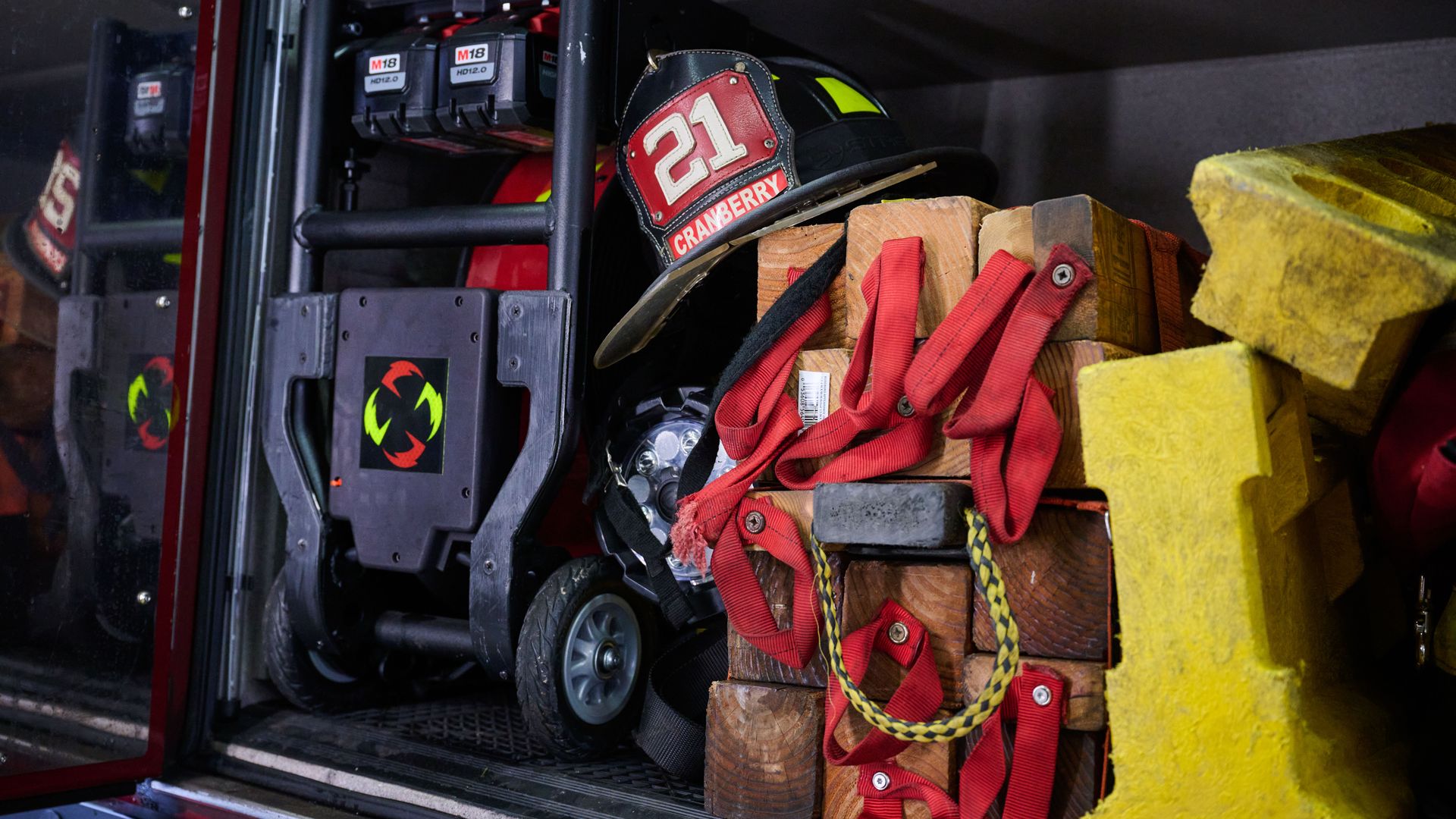
The Cranberry Township Volunteer Fire Company in Pennsylvania. Photo: Courtesy of IAFC
Pennsylvania is facing a worsening volunteer firefighter crisis that could leave some communities without a reliable emergency response.
Why it matters: The strain risks slower response times for vulnerable areas and is pushing some departments toward more expensive staffing models.
The big picture: Staffing shortages are hitting departments across the country, including Pennsylvania, says Megan Thiele, program director for the International Association of Fire Chiefs (IAFC). And rural communities often feel the impact most.
- "We're in a crisis mode with volunteers," she tells Axios.
By the numbers: The country's emergency response system relies on volunteer labor. Even cities with paid fire departments — like Philly — still depend on volunteers for mutual aid.
- More than 60% of EMS and fire departments in the U.S. are staffed by volunteers, per IAFC, and that number is even higher in Pennsylvania, at 90%.
- Pennsylvania has more than 1,900 volunteer fire departments and about 130 combination departments that blend volunteer and paid firefighters, the state estimates.
In recent years, more suburban departments — like King of Prussia's — have adopted hybrid models to avoid coverage gaps.
- The pressure is acute for volunteer companies in rural communities because they often cover larger areas, have less local tax revenue to fund major investments, and smaller populations from which to recruit.
Pennsylvania officials tell Axios they are only beginning to understand how many communities could be left without enough firefighters to respond.
- Back in the 1970s, Pennsylvania had more than 300,000 volunteer firefighters. The current total is unknown.
- The Office of the State Fire Commissioner is working to better track staffing within the state's fire ranks.
Driving the news: A national recruitment push from IAFC is targeting Gen Z and millennials in areas that rely heavily on volunteer firefighters.
- Their pitch: Firefighting is a "hustle worth having" — hoping to attract younger recruits looking to "take part in something bigger than themselves."
What they're saying: "I have the conversation with friends of mine all the time who work for corporate America, and they feel like they're not having an impact," Jordan Cramer, South Strabane Township chief of fire and emergency services, tells Axios.
- Cramer's department in the Pittsburgh suburbs transitioned to a hybrid model a few years ago, and now has a reliable 56-member roster of firefighters — more than a third of whom are paid.
- Cramer started off as a volunteer before ascending the ranks. He now travels the country coaching departments on how to bolster recruiting — something he was motivated to do after hearing older firefighters at a conference speak disparagingly about younger generations.
"When you hear people talk about Gen Z ... it's that they don't want to achieve anything," Cramer, who's a millennial, tells Axios.
- Cramer dismisses the stereotype, saying many Gen Zers are looking for rewarding ways to help their communities and find a sense of belonging.
Between the lines: What pushes volunteer firefighters to leave their jobs often comes down to time demands or leadership challenges, the Office of the State Fire Commissioner says.
- And departments that have adopted aggressive retention and recruitment efforts are generally in better shape than those that haven't.
- Take the King of Prussia Volunteer Fire Company, which on any given day handles upwards of a dozen of calls, from rescuing people trapped in elevators to car accidents and fires, assistant chief Bill Jenaway tells Axios.
- KOP's junior firefighter program has attracted young people heading into college and has become a model for finding potential career firefighters.
The future of Pennsylvania's volunteer system depends on being able to build a steady pipeline of volunteer recruits, provide on-the-job training, and convert those recruits into paid, career firefighters, Jenaway says.
The bottom line: Without sustained recruitment and retention, officials and advocates say the current volunteer system may not hold.
- "We need to plan for every possible future," Andrew DeBrunner, spokesperson for the Office of the State Fire Commissioner, tells Axios. "Creative thinking and meaningful changes … can make an impact and help right the ship."