Philly-area prison could reshape how America treats prisoners

Add Axios as your preferred source to
see more of our stories on Google.
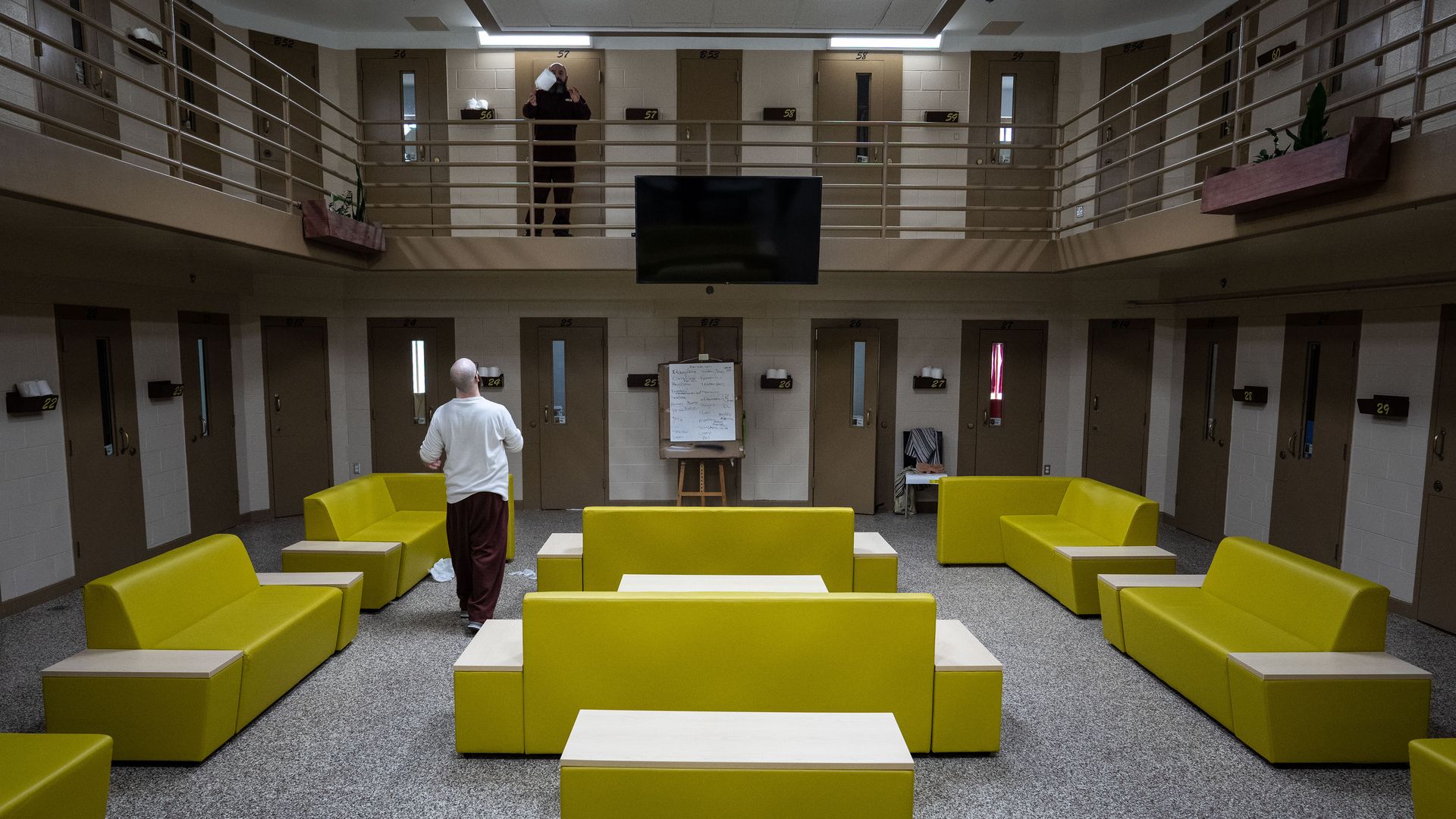
The Little Scandinavia unit. Photo: Kent Nishimura/Getty Images
Pennsylvania is emerging as a proving ground for preparing people in prison to rejoin society, per a new report from the Brennan Center for Justice.
Why it matters: Early results from a Philly-area pilot — the "Little Scandinavia" community-style living unit that launched in 2022 in Chester — show sharply lower instances of violence.
- The program paves the way for other states to adopt rehabilitation-focused models of incarceration.
State of play: Several states have implemented reforms focused less on punishment, adding programs that have improved prison conditions, eased tensions between guards and prisoners and equipped incarcerated people with life skills.
- But the Center cautions that more buy-in is needed from corrections officials across the country, estimating more than 70% of the people released from prison in 2022 will be rearrested by 2027.
The big picture: Pennsylvania's recidivism rate was 57% in 2025, meaning that more than half of people released from prison returned within three years — down from 65% in 2020, per state data.
- Meanwhile, Philly's prison system has been under court oversight for more than three decades after several lawsuits exposed dangerous and deplorable conditions inside its facilities, including inmate deaths from violence, drug overdoses and inadequate care.
- The city boosted staffing levels after being held in contempt and ordered to set aside $25 million for reforms, and it is also pushing to establish a prison oversight board.
Driving the news: The Little Scandinavia project has been so successful at reducing violence and misconduct that it's expanding to three more facilities, Drexel criminology professor Jordan Hyatt tells Axios.
- They include: SCI Cambridge Springs, SCI Smithfield and SCI Fayette.
- Researchers are still collecting data and will produce a final report about the outcomes, hoping it encourages other states — and even cities like Philly — to replicate similar reforms.
What they're saying: "It's an almost unprecedented opportunity to have access and rethink and collaborate in a space that's been … inherently resistant to change," says Hyatt, whose team includes researchers from UPenn, Villanova and the University of Oslo.
- "It's really become a very powerful demonstration of how well-intentioned folks working together can really make change."
Catch up quick: Pennsylvania corrections officials traveled to Norway, Denmark and Sweden in 2019 to understand those countries' prison systems.
- The big takeaway: Prisons in the U.S. look nothing like life on the outside, making it harder for people to adjust when they're released.
- The officials brought those findings back home and incorporated them into renovations of the Chester housing unit.
- The first prisoners moved into the 64-person unit the next year, though it officially opened in 2022, after the pandemic delayed its rollout.
How it works: Little Scandinavia looks like a modern college dorm with all the amenities: plush furniture, exercise machines, plants, a fish tank, a fully stocked kitchen and outdoor green spaces.
- Prisoners can order their own groceries, listen to music, play games, check email on tablets — and some can even foster pets — all things they'd normally be free to do in society.
- While most prisons forbid guards from developing relationships with prisoners, here they act more like counselors, forging bonds with inmates and connecting them to services or encouraging them to work through struggles by talking out problems.
What's happened: Little Scandinavia had "almost no" violence in 2024, compared with other state-run corrections centers, which saw a 22% increase in violence the same year, per the report.
Yes, but: Not everyone's convinced of the success.
The other side: The Pennsylvania State Corrections Officers Association says the state's plans to add Scandinavian units elsewhere could complicate efforts to keep drugs and contraband from coming into the prisons.
- Meanwhile, proponents believe the research shows the perks of Scandinavian-style units are appealing enough to discourage prisoners from abusing their freedoms.
The bottom line: The Center says it hopes more corrections officials realize an "out-of-sight, out-of-mind approach" hasn't solved America's incarceration crisis.
- "We live with that consequence today," the Center's justice program director, Ram Subramanian, tells Axios. "People spend their time in prison, not addressing any of the potential contributing issues or factors that brought them there. ... The cascade effect of that impacts public safety in the future for our communities."