Philly's restaurant scene is still cooking despite industry headwinds

Add Axios as your preferred source to
see more of our stories on Google.
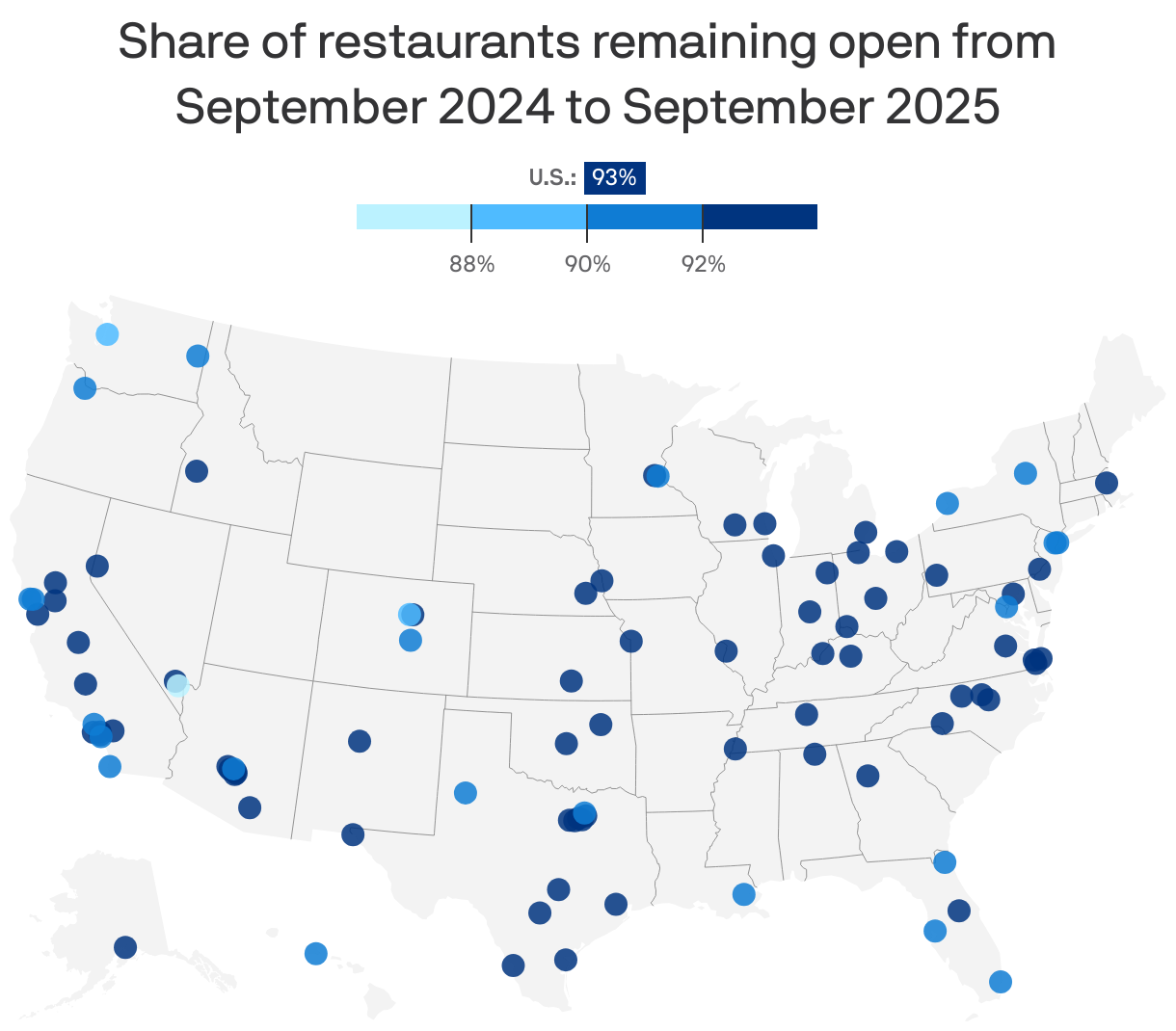
The majority of Philly's restaurants using DoorDash that were open in September 2024 remained open this September, per company data shared with Axios.
Why it matters: Some churn is normal, even healthy. But a low survival rate is detrimental for the state's local economy, which receives a significant boost from the restaurant industry — especially in Philly.
The big picture: Pennsylvania has over 26,000 restaurants and was projected to rake in more than $50 billion in sales this year, up from nearly $46 billion in 2024, per the National Restaurant Association.
- Philadelphia's three congressional districts — the 2nd, 3rd and 5th — alone were projected to account for almost $11.5 billion — nearly a quarter of statewide sales.
- The restaurant industry is Pennsylvania's fourth-largest private employer, accounting for more than half a million jobs.
Driving the news: Philadelphia's 93% resiliency rate was surprisingly middle of the pack among cities like Lincoln, Nebraska (97.3%), and Anaheim, California (95.7%) that had some of the nation's best retention rates in the covered period, per DoorDash.
Zoom in: Philly has seen dozens of new restaurants opening in 2025 — and the Michelin Guide is releasing its star ratings of city restaurants this month.
- But at least 20 other eateries have closed this year, from decades-old family-run spots like Bralow's Fresh Fish and Seafood to newer establishments like Mulherin's Pizzeria, per Eater. And Philly restaurateurs face other threats to their livelihoods, including from so-called reservation scalpers.
- Plus: Philly has seen an explosion of openings of Wonder, whose rapid expansion in the region has some food industry insiders concerned with how the chain food hall will mesh in the city's greater food scene.
What they're saying: Many Philly restaurateurs cultivate a sense of "collaboration rather than competition" that makes more eateries successful, Ben Fileccia, of the Pennsylvania Restaurant & Lodging Association, tells Axios.
- "We hate to see our friends fail," he says. "When restaurants close, it's like losing a member of your family."
Zoom out: DoorDash chief analytics officer Jessica Lachs tells Axios the data shows a "mixed bag everywhere."
- Fremont, California (87.6%), Henderson, Nevada (89.2%), and Seattle (89.8%) had the lowest such rates — meaning lots of closures.
Yes, but: Some cities with relatively low resiliency rates in the covered period — New Orleans, for example, at 90.8% — also had lots of new openings, the company found.
How it works: The data is part of DoorDash's new State of Local Commerce report, which features a bounty of metrics on restaurant trends and more across the 100 most populous U.S. cities.
Reality check: One year of survival isn't nothing, but business closure rates tend to rise on longer time horizons.
The bottom line: Running a restaurant is tough even in the best of times — and with rising costs and cash-strapped consumers, this isn't the best of times.
Editor's note: We've updated this story with a quote from the Pennsylvania Restaurant & Lodging Association.