Philly's student housing is getting pricier


Add Axios as your preferred source to
see more of our stories on Google.
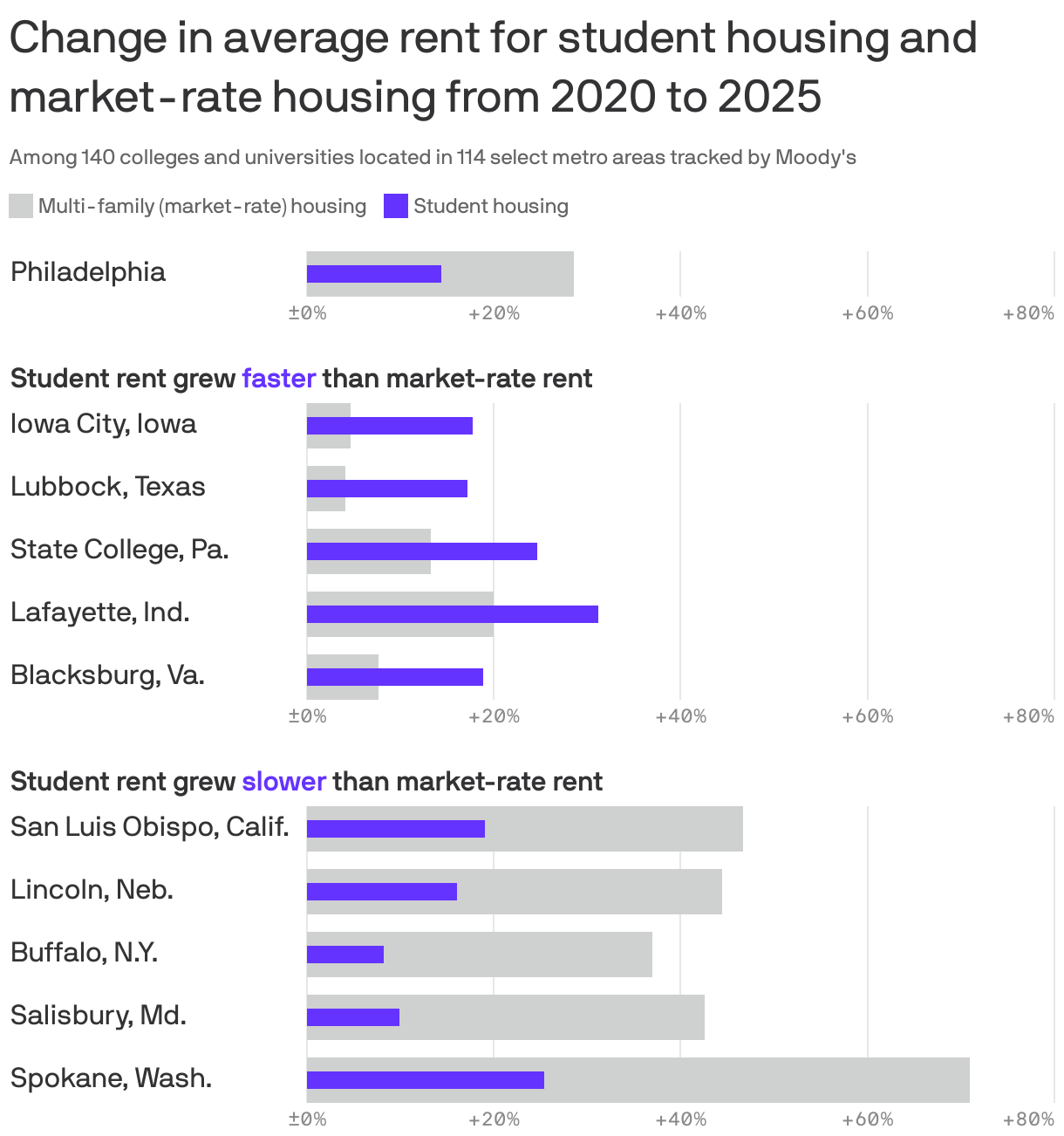
Students' rents are getting more expensive across the Philly metro, up 14.5% on average this year from 2020, per Moody's data obtained by Axios.
Why it matters: Pricey student housing adds to the already-high cost of college.
- The financial strain could limit access to higher education, especially for lower-income students.
The big picture: While the metro's student rent prices are increasing, they're doing so at a slower pace than market-rate rents over the past five years, the data shows.
- Average market-rate rents grew 28.6% in the Philly area over that period.
Zoom in: Student rents near the University of Pennsylvania went up nearly 19% since 2020, while the area by Temple University saw a 10% jump.
- Average rent in Philly's University City neighborhood, where UPenn and Drexel are located, is $3,255 this year, per RentCafe.
- It's $2,627 in North Philly, where Temple is located.
The intrigue: Some Philly-area students are opting for micro-housing because of rising rent prices.
Zoom out: Nationally, rent growth for market-rate apartments has been outpacing that of student housing, says Ricardo Rosas, Moody's associate data scientist.
- However, over the past five years, roughly 24% of 140 colleges and universities analyzed saw student rents grow faster than market-rate rents.
Between the lines: When rents rise in a metro area, student housing tends to follow suit, research suggests.
- Strong demand to live near campus instead of elsewhere in the metro can also keep student rents high.
- So can luxury apartments (think: saunas, yoga studios and infinity pools), which have moved into many student housing markets.
What they're saying: Philly students should expect about an eight- to 12-month lag before they start seeing higher rent costs reflected in the larger market, Drexel University economist Kevin Gillen tells Axios.
- Student housing can be hard to come by here, he says, as some developers avoid the market because profit "margins are smaller" and maintenance costs tend to be higher since students "beat the crap out of things."