Philadelphians should quit "hustle culture," according to a local author

Add Axios as your preferred source to
see more of our stories on Google.
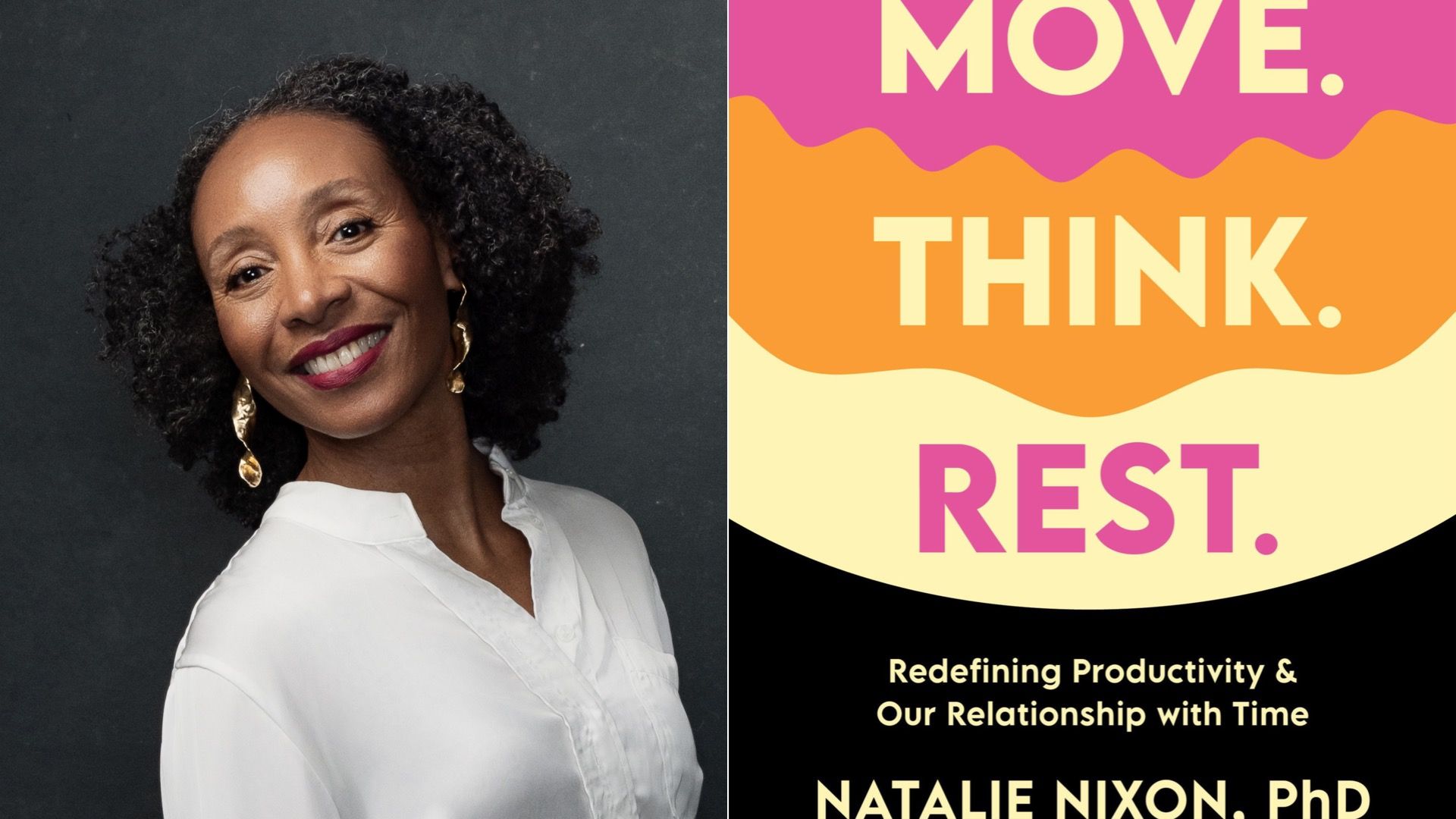
Author Natalie Nixon. Headshot: Courtesy of Aliza Schlabach
Many Philadelphians dragged themselves out of bed today, feeling the post-Labor Day lull. Some called out sick. Others thought about it but muscled through.
Why it matters: That grind-it-out mindset might feel noble, but it can be risky. Your mind and body are signaling a need to reset, Philly author Natalie Nixon tells Axios.
- In her new book, "Move. Think. Rest.," out today, Nixon warns society's obsession with productivity is stifling our most precious commodity: creativity.
State of play: Nixon's book offers a holistic approach to keep us balanced, and, in turn, achieve "sustainable growth."
- Her argument: Job stress from "hustle culture" is hurting every sector, including here in Philly.
- U.S. employers lose roughly $300 billion a year because of things like absenteeism, turnover and lost productivity, per research from the American Institute of Stress.
The intrigue: Nixon acknowledges these ideas may sound "woo woo" to some people, but they're catching on. A "creativity whisperer to the C-Suite," she has been recruited by the nation's biggest brands, including Google and Microsoft, to give talks to executives and employees.
How we got here: "We started to treat people like cogs in the machine," says Nixon, whose book release was timed to coincide with Labor Day — a holiday honoring the working class' struggle for fairer treatment.
- "Coupled with kind of the Puritan work ethic that we could argue originated in Philadelphia, we have kind of forsaken our own wellbeing," the former Thomas Jefferson University professor tells Axios.
- "We equate being active and being busy with being productive, but a lot of time that is just productivity theater."
The big picture: Think of "hustle culture" as a sort of class struggle — a 24/7 addiction to churn out product, and in turn, burn out wage workers.
- Nixon traces its roots to the first Industrial Revolution, when society lacked a middle class and "work and leisure were siloed in extreme ways" — the latter believed to be something enjoyed only by the rich and powerful.
- We're now in what Nixon calls the fourth Industrial Revolution, which comes with greater potential to offload mundane, productivity-based tasks to technology like AI and hone in on cultivating creativity.
Nixon's tips: Work-life balance shouldn't be thought of like a scale trying to find equilibrium. Instead, try interspersing play into work, and vice versa.
- Nixon cited the work of a Seattle-based molecular biologist who believes the ideal way to work is in "30 to 40-minute max sprints."
- Baking movement into your work day — taking walks, for example, to prime thoughts and not being afraid to sleep on big looming decisions — is absolutely crucial.