What Philly's new police contract means for oversight of the department

Add Axios as your preferred source to
see more of our stories on Google.
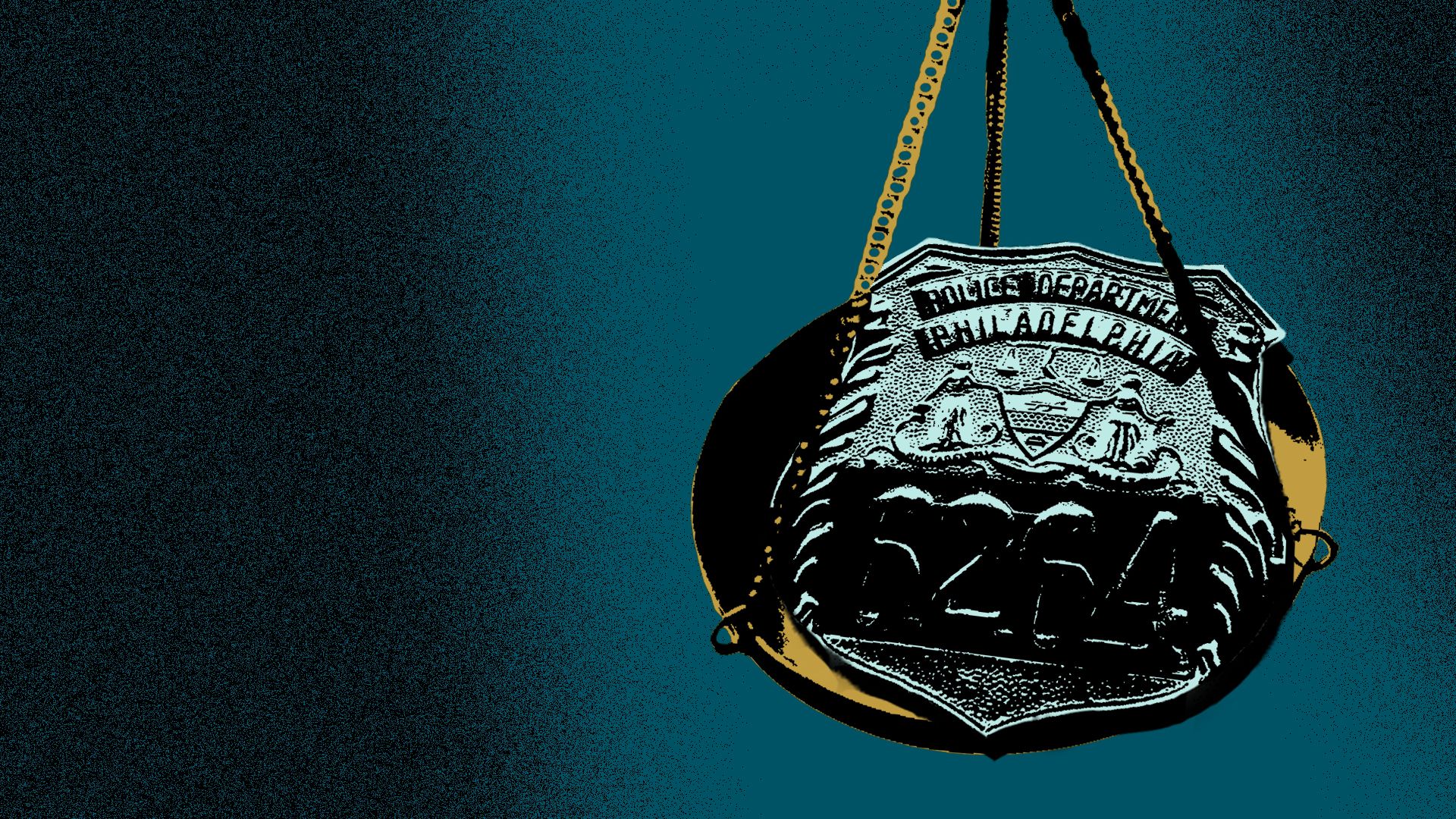
Photo illustration: Brendan Lynch/Axios; Photo: Department of Justice
Philly's new two-year police contract has clear winners and losers: Police officers are getting raises, bonuses, and more sick and wellness days, and the Citizens Police Oversight Commission (CPOC) is getting … nothing.
Why it matters: Independent police oversight in Philadelphia is now on life support.
State of play: The arbitrators who decided the contract punted on giving CPOC the power to conduct independent investigations into police officers — a key sticking point with the city's police union.
- Instead, the arbitrators maintained the status quo — neither further empowering CPOC (as the city wanted) nor restricting it.
- The watchdog needs to "invest in fostering stronger relationships with both the Police Department and the FOP as it fulfills its current role," arbitrators wrote.
- The decision neuters CPOC, which still hasn't conducted a single outside investigation into an officer.
Zoom in: The current responsibilities of the two-person investigative unit at CPOC primarily consist of responding to police shootings and conducting after-action reviews.
- The unit has done only one probe to date, into a commissioner who was serving at the time.
CPOC is scaling back hiring, but it'll still add three investigators, a staff attorney and a data coordinator despite not having any investigative caseload for the foreseeable future.
- The agency will continue doing audits of the department and making policy recommendations.
Yes, but: That's not the type of oversight Philadelphians supported when they voted in 2020 to give CPOC a legal mandate to investigate officers.
What they're saying: CPOC executive director Tonya McClary left the same role in Dallas last year after encountering similar roadblocks to reform, but she tells Axios she's committed to sticking it out in Philly.
- "It actually makes me want to dig my heels in further," McClary says. "I want to see the day we cross that finish line."
Between the lines: CPOC says the contract negotiations were tilted in the union's favor, and the Parker administration did little to balance the scales or "champion" CPOC's push for independence.
- The police watchdog says its lawyer was excluded from discussions, and the agency only briefly presented testimony, including from two national policing experts, at a closed-door arbitration hearing.
- The arbitration panel consisted of two union-friendly arbitrators, including a chair who has decided disciplinary grievances as part of the Police Termination Arbitration Board.
The other side: The city law department helped CPOC prepare its case before the hearing, and the agency wasn't given a time limit to present, spokesperson Leah Uko tells Axios.
- "Bargaining is never an easy process and, in most cases, neither party gets everything it proposes," she says.
Zoom out: After many cities enacted police reforms following George Floyd's murder, they're again facing "headwinds … the status quo or worse," Hans Menos, of the Center for Policing Equity, tells Axios.
- It's the same predicament Menos faced when he was head of the city's Police Advisory Commission (PAC), CPOC's predecessor. PAC didn't have CPOC's legislative mandate or subpoena power — and now the police watchdog is basically back in the same situation.
- "We have a short memory when it comes to crises," Menos says.
What's next: Councilmember Curtis Jones, who championed creating CPOC, said CPOC must now get "creative."
- The police watchdog is still "looking at all our options," CPOC attorney Catherine Twigg tells Axios. But a legal challenge is unlikely because CPOC isn't a party to the contract.