Childhood hunger rates worsen in Philly


Add Axios as your preferred source to
see more of our stories on Google.
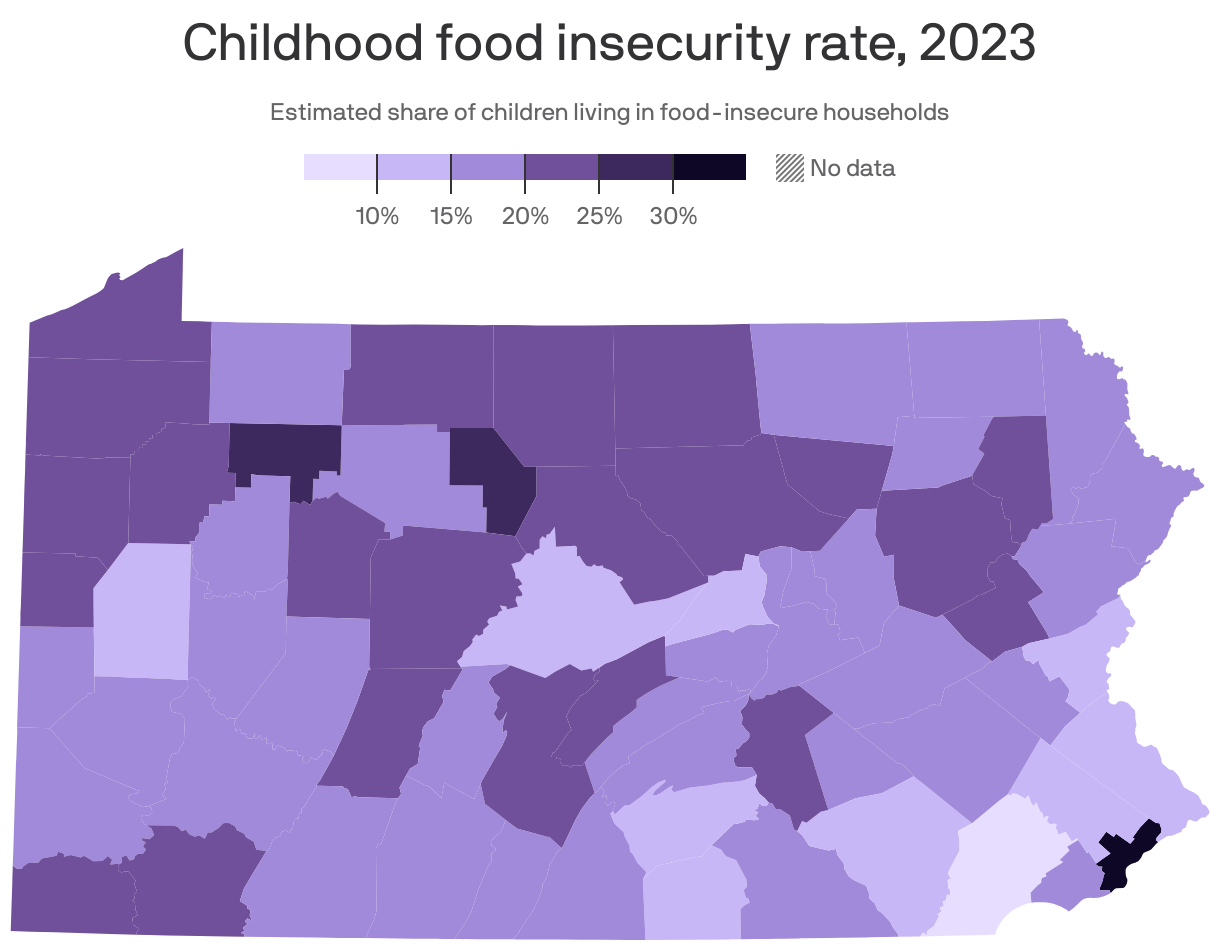
Nearly a third of all children are food insecure, per new estimates from Feeding America.
The big picture: Federal funding cuts to food aid programs, rising costs, tariffs and potential Supplemental Nutrition Assistance Program (SNAP) changes could squeeze food banks and exacerbate the childhood hunger crisis.
- "For the third consecutive year, the reported need increased," says Adam Dewey, research director at Feeding America.
By the numbers: The childhood food insecurity rate in Philly proper hit 30.5% in 2023, up from roughly 24% in 2019, per Feeding America's latest Map the Meal Gap report published last week.
- That means childhood hunger affects roughly 103,400 kids in the city.
- Plus: In Philly, 30% of all residents are enrolled in SNAP, including more than 183,000 people under 21 years old.
Zoom out: In the nearby Philly burbs, the childhood food insecurity rates were:
- Delaware County: 17.7%
- Montgomery County: 11.1%
- Bucks County: 10.7%
- Chester County: 8.7%
Threat level: Proposed federal SNAP cuts would shift more administrative costs and program funding to states, expand work requirements, and likely force states like Pennsylvania to cut benefits, per a Center on Budget and Policy Priorities report.
Friction point: All public school students in the U.S. received free breakfast and lunch during the pandemic, but Pennsylvania kept only free breakfast after the program ended in 2022.
- Now, students pay lunch fees based on income, leaving nearly 50,000 kids just above the cutoff without help, Spotlight PA reports.
The big picture: Childhood food insecurity is one piece of a broader hunger problem exacerbated by rising food costs.
- The annual aggregate national food budget shortfall — meaning, the total amount of money people in food-insecure U.S. households need to buy enough food — rose from $28.5 billion in 2022 to $32.2 billion in 2023, up 8.4% inflation-adjusted.
How it works: Map the Meal Gap is an annual effort to make local estimates about food insecurity among different groups, in part by using government data.
- The childhood food insecurity rate represents the share of children who live in food-insecure households, which lack or have uncertain access to adequate food.