MileUp diversion program gives Philly students a run at redemption

Add Axios as your preferred source to
see more of our stories on Google.
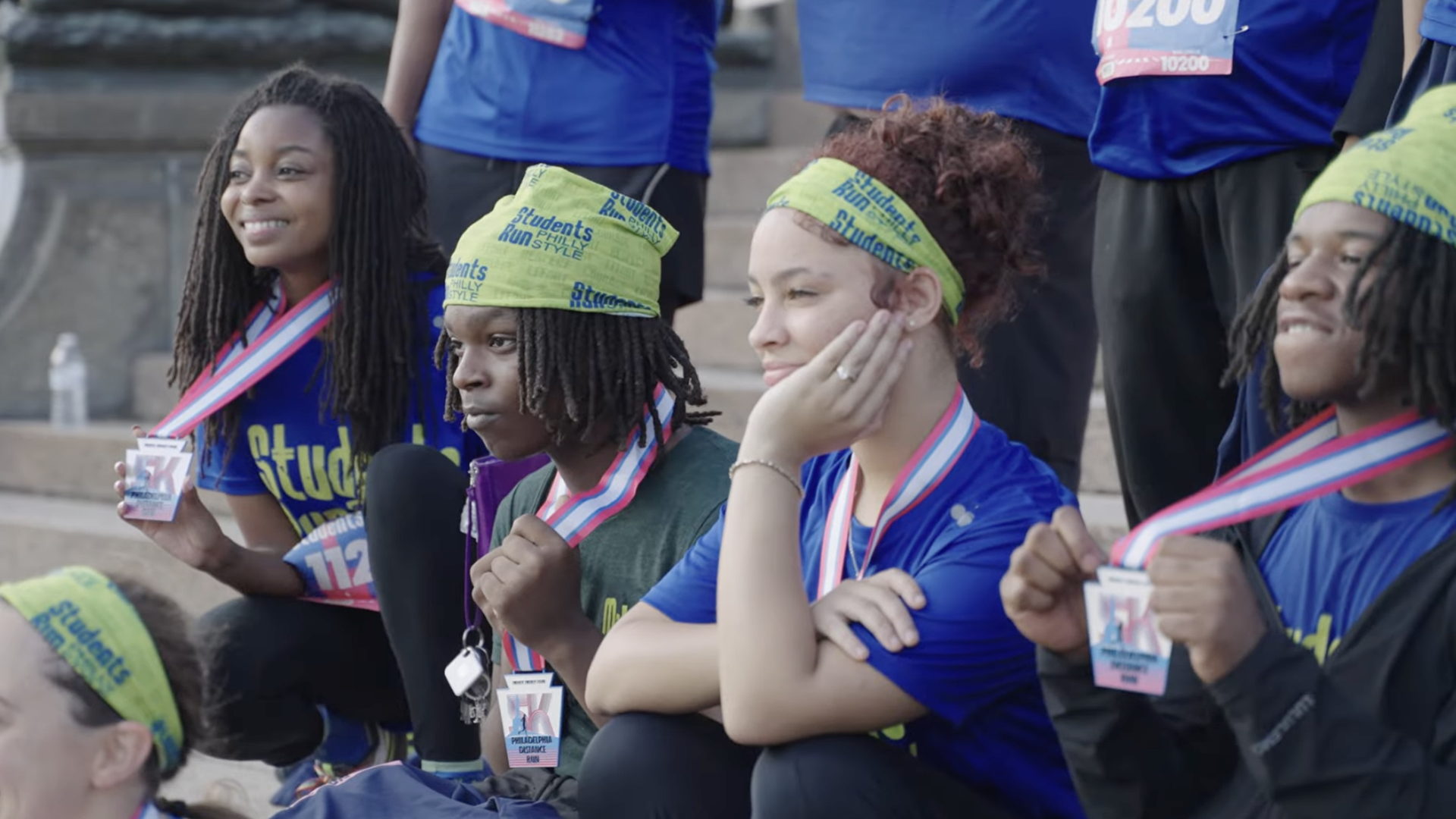
Students from the fall MileUp cohort flash their medals after completing the diversion program. Photo: Courtesy of MileUp
Rack up the miles, keep the smiles. That's a mantra that Philadelphia youth in the MileUp program remind themselves of every Tuesday and Thursday night.
Why it matters: About 15 students are running for their futures.
- The restorative justice program gives Philly youth facing misdemeanor or felony charges an opportunity to have their charges dropped and expunged from their records. Plus, a community to stay active.
How it works: MileUp runs two 12-week cohorts — one in the spring and one in the fall — inviting Philly students facing criminal charges to train for races and a chance for a clean slate.
- The program is run by Students Run Philly Style, in partnership with the Philadelphia District Attorney's Office and Drexel University's Center for Nonviolence and Social Justice.
- Participants train three times a week to compete in "milestone races" — tick marks along their path — with the goal of taking part in the Broad Street Run or Philadelphia Half Marathon. They must also complete self-reflections at the end of the program.
The intrigue: Many participants who complete the program return as peer mentors, getting paid to help the next round of runners push through the mental obstacles.
The latest: The current cohort just completed their first 5K, and the students are gearing up for their big next race.
The big picture: Coaches and advocates say some of the youth who participate in MileUp are grappling with grown-up problems — poverty, gun violence, bullying — and need a healthy outlet to channel their emotions.
- More than 100 participants have completed the MileUp program since it started as a pilot in 2020. It's funded in part by a state criminal justice grant, but that money runs out this year.
- Program leaders say they're actively searching for sponsors and other ways to fill the funding gap. The program needs $300,000 a year to stay afloat.
Zoom in: Aidan, 14, of Port Richmond, says his life was flipped in an instant when police pulled up on him and his friends outside an abandoned church a few months ago.
- Aidan tells Axios they were going to play basketball, but some members of the group instead tried to break into the church.
- Aidan says he tried talking his friends out of it, but they didn't listen.
When police arrived, Aidan and a friend stuck around while the other two took off. He thought he'd explain what happened to the officers, and they'd let him go.
- Instead, Aidan found himself charged with several felonies, including conspiracy and burglary.
- He had never been in trouble with the law, so when prosecutors offered him a way to get the charges dismissed and expunged, he took it.
What they're saying: "If this program wasn't here, my life could've been ruined without me even starting," says Aidan, who aspires to graduate from college and work in finance.
Of note: Because juvenile arrest records aren't public under state law and the students are working to get their records expunged, Axios is only using the teens' first names.
Peer mentor Lamir says running has become a key part of his life since completing the program. He now runs three miles in about 17 minutes, a breakneck pace for newcomers.
- But whatever his peers' pace, Lamir reminds the group with each halting step, "Keep running."
The bottom line: Aidan takes that advice to heart.
- "Every step, I'm closer to the finish line," he says.
What's next: The Broad Street Run is May 4.
Editor's note: This story has been updated to add that the program is also run by Students Run Philly Style.