Rainfalls are getting more dangerous in Philadelphia


Add Axios as your preferred source to
see more of our stories on Google.
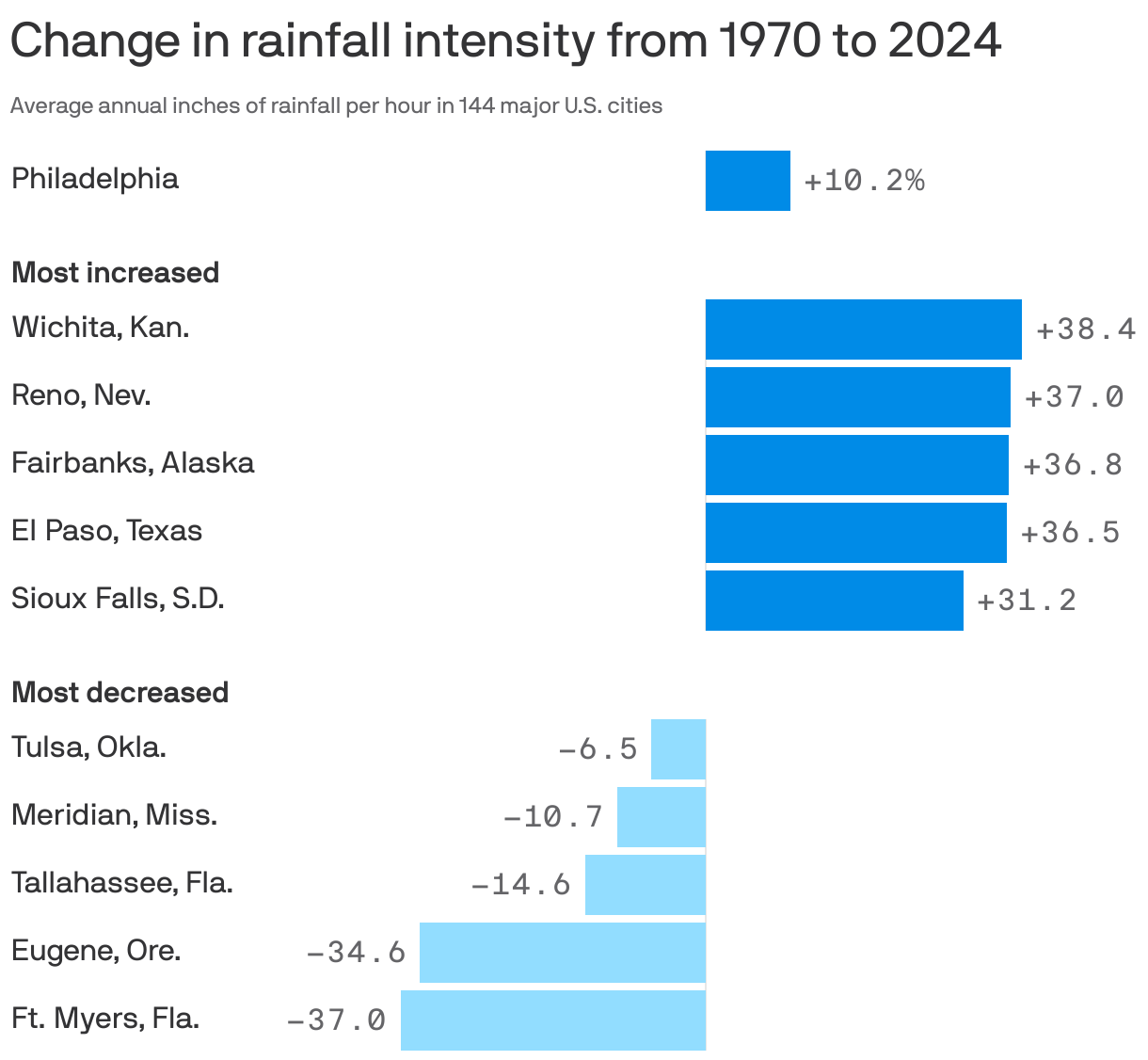
Philadelphia's rainstorms are getting more intense amid human-driven climate change, a new analysis finds.
Why it matters: More intense precipitation events can cause flash-flooding, dangerous driving conditions and other potentially deadly hazards.
By the numbers: Hourly rainfall intensity increased by 10.2% in the city between 1970 and 2024, per a new report from Climate Central, a research and communications group.
The big picture: It's not just a Philly phenomenon.
- Hourly rainfall intensity increased in nearly 90% of the 144 U.S. locations Climate Central analyzed during that timeframe.
How it works: The researchers divided each location's total annual rainfall by its total hours of annual rainfall, using NOAA weather station data.
- That approach quantifies how much rain fell for each hour it was raining in a given year — in other words, rainfall intensity.
Between the lines: Human-driven climate change is resulting in warmer air, which holds more moisture and thus can drive more intense precipitation.
- Hotter temperatures also evaporate more water vapor from lakes, oceans and vegetation.
Zoom out: Wichita, Kansas (+38%), Reno, Nevada (+37%) and Fairbanks, Alaska (+37%) had the biggest gains in hourly rainfall intensity between 1970 and 2024, per the analysis.
- Meanwhile, increases were seen in Atlantic City, New Jersey (11.7%) and Wilmington, Delaware (11.8%).
Threat level: Flooding costs the U.S. economy up to nearly $500 billion annually, by one estimate, and is creating "climate abandonment" zones as people flee for safer areas, Axios' Andrew Freedman reports.
- Researchers have also found that predominantly Black coastal communities may be particularly vulnerable to increased flood risk over the coming decades, Climate Central notes.