Romance scams cost Pennsylvanians millions in 2024


Add Axios as your preferred source to
see more of our stories on Google.
Pennsylvanians were bamboozled out of $39.2 million in romance scams last year, per new FTC data.
Why it matters: That's just a slice of the $285.4 million lost in the Keystone State to fraud in 2024 — up a staggering 21% over the previous year.
The big picture: Pennsylvania's spike in fraud, which follows a national trend, suggests fraudsters are outpacing both law enforcement and efforts to educate consumers on how to protect themselves
By the numbers: 74,926 reports of fraud were reported across Pennsylvania last year, per the FTC.
- In the Philly metro alone — which includes parts of Pennsylvania, Delaware, New Jersey and Maryland — that number jumps to 121,966 reports.
Zoom in: Across the Commonwealth, online shopping scams were the top reported fraud last year (12,556), followed by business imposters (11,901), and government imposters (8,787), per the FTC.
- Romance scams swindled the most out of Pennsylvanians' pockets, even though only 1,679 reports were made. Plus, the state saw a 7% increase in total money lost to romance cons from the previous year.
Threat level: Scammers have impersonated Philly police or state Turnpike toll services in the region over calls and texts, but they aren't always targeting victims by phone.
- The United States Postal Service issued a consumer alert ahead of Valentine's Day last month, reminding lonely hearts to remain vigilant during the holiday.
Stunning stat: Many fraudsters prey on older, less digitally savvy people — but of 20- to 29-year-old Pennsylvanians who reported fraud in 2024, 39% said they lost money, compared to 23% of those ages 70-79.
- Of Pennsylvanians 19 and under who reported fraud last year, 49.5% said they lost money.
Zoom out: Nationally, investment and impostor scams took the biggest financial tolls last year, the FTC says, with consumers losing $5.7 billion and nearly $3 billion to each, respectively.
- The latest trend: Scammers pretending to be government representatives, with reported losses increasing from $171 million in 2023 to $789 million in 2024.
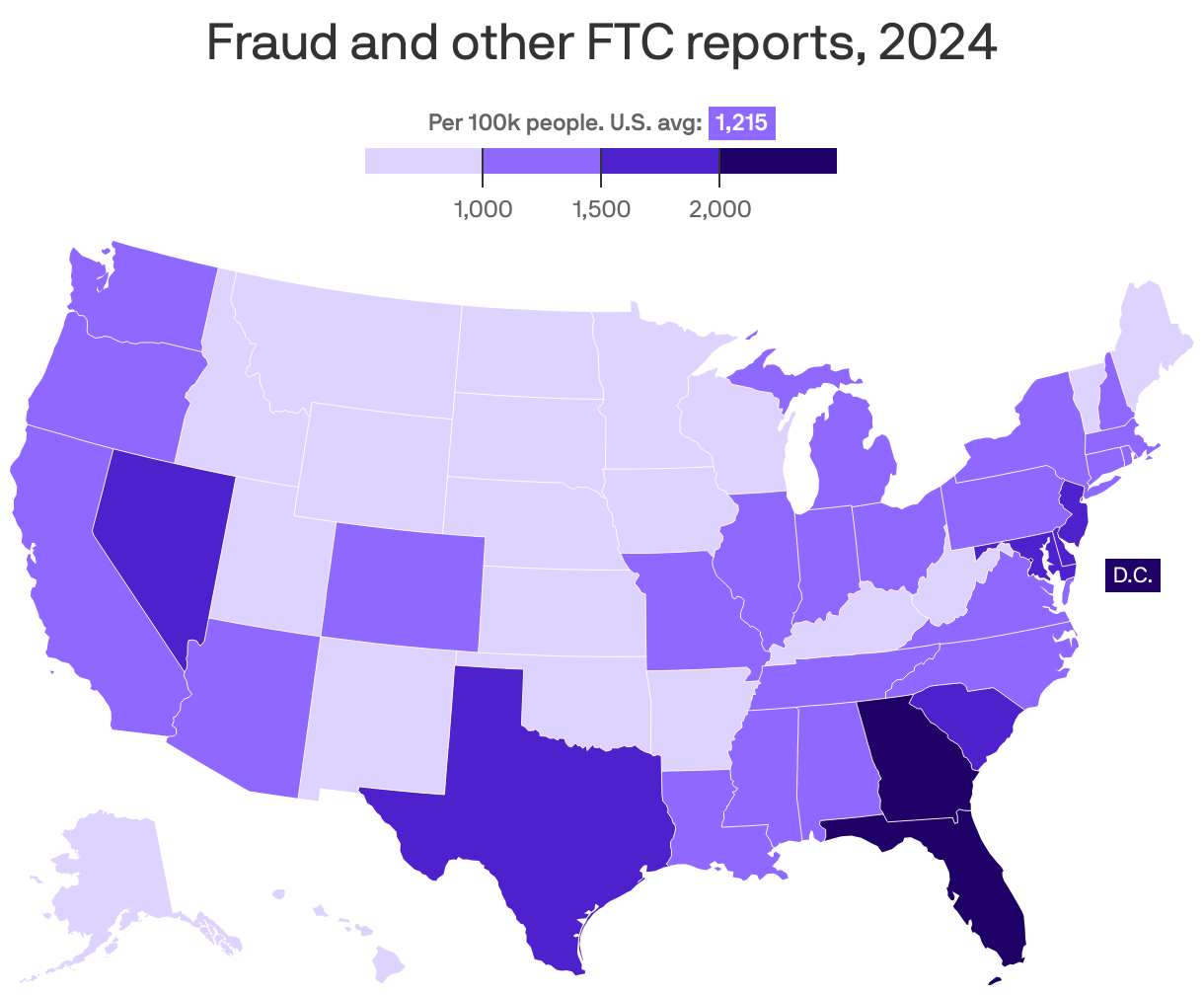
- Residents of Washington, D.C. (2,509); Florida (2,163) and Georgia (2,108) filed the most FTC reports per 100,000 residents last year for fraud and other topics.
Caveat: FTC fraud reports are voluntary, and many instances of fraud and other scams go unreported — meaning all these numbers are probably undercounts.
What's next: Companies like Visa are stepping up efforts to detect and fight back against fraud and scams, Axios' Sam Sabin reports.