Pennsylvania weighing bill to allow for medically assisted death


Add Axios as your preferred source to
see more of our stories on Google.
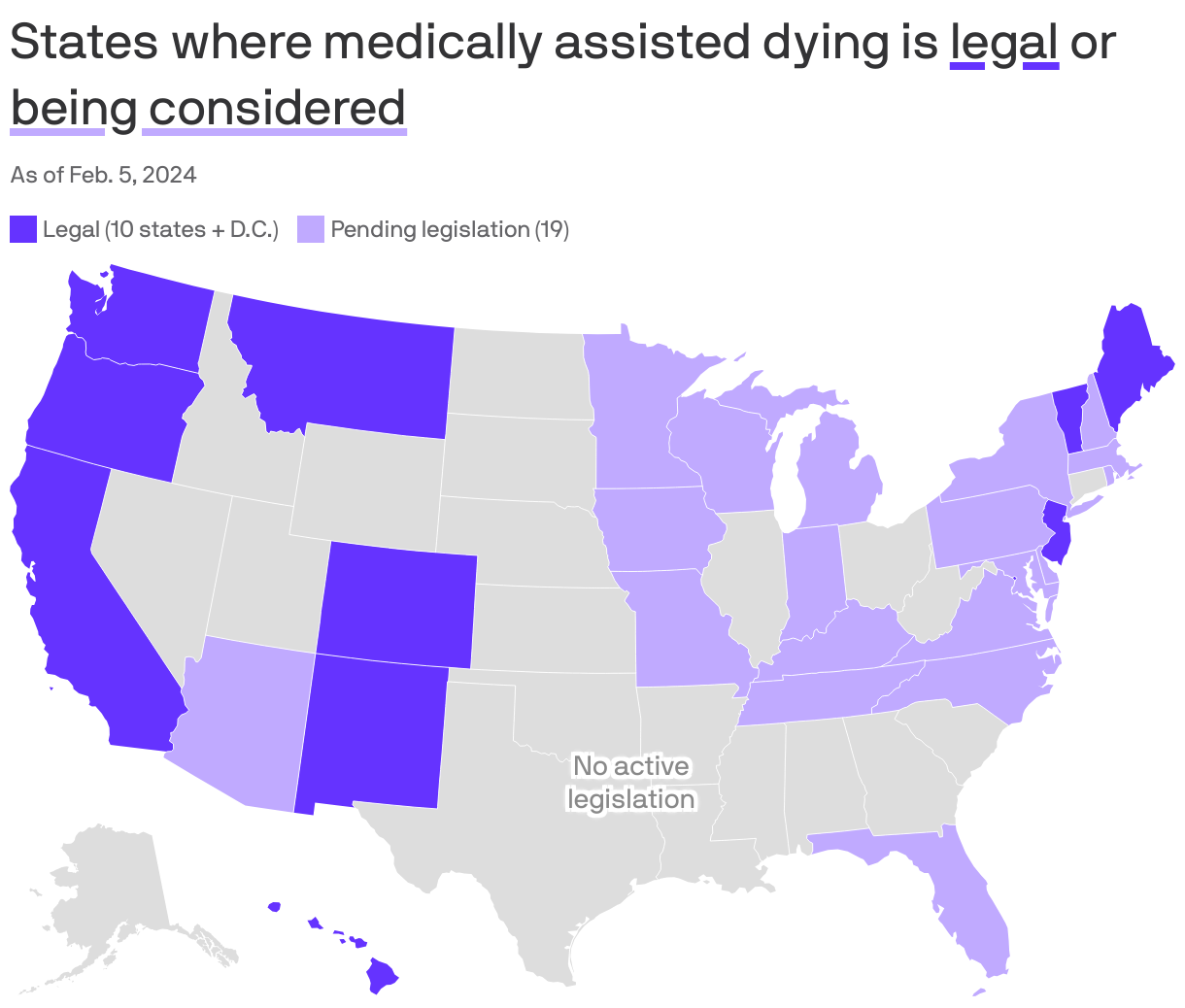
A push to let physicians prescribe life-ending drugs to terminally ill patients is getting major attention in statehouses this year.
- Lawmakers in 19 states, including Pennsylvania, are considering laws to allow the practice.
The big picture: Despite continuing skepticism from the medical establishment, controversial assisted death policies are gaining new momentum because of personal anecdotes, experience from states that were among the first to allow it and changing attitudes partly driven by the pandemic.
Zoom in: Pennsylvania's proposed bill is modeled after a law in Oregon, which became the first state to legalize medically assisted death in 1994.
- While nine states and Washington, D.C., have passed similar laws, the Commonwealth has had other iterations fail to advance in previous sessions.
How it works: The laws typically allow people diagnosed with six months or less to live to request prescriptions from a doctor that they can take at home if they decide to end their lives.
- Doctors can only prescribe the drugs to patients they deem mentally competent.
By the numbers: About 5,330 people in the U.S. have died with medical assistance as of 2020, with 8,451 receiving a prescription for the drugs, according to a study in the Journal of the American Geriatrics Society.
- The vast majority of patients who ended their lives were non-Hispanic white people (95.6%), and about three-quarters had a cancer diagnosis.
What they're saying: People watching their loved ones spend their final days in the hospital during COVID-19 without getting to say goodbye highlighted the importance of the circumstances around a person's death, the laws' advocates say.
The other side: Major medical associations have not endorsed medically assisted death.
Read more: More states are considering bills allowing medically assisted death this year