Alcohol deaths spiking in Pennsylvania

Add Axios as your preferred source to
see more of our stories on Google.
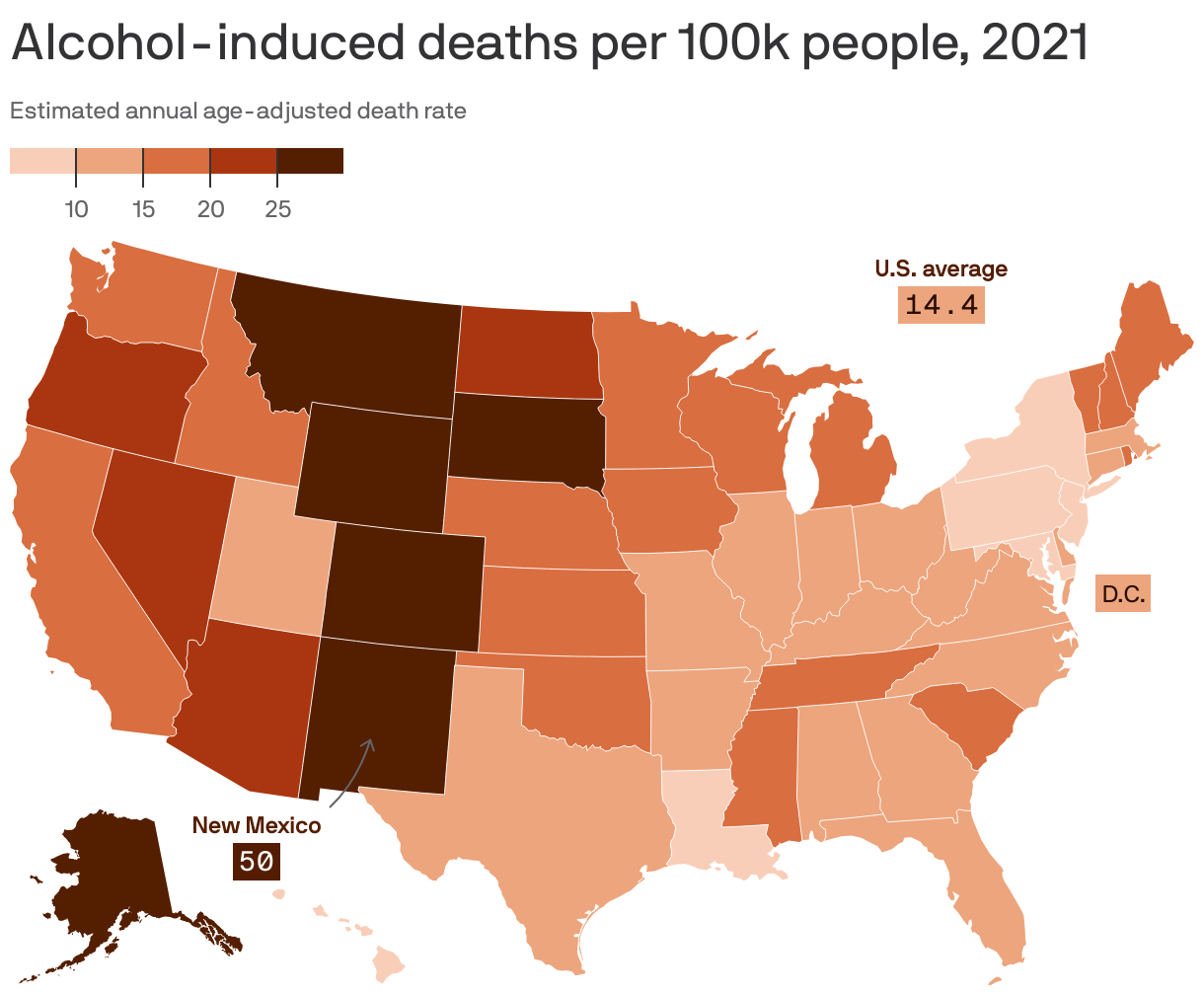
Alcohol-related deaths are spiking in Pennsylvania, mirroring a national trend.
Why it matters: While city and state policymakers have largely focused on combating the opioid crisis in recent years, little attention has been paid to limiting alcohol abuse.
- Alcohol kills more people than drug overdoses in the Keystone State, per recent CDC and state estimates.
Driving the news: Alcohol-related deaths in every state and Washington more than doubled between 2009 and 2021, per the latest figures from KFF.
- In 2021, the Keystone State's rate was 47th in the U.S. at 9.4 deaths per 100,000 people, nearly double 2009's rate of 4.8.
- The national rate was 14.4 in 2021, per KFF.
By the numbers: Pennsylvanians consume an average of about 522 drinks a year, slightly below the national average of 536, per the National Institute on Alcohol Abuse and Alcoholism.
- 17% of Pennsylvania residents binge drink — the same as the national figure, per the CDC.
- There were an average of more than 5,700 annual alcohol-related deaths in the state between 2015-19. Drug overdose deaths ranged from 3,119-5,425 annually during the same period.


Zoom out: New Mexico had the highest alcohol-induced death rate in the U.S. at 50 per 100,000 people, followed by South Dakota at 42.8.
Of note: Deaths caused by alcohol spiked during the first year of the pandemic in the U.S., Axios' Sareen Habeshian writes.
Between the lines: Hiking alcohol taxes and limiting when and where people can buy alcohol have been shown to prevent excessive alcohol abuse, per a federal task force.
The intrigue: Pennsylvania has some of the most restrictive liquor laws in the nation.
- But regulations began loosening in 2016, which allowed for more locations, like grocery stores, to sell beer and wine.
What they're saying: Henry Kranzler, psychologist and director of Penn's Center for Studies of Addiction, tells Axios the dangers of alcohol use often go unrecognized compared to opioids.
- "Alcohol has a peculiar place in our culture," he said. "It's part of a lot of activities."