Comcast's in-office mandate could boost Center City

Add Axios as your preferred source to
see more of our stories on Google.
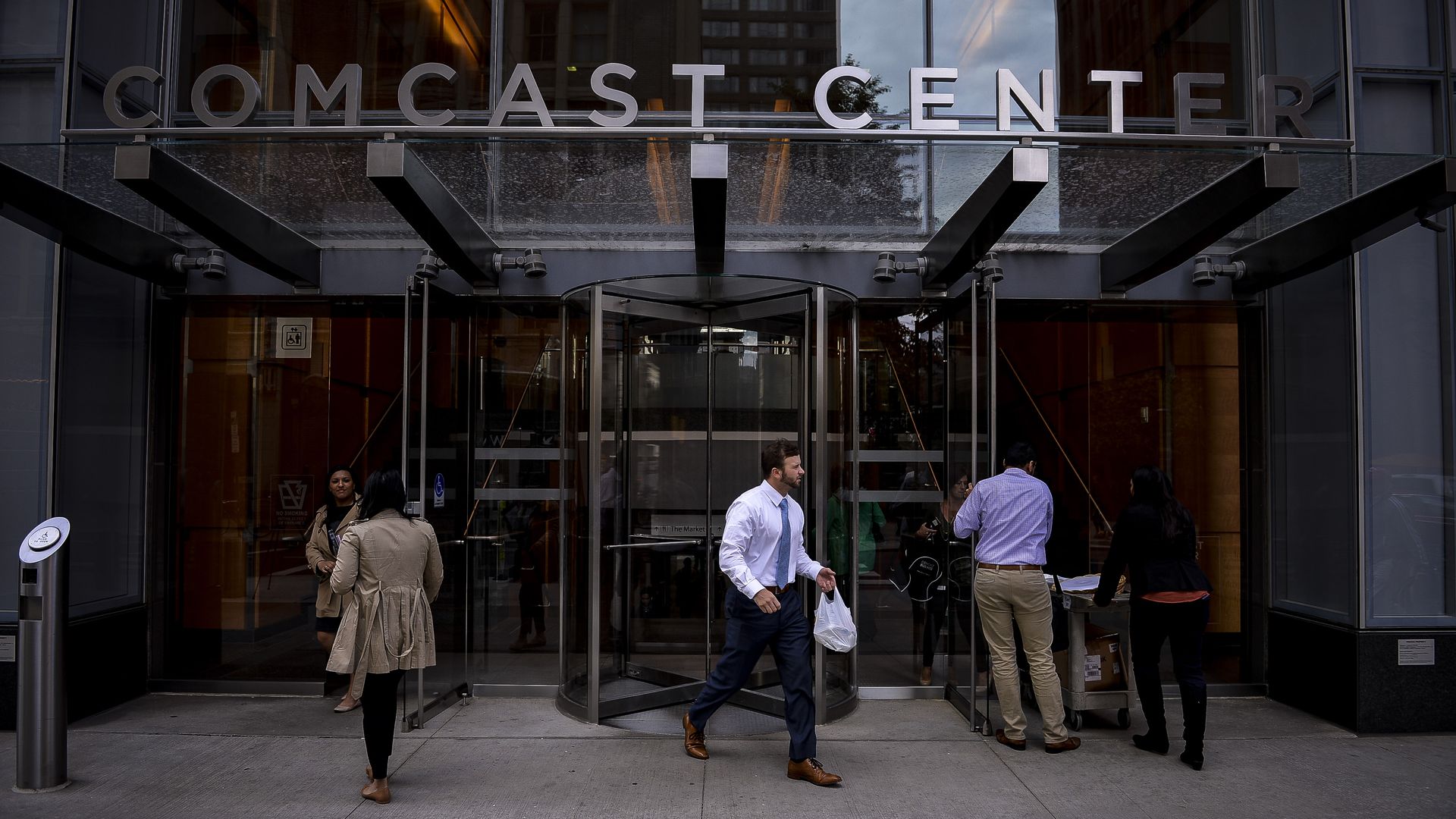
Photo: Charles Mostoller/Bloomberg via Getty
Comcast's new return-to-office mandate will bring thousands of its employees back to Center City for at least four days a week, starting today.
Why it matters: The technology giant is Philly's largest private downtown employer, and the policy could give a jolt to the area's pandemic recovery.
Driving the news: The mandate will affect approximately 8,000 employees who work in the pair of office towers that serve as Comcast's headquarters.
- The policy, which Comcast CEO Dave Watson revealed in a June memo, cuts employees' ability to work remotely from two days to one, which had been in place over the past year.
- The mandate is for all U.S.-based Comcast employees.
The big picture: The push to get employees back into the office has grown more aggressive this year, reports Axios' Emily Peck.
- Yes, but: Experts say strict return-to-work mandates could backfire and lead to an exodus of employees, writes Axios' Christine Clarridge.
Between the lines: The move by major Center City employers, including Comcast, last year to bring back workers partially to the office helped fuel an increase in downtown foot traffic.
- More workers traveling to Center City could help bolster businesses and get more people riding SEPTA.
By the numbers: Only 57% of office workers have returned to their desks compared to pre-pandemic levels within Philly's main office building area as of August, Center City District president Paul Levy tells Axios.
- Daily foot traffic in Center City was at 75% of 2019 levels in June.
Meanwhile, SEPTA's Regional Rail and metro ridership was barely more than half its pre-pandemic levels.
What they're saying: Comcast has no plans to move to a five-day-a-week in-office policy, spokesperson John Demming tells Axios.
Levy says Comcast's new policy could spur other employers to follow suit, which could in turn increase downtown employment, especially at restaurants.
- "It has hugely positive implications both visually … and for so many other industries that depend on the presence of office workers," he said. "So it is a big deal."