One year into Pennsylvania's 988 suicide hotline

Add Axios as your preferred source to
see more of our stories on Google.
Illustration: Eniola Odetunde/Axios
About 21% of the 14,000-plus Pennsylvania calls made to the 988 crisis hotline between April and May were redirected to other states, per an analysis from health research outlet KFF.
Why it matters: The redirected calls are happening at a time when most Americans still aren't aware the 988 national suicide prevention and mental health hotline exists, Axios' Sabrina Moreno reports.
Between the lines: Experts say it's harder for out-of-state specialists to connect people in crisis with local services.
Flashback: Last month marked one year since the National Suicide Prevention Lifeline was replaced with an easier-to-remember number, 988.
- Since then, the hotline has been contacted roughly 5 million times nationwide.
Yes, but: More than 80% of Americans still aren't familiar with the new hotline, according to a recent National Alliance on Mental Illness survey.
The big picture: Plans to use some of the nearly $1 billion in federal funding for a nationwide public service campaign haven't materialized, partly due to early concerns that marketing 988 could push the lifeline past capacity.
- Ahead of its launch, fewer than half of public health officials tasked with deploying 988 said they were confident they had the necessary staff to field the expected surge in calls.
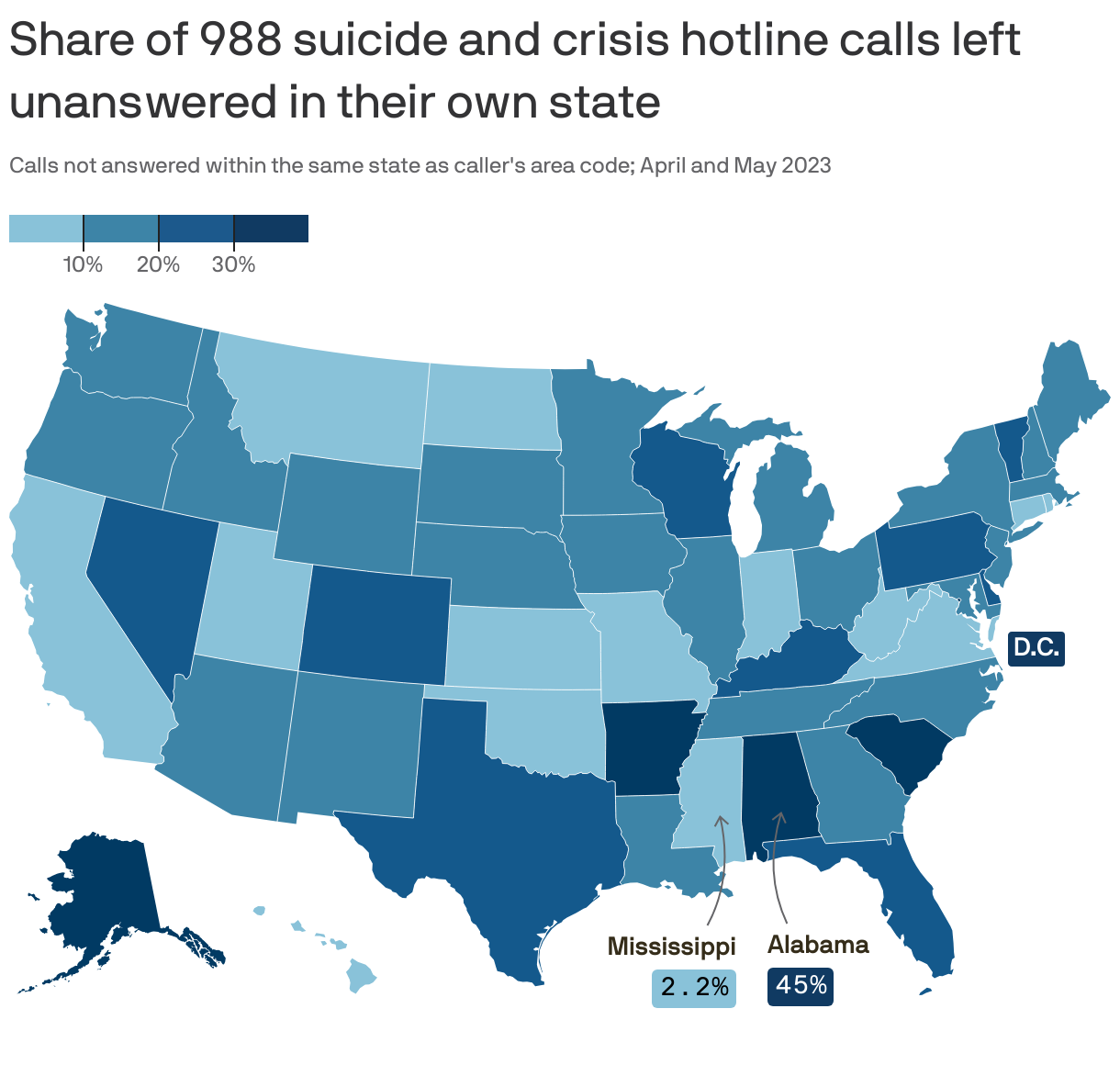
How it works: Pennsylvania has 13 call centers. Calls are routed to a local center based on the caller's area code, per state health officials.
- If they're not answered within a minute, calls are transferred to one of the state's three regional 988 call centers. As a last resort, callers are directed to a national backup center if no one is available regionally.
Zoom in: An average of nearly 200 people call into Philly's crisis lines each day with each call typically answered within 13 seconds, per city data.
- The city has received more than 113,000 calls since January 2022.
By the numbers: Only six states have enacted legislation to create monthly phone line fees to support the system, similar to how communities fund 911.
- Six more – including Pennsylvania – have bills pending, per NAMI's tracker, while others have made general fund appropriations.
What they're saying: Pennsylvania saw a 40% increase in calls between June 2022-23, per the Department of Health and Humans Services. Officials say they're striving to improve response times.
- "We know that the longer an individual is on hold, the more likely it is for them to hang up," spokesperson Brandon Cwalina tells Axios.