Reimagining the Roundhouse

Add Axios as your preferred source to
see more of our stories on Google.
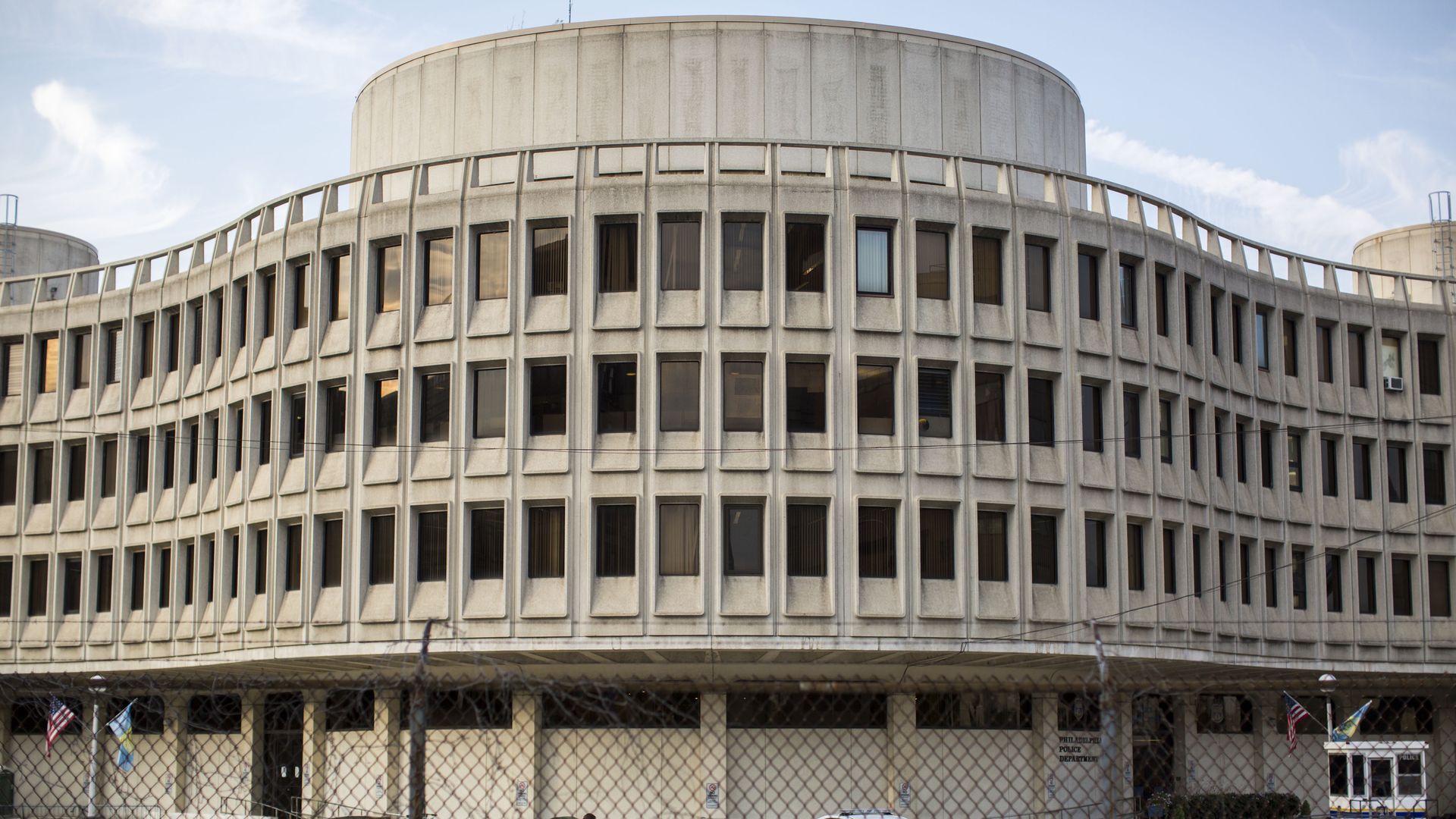
The former headquarters of the Philadelphia Police Department, known as the Roundhouse. Photo: Jessica Kourkounis for The Washington Post via Getty
The Roundhouse, viewed by some residents as symbolic of police brutality, could be transformed into a healing community hub.
Driving the news: The city released a final report Monday outlining the results of a months-long community engagement effort regarding the future of Philadelphia Police's old headquarters.
- Many participants acknowledged the building’s dark past but still felt it was worth preserving. They want to see it transformed into an inviting space that benefits residents.
- Some wanted the building demolished, but city officials said that’s unlikely as the hope is a developer buys and transforms it into affordable housing, a recreation or events center, or a museum that recognizes its complicated history of police abuse.
Why it matters: The circularly shaped concrete structure was an architectural marvel meant to usher in a new era in city policing that was more accountable and transparent.
Flashback: The building was designed by the architecture firm Geddes, Brecher, Qualls & Cunningham and constructed during a period of urban renewal, drawing national and international praise when it opened.
- Police later erected a concrete fence around the perimeter at 7th and Race streets and closed one of the entrances, making it less accessible to the public.
- Many people who were locked up or experienced police abuse there over the years came to view the building resentfully as evoking a pair of handcuffs, the report outlined.
- In 2022, after nearly six decades, police relocated headquarters to the Public Services Building on North Broad Street.
By the numbers: The four-story Roundhouse encompasses 125,000 square feet on nearly three acres with a 56,000-square-foot rear parking lot.
How it worked: Consulting firms Connect the Dots and Amber Art and Design conducted more than a dozen events and gathered online responses from residents from June to December before issuing a report with recommendations about how best to use the building.
- The team said the city should do something that acknowledges the site’s troubled history and prioritize developers that will “transform the site into a more welcoming and accessible place that is better connected to the surrounding community.”
What they’re saying: The engagement process was about “opening so many doors that people could always find a way in,” Sylvia Garcia-Garcia of Connect the Dots told Axios.
- Philadelphians want to see the concrete perimeter torn down and more greenery added to the outside of a building as one participant said it was “designed to engage the community, not to barricade itself from its neighbors,” per the report.
What we’re watching: The Preservation Alliance for Greater Philadelphia and Docomomo US/Greater Philadelphia want the Roundhouse designated as a historical site.
- The organizations said in their nomination packet it’s important to preserve the building because it was “achieved through a level of collaboration that was both totally unique at the time in the practice of architecture and foretold the future of digital collaborative design,” according to a copy obtained by Axios.
What’s next: The Philadelphia Historical Commission will hold public hearings and decide in the coming months whether the building meets criteria for the designation.
- That could complicate the sale of the site, as any interested developer would have to abide by laws dictating building modifications, city planner Ian Litwin told Axios.