Philly's soaring food costs

Add Axios as your preferred source to
see more of our stories on Google.
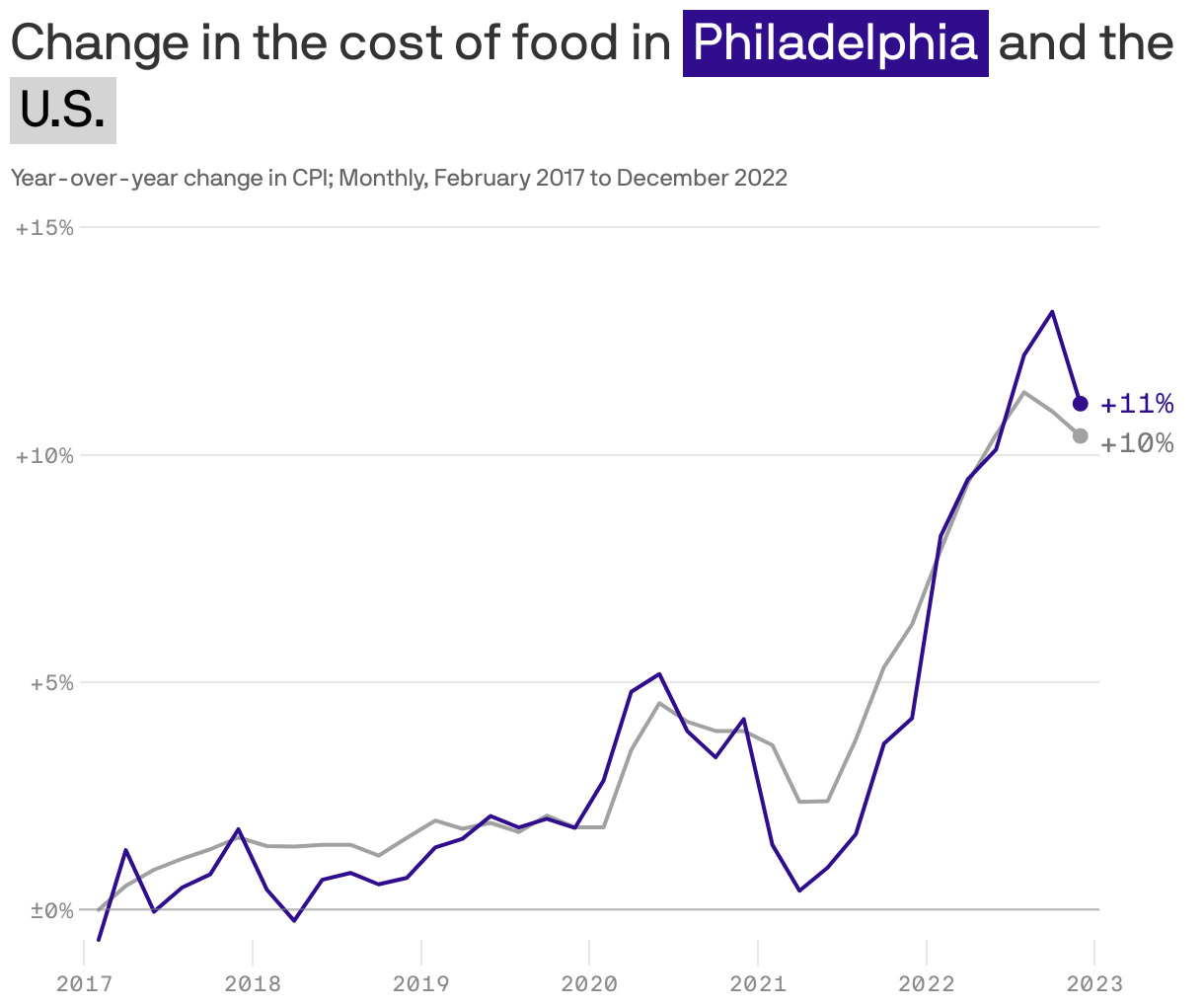
Food prices were up a whopping 11.1% across the Philly region in December compared to the previous year, per data released by the Bureau of Labor Statistics.
- That’s above the national average of 10.4%.
Why it matters: Across the region, one of every 10 households lack access to meals on a consistent basis, according to 2020 data.
- Philly is the poorest big city in the U.S. with a poverty rate of 22.8%, nearly double the national average.
Between the lines: As food prices rise, consumers are left to make difficult choices about what to buy and what to do without.
- Meanwhile, grocery stores and restaurants must decide whether to pass higher food costs on to customers or to absorb them.
By the numbers: The cost of food eaten at home increased by 14.2% in December, while food eaten away from home was up 6.5%, according to the Bureau of Labor Statistics.
What they’re saying: Donta Rose, owner of the discount supermarket Grocery Outlet in Sharswood, tells Axios his sales are up because he has maintained low prices. He says he's attracting customers from traditional markets that are raising costs.
- “Food prices being up helps discount stores — it pushes people to me,” he said.
While Rose says traditional supermarkets are seeing customers cut back on sugary snacks and ready-made and frozen meals, his sales for those items are “skyrocketing.”
What we’re watching: Energy and food prices dipped slightly in December in the Philly region, after reaching record highs in June, according to the Bureau of Labor Statistics.
Meanwhile: Wholesale egg prices are beginning to drop and retail prices usually follow, Axios' Kelly Tyko reports.
- Yes, but: Many issues affecting food prices remain in place, such as economic and political factors, making it difficult to predict grocery costs this year.