Arkansas bucks U.S. fertility decline


Add Axios as your preferred source to
see more of our stories on Google.
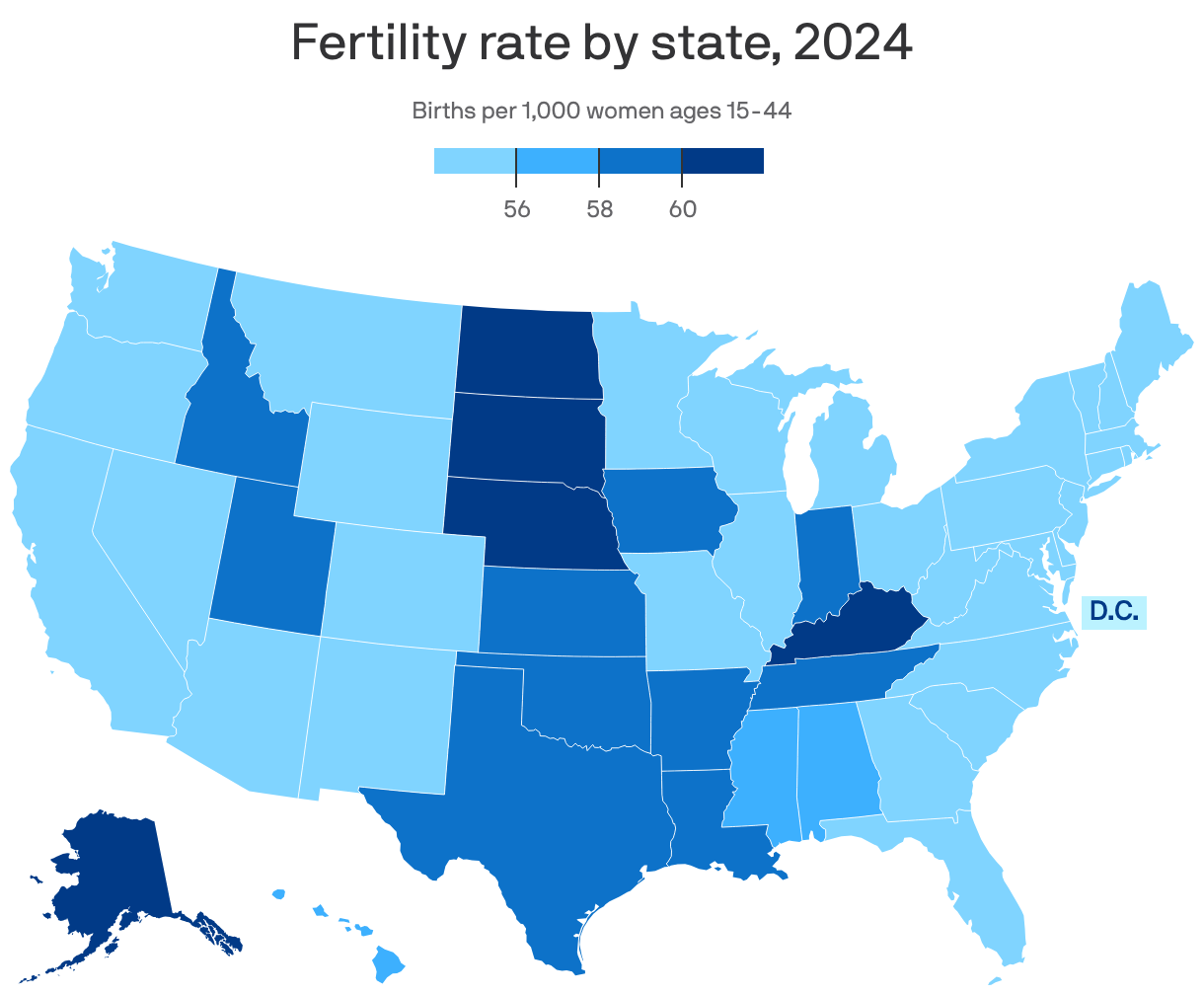
Arkansas' fertility rate is above the national average and in line with the central Plains corridor, resisting the country's long-running birth-rate decline.
Why it matters: Birth patterns shape school enrollment, housing demand, child care needs, future workforce growth and voting districts.
Zoom in: Despite a decades-long decline in U.S. fertility rates, a corridor of central Plains states — including North Dakota, South Dakota, Nebraska, Kansas, Oklahoma and Texas, along with Arkansas — continues to post higher rates than the rest of the country on average.
The big picture: The national fertility decline isn't uniform, with a mix of demographic, economic and cultural factors at play.
What they're saying: "Generally in demography we find more births where moms can (more) easily find higher-waged jobs," family demographer Jennifer Glass tells Axios. "The gender wage gap is lower in Dallas than Detroit or Pittsburgh, for example."
Researchers point to several other factors:
- Demographics: U.S. Census data shows Texas and North Dakota rank behind only Utah among the nation's youngest states, meaning more women are in their 20s and early 30s, when birth rates are highest.
- Child care: Glass notes these costs are comparably lower here, while they have soared in coastal states.
- Housing: Family-size homes remain far more affordable across much of the Plains than on the coasts. The median home price was nearly $800,000 in California versus about $280,000 in Arkansas in May, according to Redfin data.
- Culture: Americans are partnering, marrying and starting families later than previous generations, especially in larger metropolitan areas. But rural regions and more religious communities tend to see earlier marriage and childbearing, extending the years during which families might have additional children.
Stunning stat: CDC data shows the average American woman is expected to have about 1.6 children over her lifetime. That is down from more than 7 children per woman in 1800.