Arkansas agri community monitors screwworm return

Add Axios as your preferred source to
see more of our stories on Google.
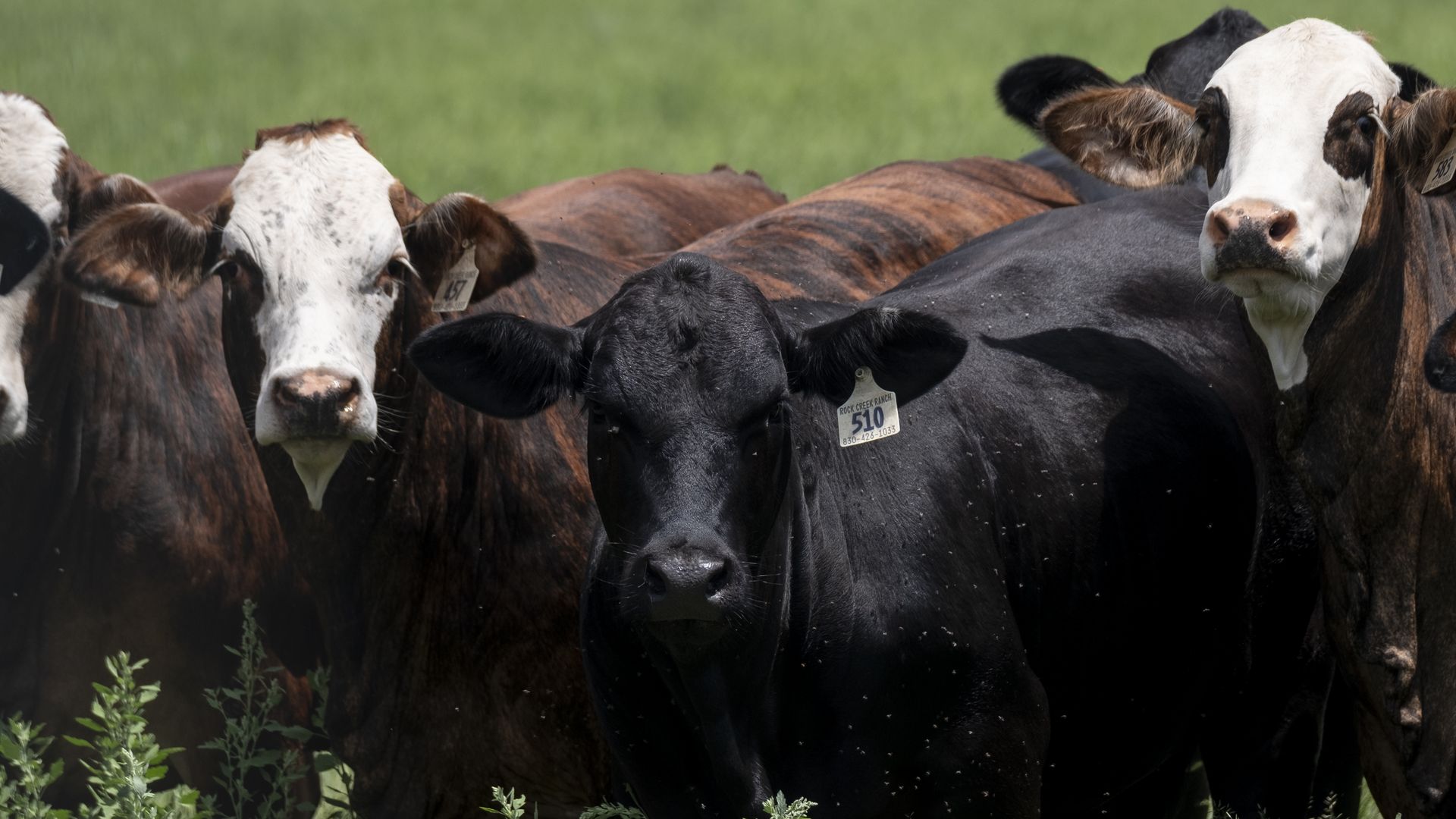
Cattle roam a field in La Pryor, Texas. The first case of the New World screwworm parasite since its eradication from the country in 1966 was confirmed June 3. Photo: Joel Angel Juarez/Getty Images
A flesh-eating pest eradicated from the U.S. decades ago is back, with several confirmed cases in Texas and New Mexico and federal officials racing to keep it from spreading in livestock.
Why it matters: New World screwworm (NWS) threatens cattle, pets and wildlife by laying eggs in wounds, where larvae feed on living tissue.
- USDA says it is not a food-safety issue, but a wider outbreak could disrupt cattle movement, add costs for producers and put more upward pressure on beef prices.
The latest: The first U.S. case was confirmed June 3 in a 3-week-old calf in Zavala County, Texas. USDA confirmed new cases on Monday in a goat in Gillespie County, Texas — about 360 miles from Texarkana, as the crow flies — bringing the U.S. total to six, including a dog in New Mexico.
State of play: Federal and state teams have expanded surveillance, testing and trapping in affected areas.
- They are leaning on the same method that eradicated screwworm in the U.S. in the 1960s: releasing sterile male flies so wild females produce no offspring. USDA says it is working toward roughly 500 million sterile flies per week in response to the detections.
Zoom in: Arkansas' beef industry is small compared to Texas' and Oklahoma's, but there were about 1.5 million head in the state in 2024, and cash receipts were $687 million in 2022.
What they're saying: Natural State Beef cattle rancher Mike Fountain of Harrison told Axios he's watching the situation but is not immediately alarmed.
- "My initial thinking is it's more of a burden on the cattle producer than it will be on the consumer or the restaurant chains."
- He compared it to other cattle problems producers already manage, such as pink eye, foot rot and other parasites.
- Fountain also stressed the food supply is safe, echoing USDA's message that screwworm does not compromise meat.
"I think the quarantine is the major thing that would affect" the supply chain, Addie Stamps, director of commodity activities and economics for the Arkansas Farm Bureau, told Axios.
- "Anytime there is a case, [USDA enforces] a quarantine zone around that animal, which restricts the movement in and out, and so … the less movement of cattle selling and buying it … creates a supply chain issue."
Tyson Foods of Springdale and the other largest beef packers in the U.S. — Cargill, JBS Foods and National Beef Packing Co. — did not immediately respond to Axios' inquiries.
Communication between USDA and the Arkansas Department of Agriculture "has increased significantly regarding NWS response activities," spokesperson Ayden Duncan told Axios in an email.
- "Our primary concern at this time is the movement of animals that could be carrying NWS larvae. … Arkansas and many other states are taking steps to ensure animals entering from affected areas are properly inspected."
What to watch: The University of Arkansas Extension is urging ranchers to monitor animals closely and USDA says animal owners should immediately report draining wounds, maggots, egg masses, discomfort or lesions around body openings.
The bottom line: This likely isn't an emergency right now for Arkansas ranchers, but it's another animal health threat to monitor and another potential cost to absorb.