Bipartisan panel highlights maternal health needs

Add Axios as your preferred source to
see more of our stories on Google.
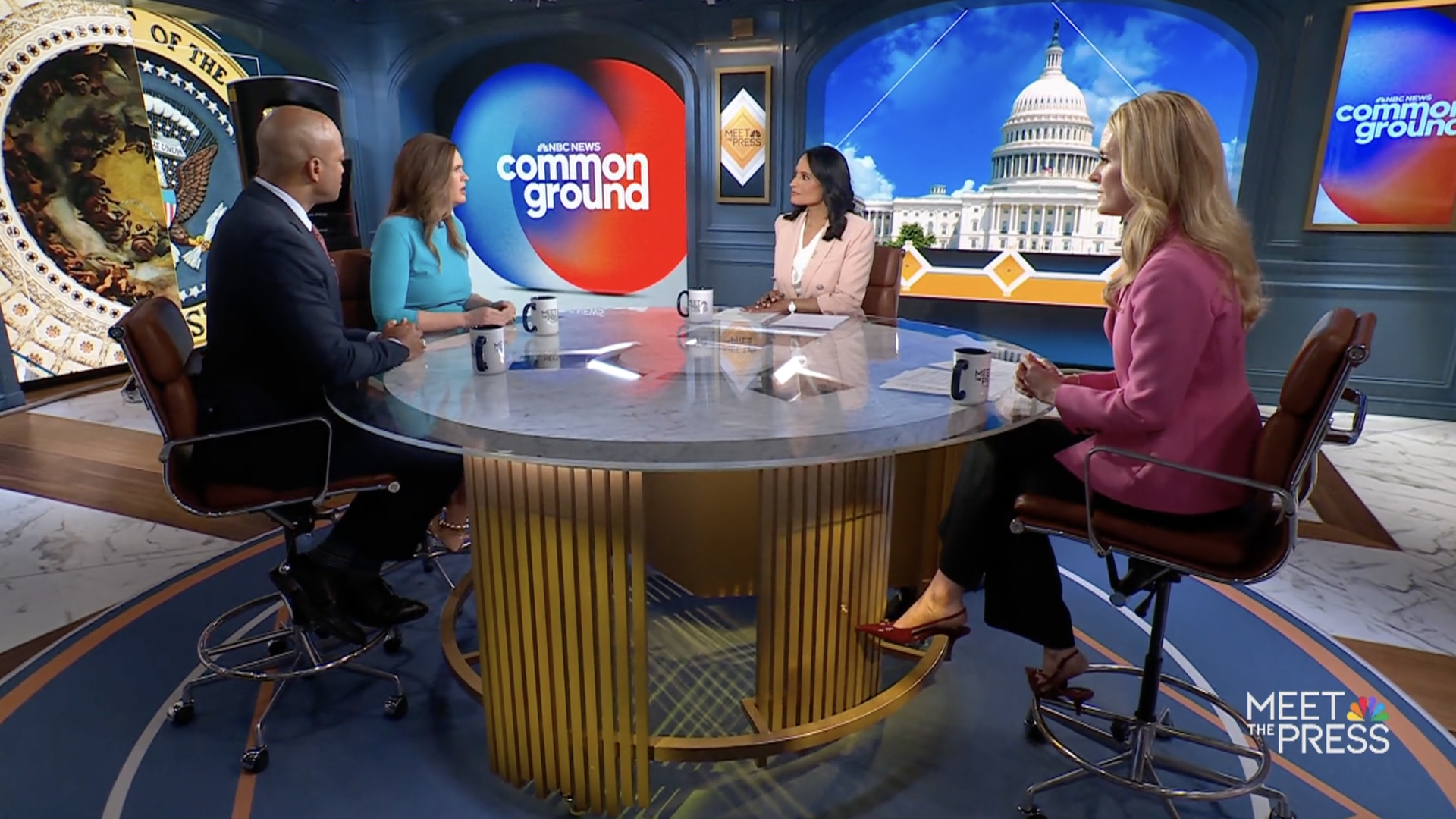
From left: Maryland Gov. Wes Moore (D), Arkansas Gov. Sarah Huckabee Sanders (R), host Kristen Welker and Ingeborg Investments CEO Olivia Walton. Screenshot: "Meet the Press"
Republican Gov. Sarah Huckabee Sanders joined Maryland's Democratic governor and the Crystal Bridges museum's chair on NBC's "Meet the Press" on Mother's Day to talk about maternal health.
The big picture: The maternal health issue is a rare area of bipartisan agreement. Answers include earlier maternal health care, better postpartum support, and more locally rooted systems to help people navigate pregnancy and birth, the panelists said.
State of play: The reported U.S. maternal death rate doubled over the 20 years from 1999 to 2019, and more than 80% of those deaths were preventable, said Olivia Walton, Ingeborg Investments CEO and chair of the Crystal Bridges Museum of American Art.
- The Healthy Moms, Healthy Babies America initiative, launched recently by Bentonville's Heartland Forward, aims to cut the maternal mortality rate in half within five years.
- The fine print: The nonprofit's campaign is separate from Arkansas' Healthy Moms, Healthy Babies Act.
The discussion cut across party lines, with all three making complementary points:
Sanders argued that Arkansas' maternal health failures have been driven in part by women not getting into care early enough and by a system that sends them from one silo to another.
- The state is trying to solve that with the Healthy Moms, Healthy Babies Act, an ad campaign aimed at getting women into prenatal and postnatal care sooner, and the 10:33 Initiative to connect people with local faith and community partners.
- If women can be reached earlier and guided through the process more clearly, Arkansas can improve its outcomes, she said.
Gov. Wes Moore of Maryland said the problem is not only clinical but structural. Disparities are "generational, concentrated and oftentimes intentional," and policy works better when the people most affected help design it.
- That was the logic behind Maryland's Bridge Project, which will provide cash assistance to 150 prenatal and postnatal mothers.
- Support for moms is inseparable from a serious strategy to fight child poverty, he said.
Walton framed maternal health as not just a moral or medical issue, but as an economic one.
- Poor maternal health outcomes cost the U.S. about $165 billion a year, she said. The biggest gaps are in prenatal access, postpartum care and payment models that do not reward the outcomes the system says it wants.
- America still largely stops caring for moms after delivery, even though two-thirds of maternal deaths happen after birth, she said.
The bottom line: All three panelists tied the issue back to their own parenthood.
- Sanders said being a mom makes her a better governor and noted how rewarding it is, but also how hard it can be some days.
- Walton said motherhood was hard even with resources, which sharpened her view of how much harder it can be for families without them.
- Moore said being a dad reinforced that maternal-health policy works best when mothers and affected communities help design it.