Medicaid, SNAP cuts could threaten Arkansas jobs


Add Axios as your preferred source to
see more of our stories on Google.
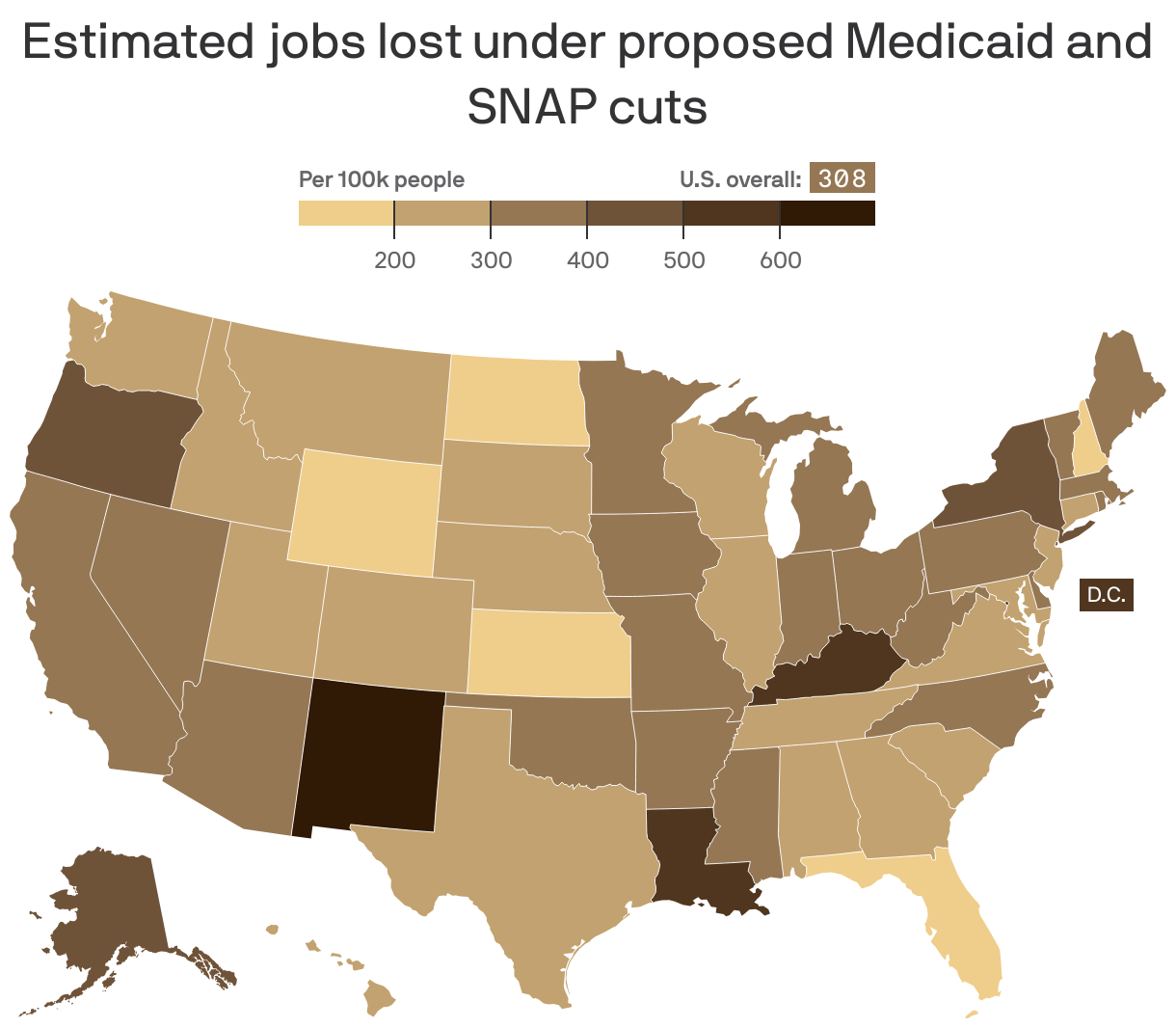
States could lose thousands of jobs — including 10,900 jobs in Arkansas — and billions of dollars in economic output under potential Medicaid and food aid cuts, a new estimate finds.
Why it matters: Millions of Americans rely on such federal financial assistance — money spent at doctors' offices, grocery stores and elsewhere, supporting jobs and economic activity.
Driving the news: The U.S. House of Representatives' latest budget resolution calls for more than $1 trillion in combined cuts to programs overseen by the House commerce and agriculture committees, which include Medicaid and the Supplemental Nutrition Assistance Program (SNAP).
- The details of such cuts would need to be sorted out in Congress, and the Senate has not yet worked out its own budget blueprint.
What they did: In the meantime, a new analysis from the Commonwealth Fund and George Washington University's Milken Institute School of Public Health sought to gauge the economic consequences of major Medicaid and SNAP cuts.
- The researchers' estimates assume $880 billion and $230 billion in broad Medicaid and SNAP cuts, respectively, over 10 years, spread evenly over the decade and proportionately among states.
What they found: Such cuts could cost more than 1 million jobs nationally in 2026 alone, cause a $113 billion drop in combined state GDP and result in nearly $9 billion in lost state and local tax revenue.
- The hit to state GDPs would exceed the estimated $95 billion in federal savings achieved through such cuts, the report finds.
What's next: Although Republicans, who control the White House and both houses of Congress, are eager to reduce federal spending, cutting widely-used entitlement programs like Medicaid has long been considered political suicide.
- The latest polling shows broad support for leaving Medicaid untouched or increasing spending, even among Republican voters — numbers that may give some lawmakers pause before approving big cuts.