Flu season hits hard


Add Axios as your preferred source to
see more of our stories on Google.
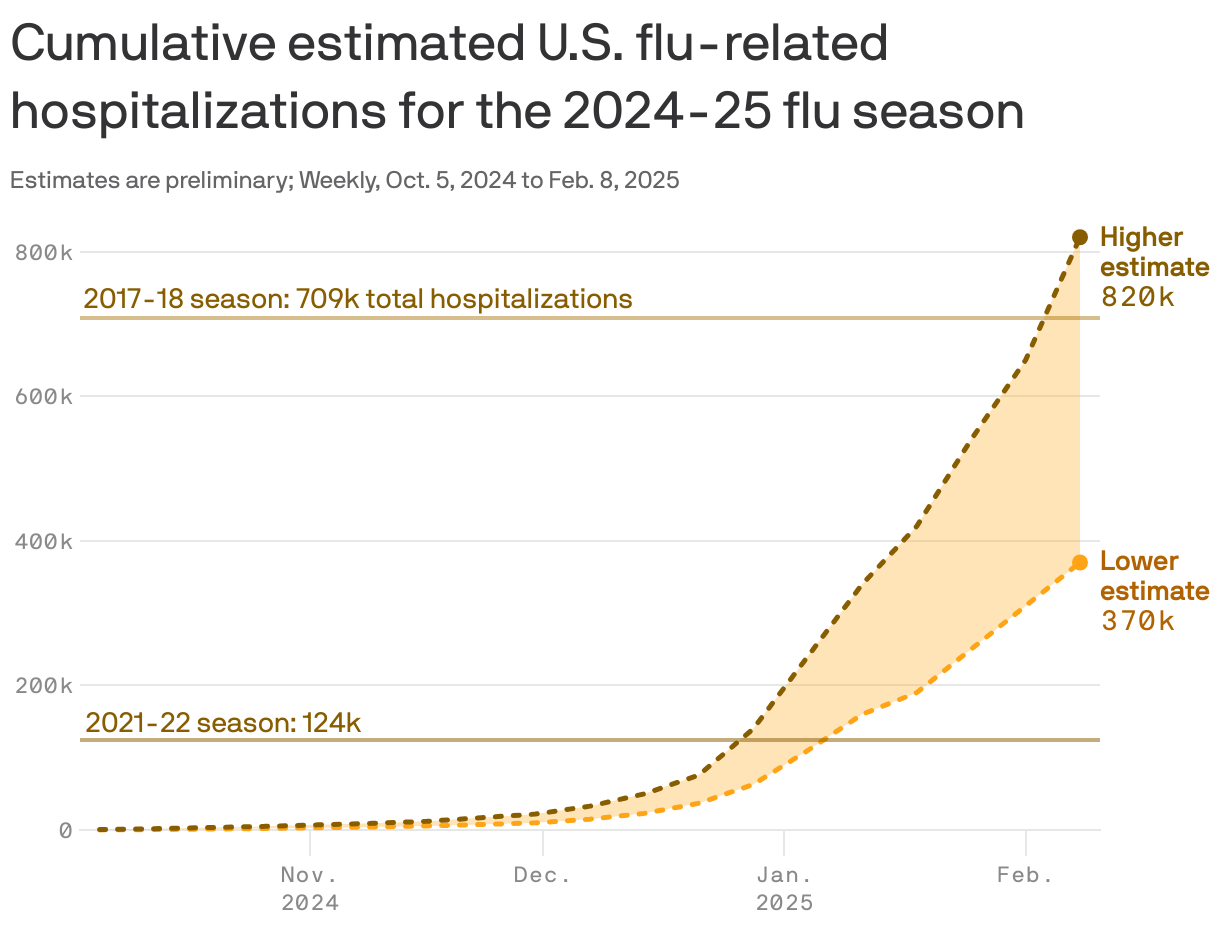
The worst flu season in 15 years has left hundreds of thousands of Americans hospitalized while straining physicians' offices and emergency departments.
Why it matters: The virus is causing more severe complications and hitting young children especially hard.
Zoom in: The Arkansas Department of Health reported 73 flu-related deaths in the state this season as of Feb. 15, including one person under 18 years old and another between the ages of 25-44.
- So far, 2,133 people in Arkansas have been hospitalized with the flu, including 94 children ages 4 and younger and 78 people ages 5-17.
By the numbers: This flu season is classified as a "high-severity" season, with estimates of at least 29 million cases, the most since the 2009-2010 flu season, according to the latest Centers for Disease Control and Prevention data.
- There have been at least 370,000 hospitalizations, and 16,000 deaths from flu as of Feb. 8, per the CDC. That's on a pace to surpass the previous high recorded during the 2017-2018 flu season.
Of particular concern is the severity being seen in kids this year.
- Pediatric flu deaths hit a record 200 last year, and this season is shaping up to be worse, said Matthew Cook, president and CEO of Children's Hospital Association.
What we're watching: Public health officials say they are increasingly flying blind because they can't interact with or get flu data from global sharing platforms FluNet and FluID since the Trump administration announced the U.S. exit from the World Health Organization.
This especially rough year for season flu coincides with the spread of avian flu throughout U.S. poultry and dairy farms, as well as wildlife.
- The fear is if the two have enough chances to mix, it may eventually create an avian flu strain that could spread between humans and turn into a pandemic.
The bottom line: There's a lot of respiratory virus still going around this season. If you haven't gotten the vaccine yet, it'd still be prudent to get one, experts urge.