Arkansas' food aid gap, mapped


Add Axios as your preferred source to
see more of our stories on Google.
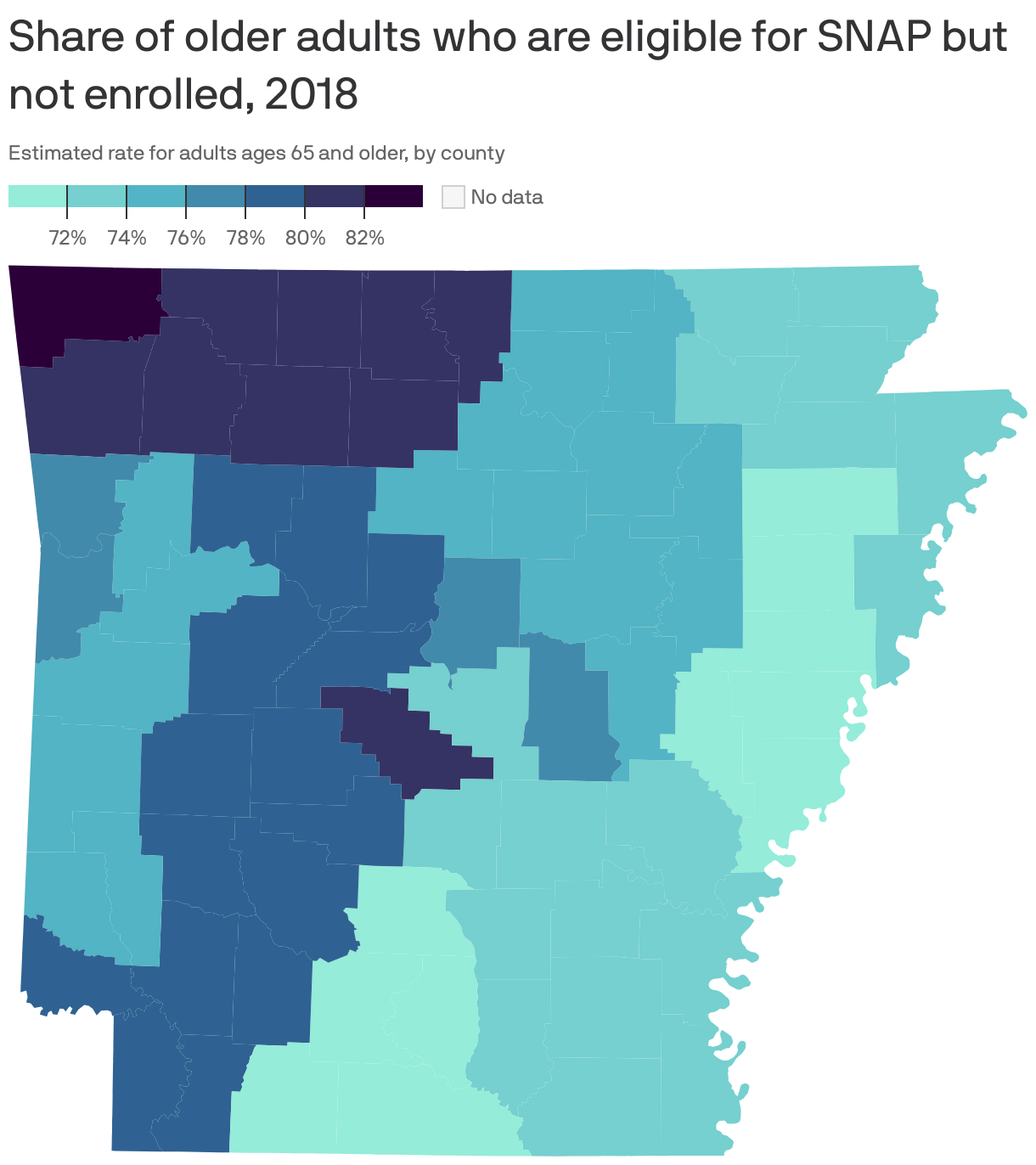
An estimated 80% of older adults in Northwest Arkansas who are eligible for a federal food-assistance program are not taking part, a new report finds.
Why it matters: The Supplemental Nutrition Assistance Program (SNAP), formerly known as the Food Stamp Program, can help low-income Americans afford groceries — but those who qualify must apply in order to be helped.
The big picture: Just over 70% of Americans 65 and older who qualified for SNAP in 2018 weren't participating, per the report from the National Council on Aging (NCOA) and the Urban Institute, a Washington, D.C.-based think tank.
- That's about 9 million people who may be struggling to afford groceries but haven't tapped this major source of government aid.
Zoom in: With rates, it can be important to keep up with the actual numbers. In Benton County, the rate is 83%, which translates to 2,665 people, according to the report.
- Washington County's rate of 80% is nearly 1,600 people.
- Other NWA counties were calculated as a region, so numbers of individuals weren't available.
Almost 73% of Arkansans 65 and older who qualify — nearly 54,000 people — aren't participating.
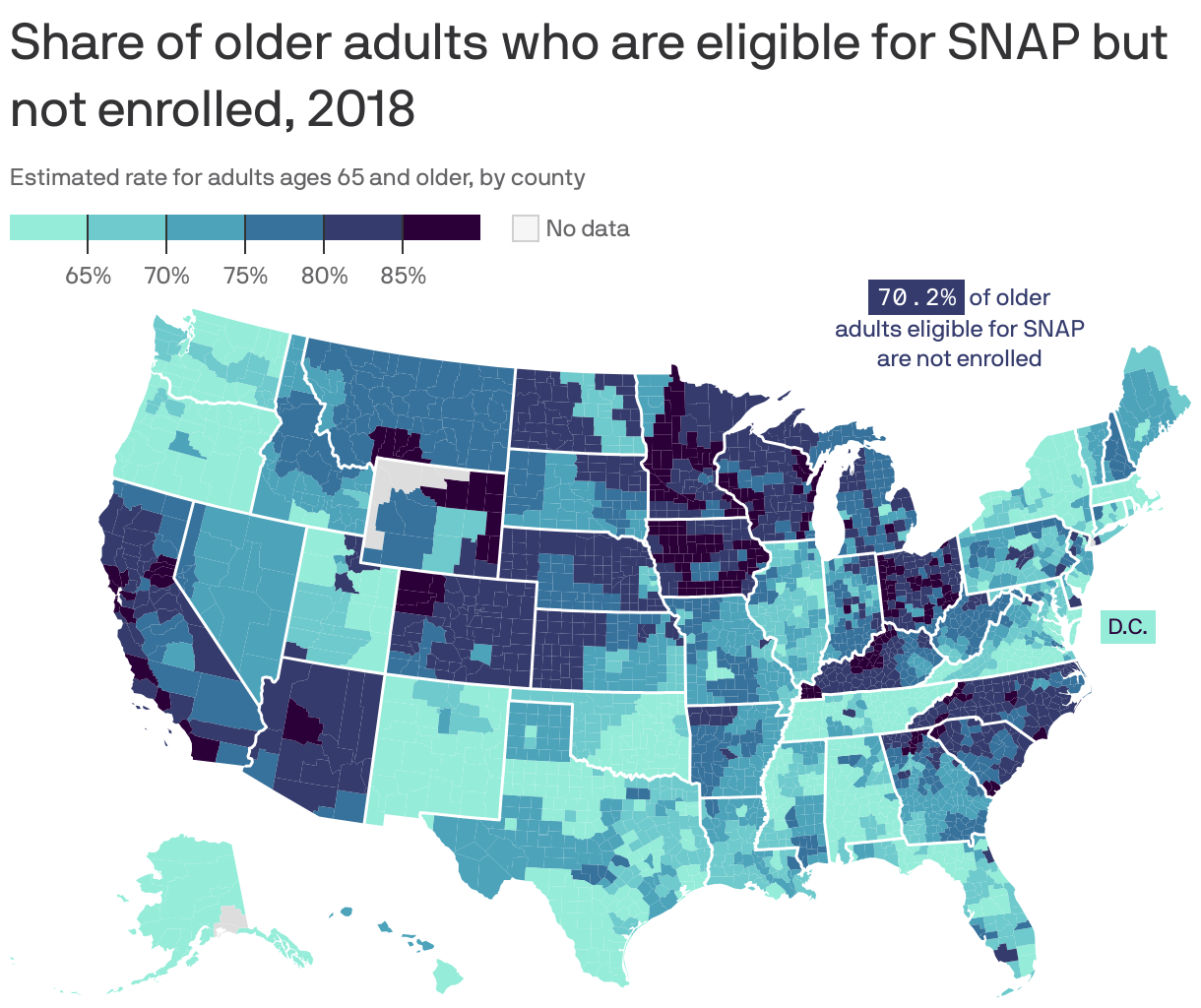
Zoom out: SNAP participation varies greatly by state, with only 17% of eligible Californians ages 65 and up receiving benefits, compared with 51% in Rhode Island.
- SNAP is administered by the U.S. Department of Agriculture but is operated by states at the local level.
Meanwhile, only 49% of older Americans eligible for Supplemental Security Income — that's Social Security payments — are enrolled.
- And only 46% of those eligible for the Medicare Savings Program are participating.
What they're saying: "It's shocking and unacceptable to have 9 million eligible older adults not enrolled in benefits that can make the difference between them affording food or health care each month," NCOA president and CEO Ramsey Alwin said in a statement accompanying the report.
- "These individuals are struggling to afford basic necessities, and they are missing out on critical assistance."
The bottom line: Education and assistance is key — Americans who are eligible for these programs but not enrolled may not know about them, may not realize they can take part, or may need help signing up.