Arkansas among top eight for most bad mental health days

Add Axios as your preferred source to
see more of our stories on Google.
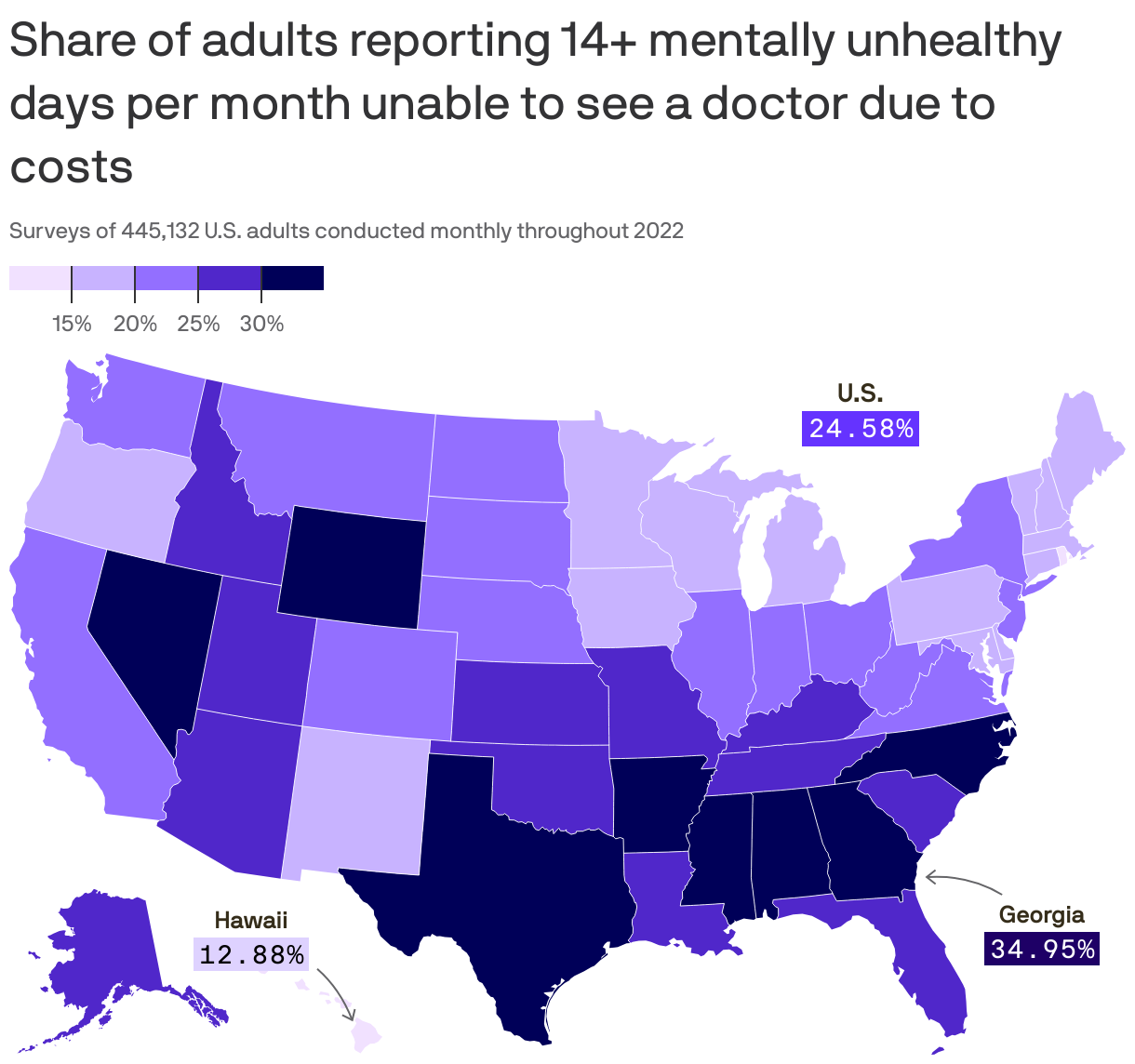
Almost 1 in 4 American adults with frequent mental distress reported not seeing a doctor because of the cost, Mental Health America found in a new survey based on 2022 federal data.
Why it matters: Delayed or forgone treatment for mental disorders is often linked to insurance status and medical debt, and is fueling a treatment gap that cuts across demographic groups.
What they found: In eight states including Arkansas, a minimum of 30% of adults reporting at least two weeks of mental distress per month were unable to afford medical help.
- Of those states, Georgia, Alabama, and Texas also rank in the bottom five states for availability of mental health workers.
Between the lines: Private insurers aren't required to cover mental health services, and the survey found 10% of adults and 8.5% of youths lack coverage.
Zoom out: Mental Health America ranked Massachusetts, Connecticut and Maine best overall for mental health and treatment, while Nevada, Arizona and Montana were the worst among the 50 states and D.C.
- The group used 15 metrics, including suicidal ideation and substance-use disorder, or a major depressive episode in the past year.