Northwest Arkansans travel more than national average


Add Axios as your preferred source to
see more of our stories on Google.
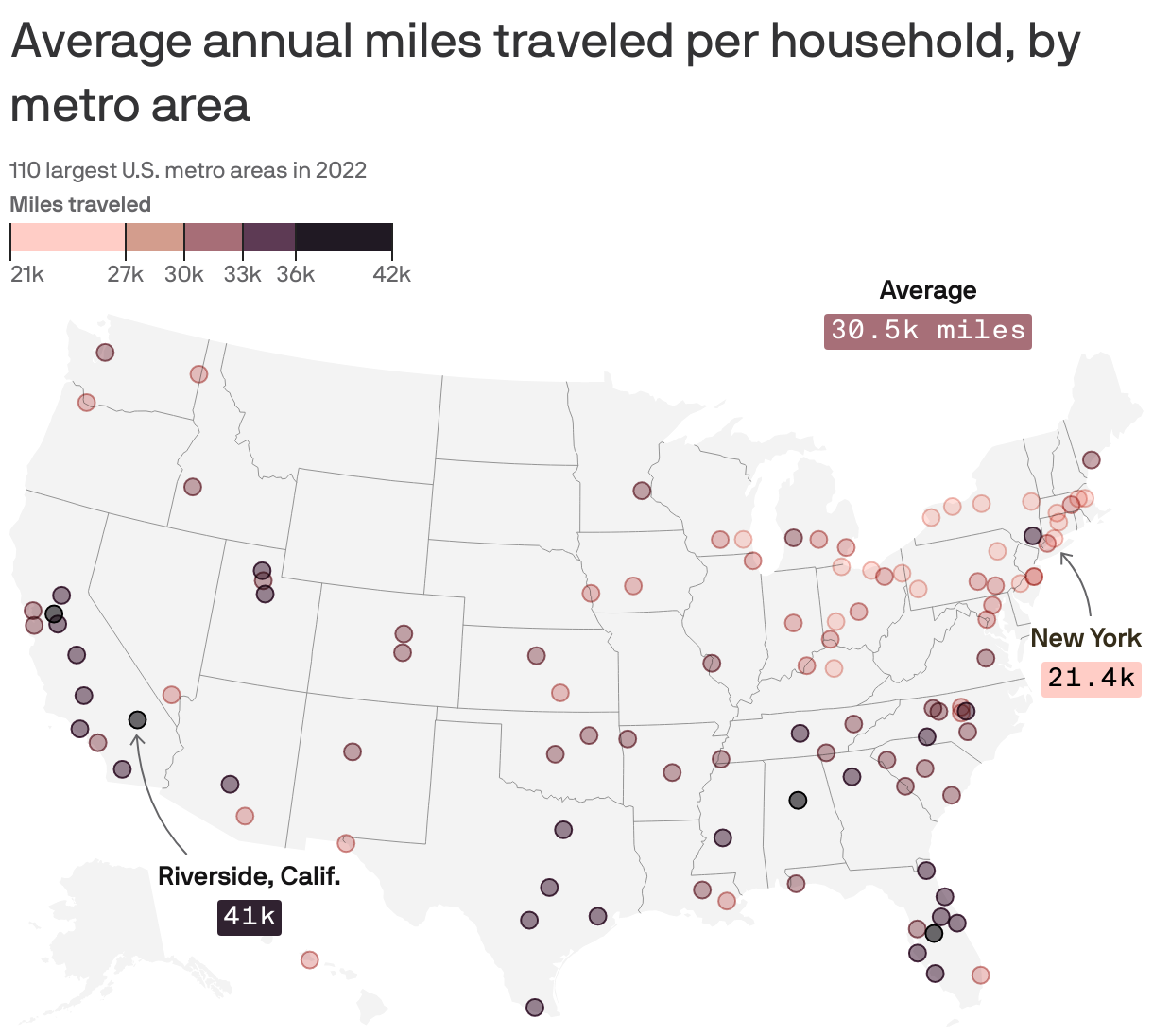
The average Northwest Arkansas metro area household travels more than 31,000 miles annually, per a new study, compared to the national average of nearly 30,000.
Driving the news: A recent Brookings Institution study explores household auto, biking, mass transit and walking data for the 110 largest U.S. metro areas to measure how close people are to where they work, eat, play, shop and more.
- "For the average driver, living closer to multiple activity centers can save around $920 to $1,200 in annual transportation expenses, and reduce their carbon footprint by 2,455 to 3,020 pounds of carbon dioxide," the researchers found.
Why it matters: "Helping people live closer to the centers of economic activity ... should reduce the distances people need to travel for many of their essential trips," the analysts wrote.
- "Shorter trip distances, in turn, make walking, bicycling, and transit more attractive and can improve quality of life."
- "In other words, greater proximity could lower environmental emissions, create safer streets, and unlock financial savings," the study added.
Yes, but: Only 37% of residents in the metro areas studied live within three miles of five activity centers.
By the numbers: The average U.S. household spent 16.4% of its annual income on transportation in 2021, the second-highest expense behind housing (33.8%).
- Zoom in: The average household in Centerton spends 26% of its income on transportation, according to the Housing and Transportation Affordability Index.
- The numbers are slightly lower in Bentonville and Rogers (25% each), Springdale (24%), and Fayetteville (21%).
The bottom line: The analysts argue for "building for proximity" to lower overall trip distances and make walking and biking more feasible.