EV revolution leads to lithium land grab in Arkansas

Add Axios as your preferred source to
see more of our stories on Google.
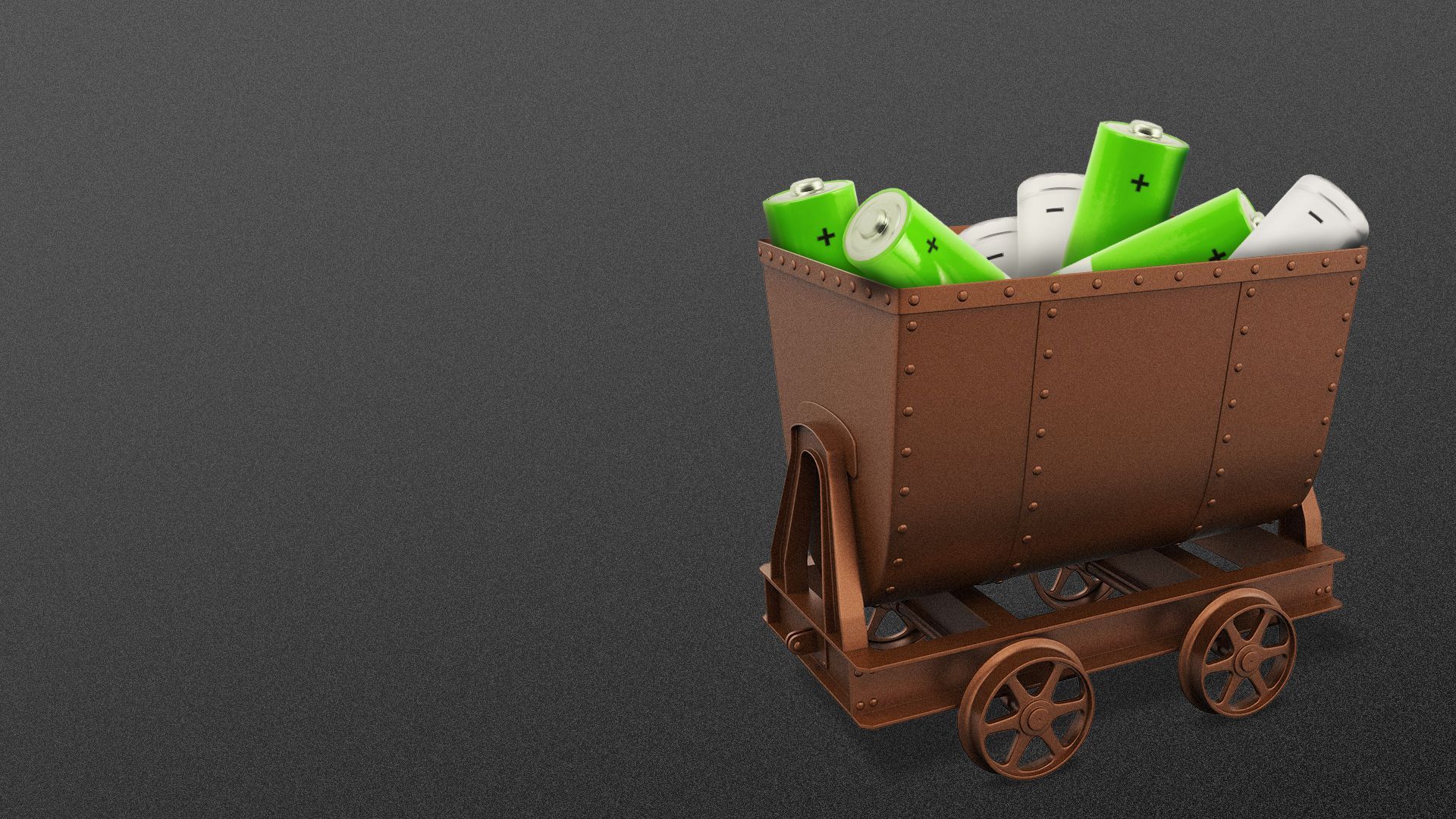
Illustration: Gabriella Turrisi/Axios
White is the new gold.
What's happening: Robert Mintak, CEO of Canadian company Standard Lithium (SLI), is confident it can capture the silvery-white metal from the geological Smackover Formation that runs from east Texas to Florida.
Why it matters: Nearly all lithium, a key ingredient in rechargeable batteries, comes from abroad.
- Since the most expensive part of an electric car is its battery, U.S. consumers are stuck with high-priced EVs — a hindrance to adoption — until raw materials and manufacturing are on-shored.
- One estimate suggests there's enough lithium in the Smackover Formation to power 50 million EVs.
The big picture: There's a modern-day rush to riches underway. EnergySource Minerals of San Diego plans to do much the same near the Salton Sea. It's just beginning for the project, which faces the additional challenge of cooling geothermal water before it can filter out the lithium.
- Galvanic Energy of Oklahoma City had secured land leases to mine lithium in Arkansas' Lafayette and Columbia counties, but sold drilling rights to ExxonMobil last month for $100 million.
How it works: Mintak gave Axios a tour of SLI's demonstration plant in El Dorado in early April. The formation has been tapped as a source of oil and gas since the 1920s, so the plant "piggybacks" on existing operations owned by Lanxess of Germany, which extracts bromine from the formation's water, then pumps that water back into the ground.
- SLI effectively adds a filter to capture lithium from that water before it's returned.
- The company plans to process it on-site into lithium carbonate or lithium hydroxide suitable for batteries.
The arrangement takes advantage of Lanxess' established infrastructure of wells, pipes and pumps, giving SLI an economic and time advantage, Mintak said.
Meanwhile, SLI is doing exploratory work throughout the formation. The company claims it cultivated the highest concentration of lithium from brine in the state at a well in its "South West Arkansas Project."
- A separate well in east Texas has produced the "highest confirmed lithium grade brine in North America," the company says.
Context: Work on the demonstration plant began in 2018, but the COVID-19 pandemic slowed things down, Mintak told Axios.
- The plant — three stories of pipes, tanks and catwalks under a temporary structure — is designed to prove the concept.
Reality check: A commercial plant is likely years and untold millions of dollars away from producing lithium for batteries. During that time, a number of things could go wrong.
- For example, the U.S. Department of Energy made a $15 million grant to Berkshire Hathaway to develop tech in California, only to rescind the offer due to disputes over patents and other issues.
What's next: A definitive feasibility study from a third party is due on Mintak's desk at the end of the month. It will dictate the financial investment needed to build the company's first commercial plant.
- He hopes to begin making plans for the new facility by year's end, he told us, but won't speculate on when commercial lithium will come from the formation.
Standard issue with short-sellers
SLI has critics.
Flashback: Two hit pieces from short-seller research companies Hindenburg and Blue Orca Capital delivered blows to Mintak in 2021 and 2022.
Details: They claim there's not much to SLI and its technology is based on three patent applications the company purchased in 2018. They also state the company's extraction rates are lower than reported and that Mintak isn't qualified to run the company.
The other side: Mintak didn't want to talk on the record about the reports, referring us to the company's public statements. He did say he was shocked by both.
- Mintak noted the company is publicly traded and required to report its financials and activities to the Arkansas Oil and Gas Commission.
What they're saying: Anthony Patterson, an El Dorado native and investor in SLI, told us he has concerns about why the company is using resources on exploration in Texas when it hasn't sold any lithium.
Yes, but: "I see this as a good project that's working," he said. "This affiliation with Laxness really carries a lot of weight because I don't see a conglomerate of that size associating itself with something that's not likely to succeed."