Big events, big bills battle for funding in deficit-ridden New Orleans

Add Axios as your preferred source to
see more of our stories on Google.

Illustration: Brendan Lynch/Axios
For New Orleans to successfully pull off hosting duties for the college football national championship in 2028, organizers need to raise another several million dollars, Allstate Sugar Bowl CEO Jeff Hundley says.
Why it matters: With city leaders also grappling with what they're calling less-than-expected returns from hosting other recent major events, the ask may not go down so easy.
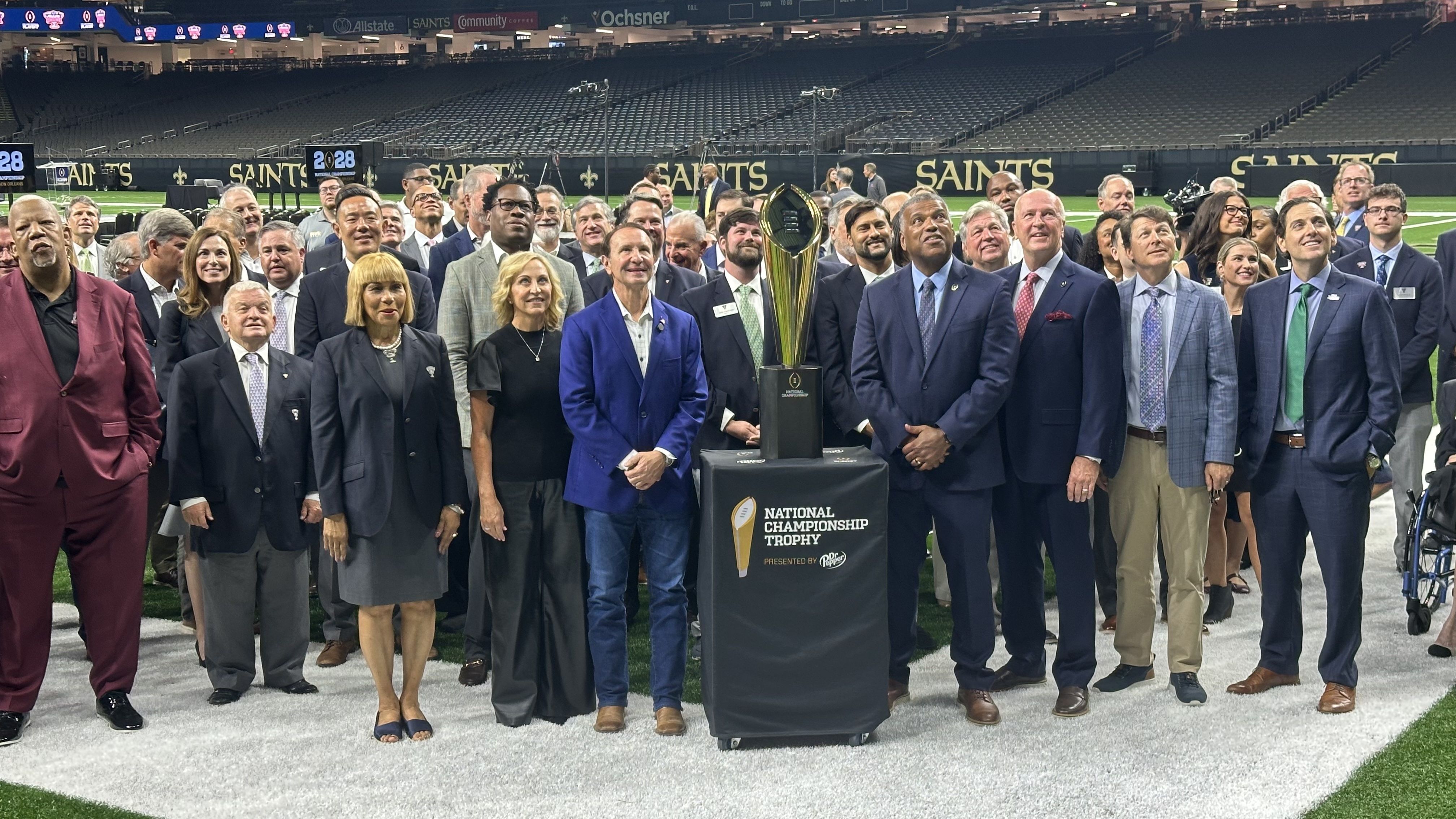
The big picture: Gov. Jeff Landry, local tourism leaders and sports organization officials sat on the Caesars Superdome field applauding last Wednesday's announcement that it'll again host the college football championship.
- But at City Hall, leaders quibbled over how to deal with an estimated $100 million budget deficit this year.
- Solutions, they said, may involve tax and service rate increases.
- "Is it time now to take another look at how we deal with these events in terms of their value to our community?" questioned councilman and mayoral hopeful Oliver Thomas. "Because if we're going to lose with somebody from the outside winning, how is that a good thing for the people who are here?"
By the numbers: About $70 million of New Orleans' deficit is due to the increased cost of public safety measures after the Jan. 1 terror attack and managing January's winter storm, writes Axios' Carlie Kollath Wells.
- But it's due, too, to lower-than-expected returns during Taylor Swift's "The Eras Tour" last year and hosting Super Bowl LIX this year.
- New Orleans' 2025 budget planned for nearly $15 million in Super Bowl tax revenue, but the city only realized $8 million to date, according to the city's chief administrative officer Joe Threat.
The intrigue: An LSU-backed economic impact study called LIX one of the most lucrative Super Bowls of all time.
- Part of its $1.25 billion overall economic impact, researchers said, was $48.1 million in state tax revenue and $28.4 million in local tax revenue.
- That doesn't necessarily mean, New Orleans & Co. CEO Walt Leger says, that it was a win for every community and every business.
- But revenue estimating and financial forecasting "seem to be areas that we could have some improvement on the local level," Leger says, adding his hope that the incoming mayoral and City Council administrations "work to ensure that we have accurate projections so you don't end up with this" in the future.
Zoom in: In the run-up to Super Bowl LIX, city officials also greenlit dozens of infrastructure and beautification projects.
- Though many of those will benefit residents and visitors for years, they cost about $60 million, Threat said, and the mere fact of hosting can come at a cost, too.
What they're saying: "When we hosted [the college national championship] in 2020, quite frankly, the business community hadn't yet recognized the tremendous value of this awesome event," Hundley said last week, noting that changes like name, image and likeness deals and the size of coaching contracts has dramatically altered the math in college football.
- Back then, he told The Times-Picayune's Jeff Duncan, hosting in 2020 came with a $13 million price tag. That's since doubled.
- Hundley told Axios New Orleans it would take "several million dollars" to close the gap on the host committee's fees for 2028, which he hopes to raise from corporate support.
- "The fact of the matter is, the dollars and cents just mean way more than they ever have in the history of the game," he said. "If the funds are there, we'll have a long and strong role in the future of college football. If they aren't, we won't."