Lizards may hold the key to treating lead poisoning

Add Axios as your preferred source to
see more of our stories on Google.
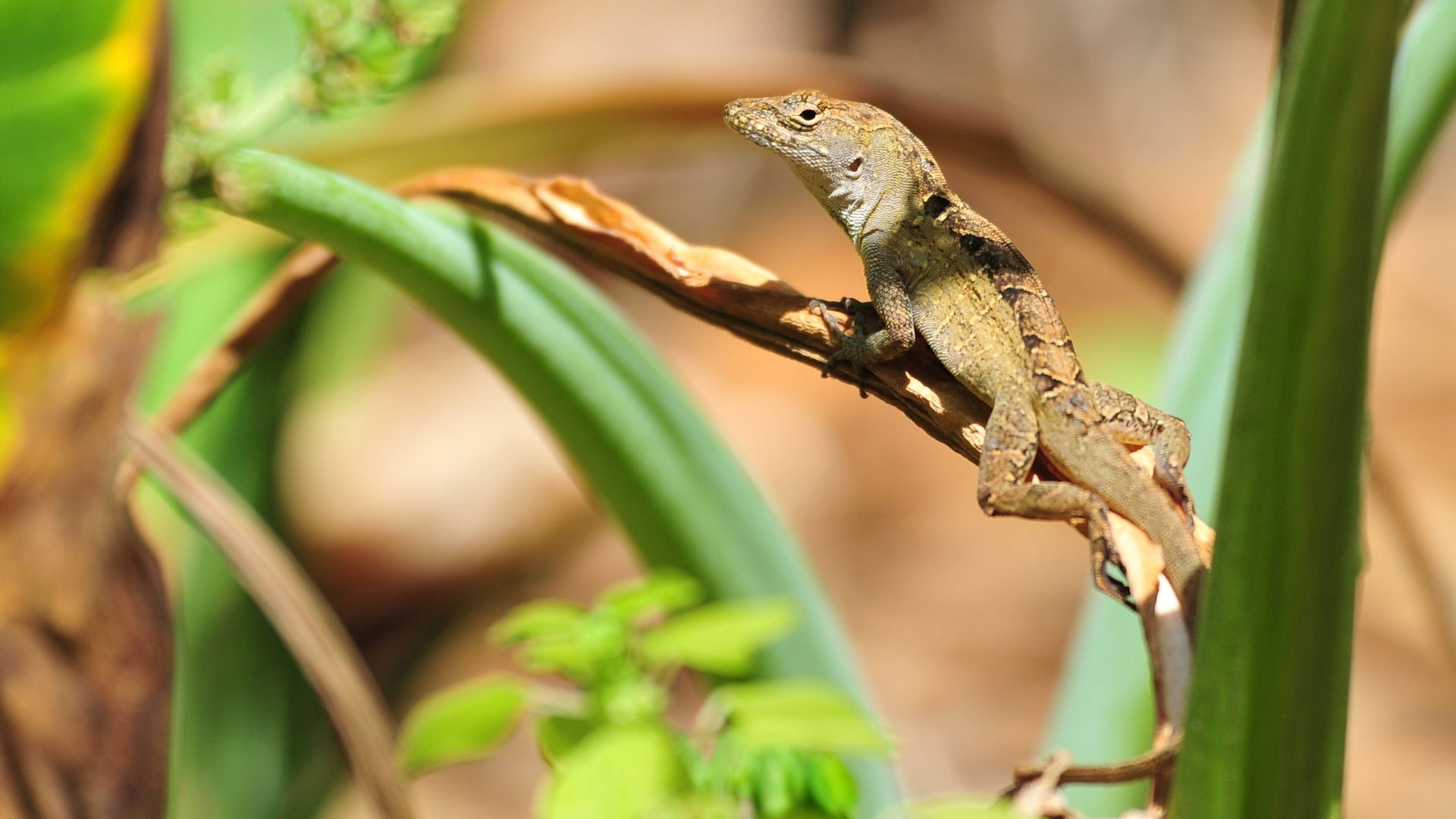
Brown anole. Photo: Wayne Wang/Tulane University
A common lizard across the South is surviving with more lead in its body than researchers previously thought possible — and the toxin doesn't appear to affect it at all, a new study says.
Why it matters: Unlocking their secret could help scientists develop new ways to treat lead poisoning in humans.
The big picture: Brown anole lizards in New Orleans have the highest blood-lead levels ever recorded in any vertebrate, according to new research from Tulane University.
- The lizards are likely being contaminated by breathing and eating lead-contaminated dust, Tulane professor Alex Gunderson tells Axios. It's likely on the bugs they eat, too.
- Brown anoles are an invasive species from the Caribbean and have been in New Orleans since at least the 1990s.
- They are more common now than the green anole, which is a native species.
What they found: Lead usually affects wildlife in similar ways to humans, Gunderson says, creating problems with balance, speed and endurance.
- But doctoral student Annelise Blanchette and Gunderson discovered that the brown lizards could withstand lead levels about 10 times higher than the already extreme concentrations found in the field before showing any decline in performance.
The intrigue: Gunderson doesn't know why the anoles can survive with such high lead amounts, but he says his theory is they are able to store the lead in a way that makes it inert.
- It will take more research to understand the "how," he says, and whether the research can be applied to humans in treating heavy metal exposure.
- "It is a long way off right now," he says.
Between the lines: Lizard research also led to the creation of Ozempic and other GLP-1s.
- The popular weight-loss drug was discovered while researching the venom of Gila monsters.
- "It's really important to study everything," Gunderson says. "We don't know what we don't know."
Threat level: Lead is a pollutant commonly found in soil, old pipes and paint.
- There's no safe level for lead in humans, with symptoms including stunted growth, learning delays and behavioral problems. There's no known antidote for lead poisoning either, the CDC says.
- Nearly 90% of New Orleans homes in a citywide study of residential drinking water tested positive for lead contamination, according to the nonprofit Water Collaborative of Greater New Orleans.
- New Orleans and Jefferson Parish are in the process of identifying lead pipes so they can be replaced, a time-consuming and costly project.
What's next: Tulane is studying lead levels in green anoles, with the results expected out next year.
Go deeper: Read the brown anole study.