Map: Lead water pipes in each New Orleans neighborhood

Add Axios as your preferred source to
see more of our stories on Google.
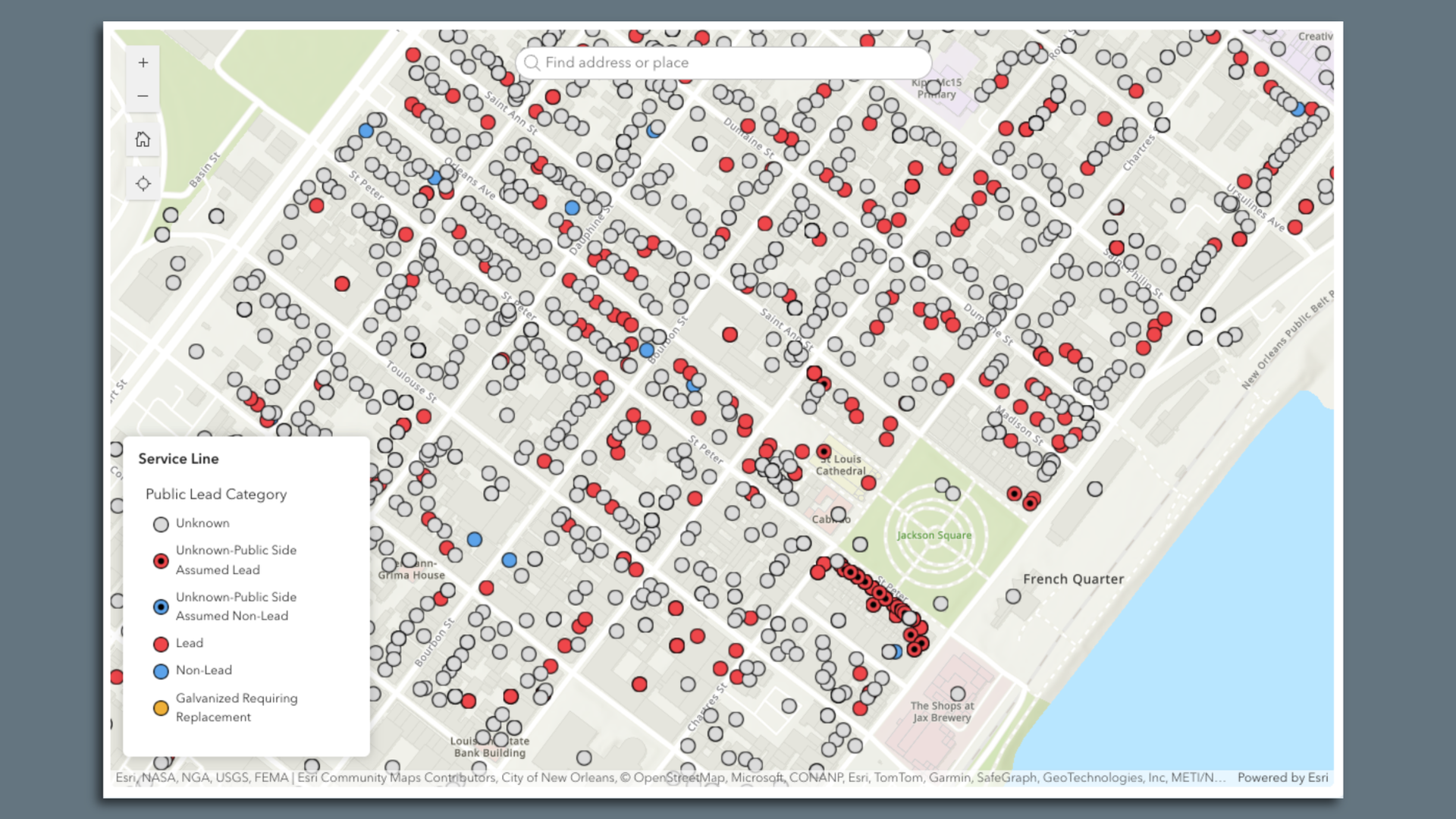
On SWBNO's map, red dots mean confirmed or assumed lead pipes. The gray dots mean the status is unknown. Screenshot: SWBNO
New Orleans released an online tool where you check for lead water pipes at your home, school and any other place you regularly visit.
Why it matters: It's the first time the data has been publicly available.
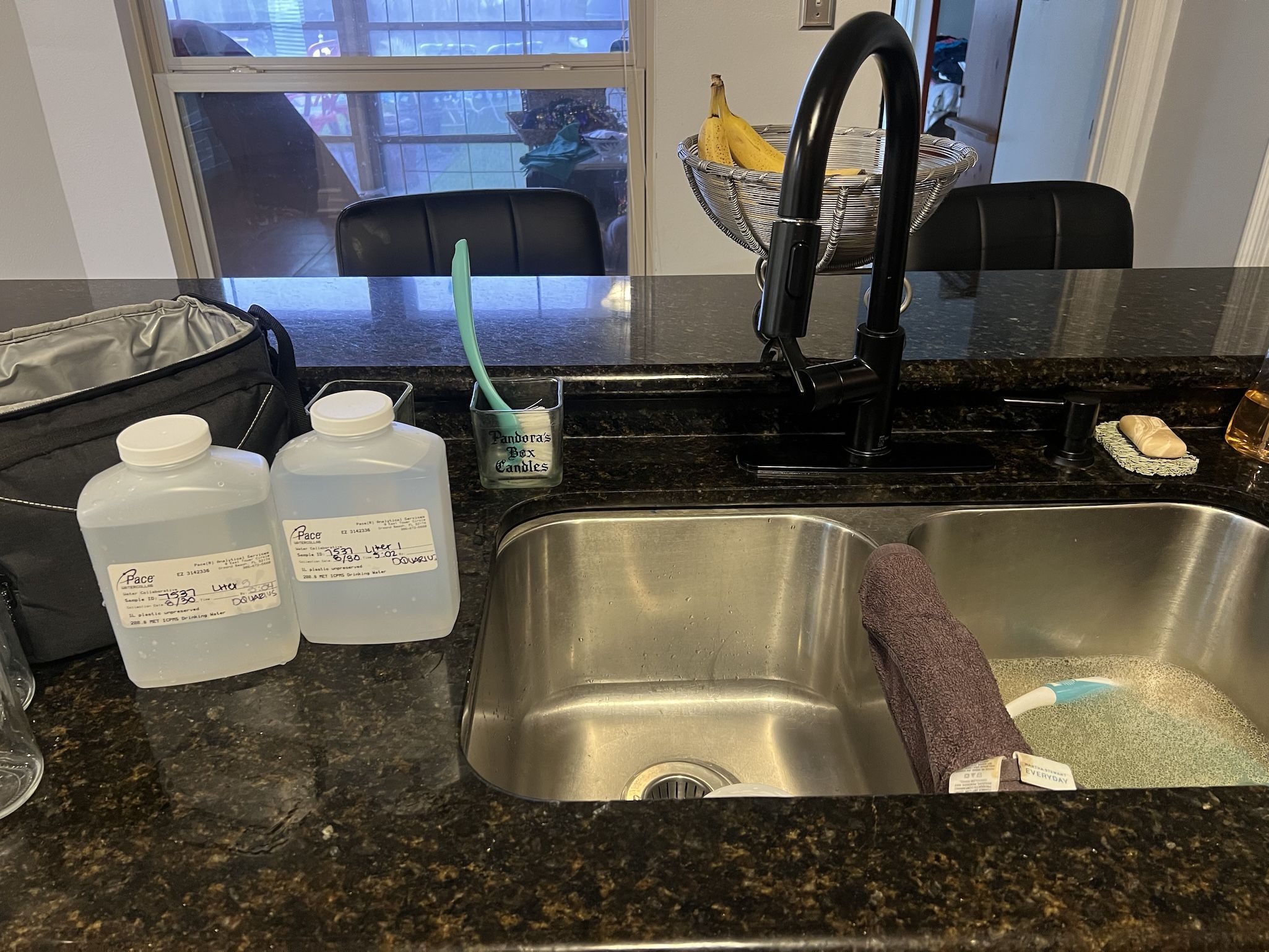
Threat level: Nearly 90% of homes in a citywide study of residential drinking water tested positive for lead contamination, according to the nonprofit Water Collaborative of Greater New Orleans.
- The group sampled 144 homes across 37 neighborhoods, a spokesperson told Axios. The full report will be released Saturday.
The big picture: The Sewerage and Water Board's map identifies about 15,000 customers with lead pipes that need to be replaced. That number will likely grow.
- Info about pipe materials wasn't available for about 120,000 customers, SWBNO said Friday. Those will be updated as more inspections are done, the utility said.
Between the lines: Drinking water doesn't have detectable levels of lead when it leaves the treatment plant, SWBNO says.
- However, water can be contaminated on its journey through lead pipes and plumbing fixtures.
- Lead pipes were common until 1986, and many lead service lines remain in New Orleans. SWBNO says it adds lime to the water to minimize lead pipe corrosion.
- You can get a free lead testing kit and a water filter pitcher.
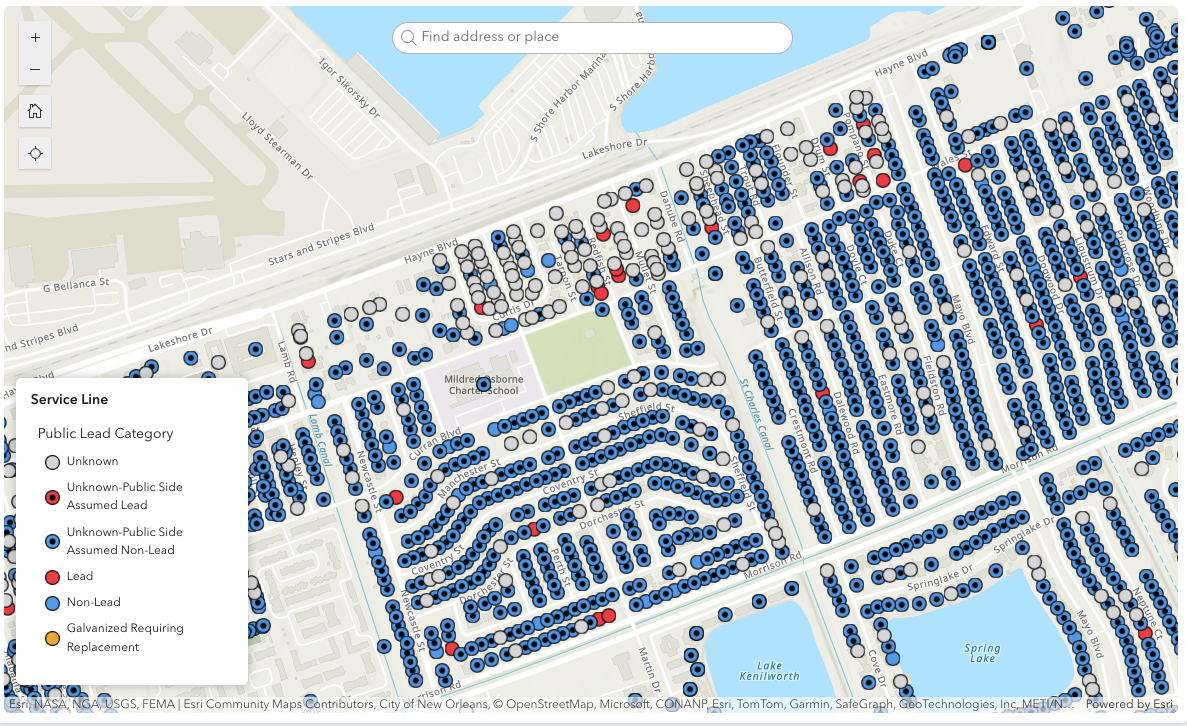
How it works: SWBNO's tool shows red, blue, yellow and gray dots on an interactive city map.
- Red is bad and means there's confirmed lead or assumed lead. Blue means not lead, and yellow means it is a galvanized pipe that needs to be replaced.
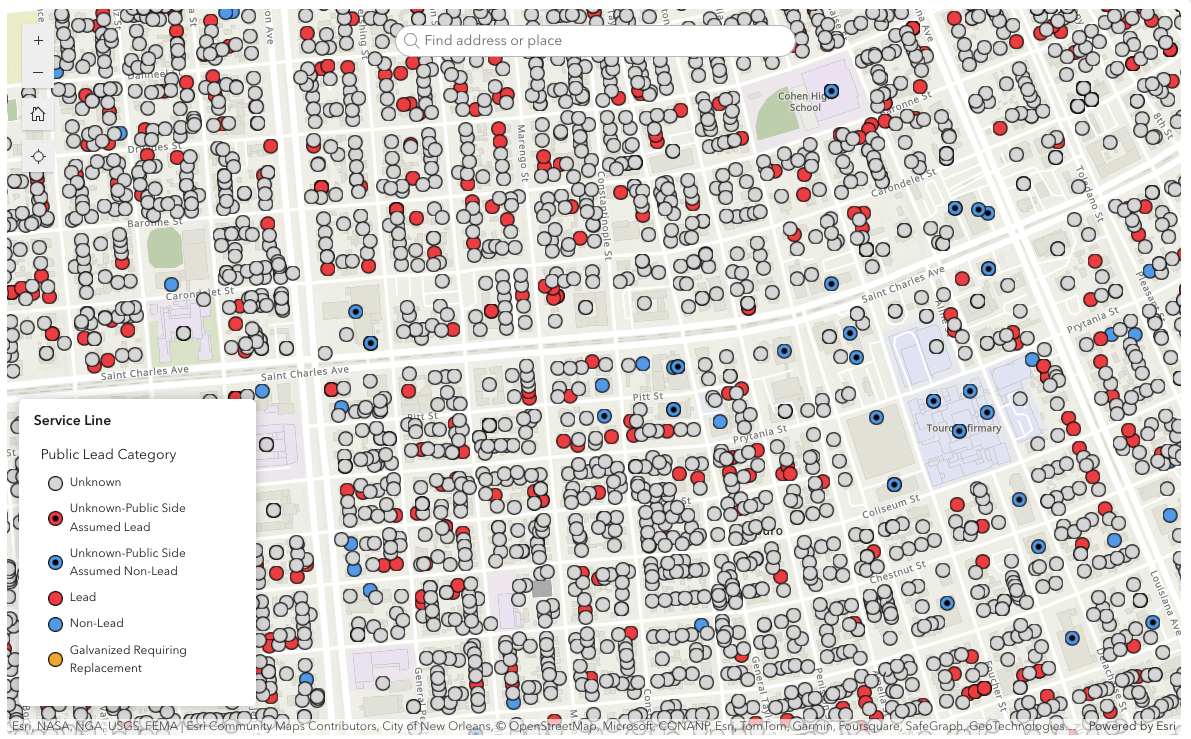
- The problem is many of the dots are gray, which represents unknown lead status.
What they did: BlueConduit, the water analytics company that created the map with a Google.org grant, used two types of data.
- Verified service line materials: SWBNO has a record of the water service line material.
- Unknown service line materials: SWBNO does not have a record of the water service line material. It used predictive modeling to make educated assumptions, based on available data.
Zoom out: Louisiana utilities have until Wednesday to turn over a detailed inventory of lead pipes to the state Department of Health.
- Jefferson Parish representatives tell Axios they are on track to meet the deadline.
- A timeline was not immediately available from LDH for when the data will be available to the public.
State of play: The EPA estimates that up to 9 million homes across the country are served by lead pipes, many of which are in lower-income communities and communities of color.
- The long-term goal is to replace lead pipes, but it is going to take years.
- The feds this week allocated $2.6 billion to end this "generational public health problem" within about 10 years.
What's next: The inventory is a "crucial first step" to a lead-free water system, SWBNO executive director Ghassan Korban said in a statement.
- Now, SWBNO will mail notifications to customers. It also is launching an inspection effort next month to identify the lead status of pipes, starting with 300 lines at schools and 800 public lines.
- It plans to start replacing lines late next year, SWBNO says. Property owners are responsible for replacing components on their land.