New Orleans marks 3rd hottest year on record


Add Axios as your preferred source to
see more of our stories on Google.
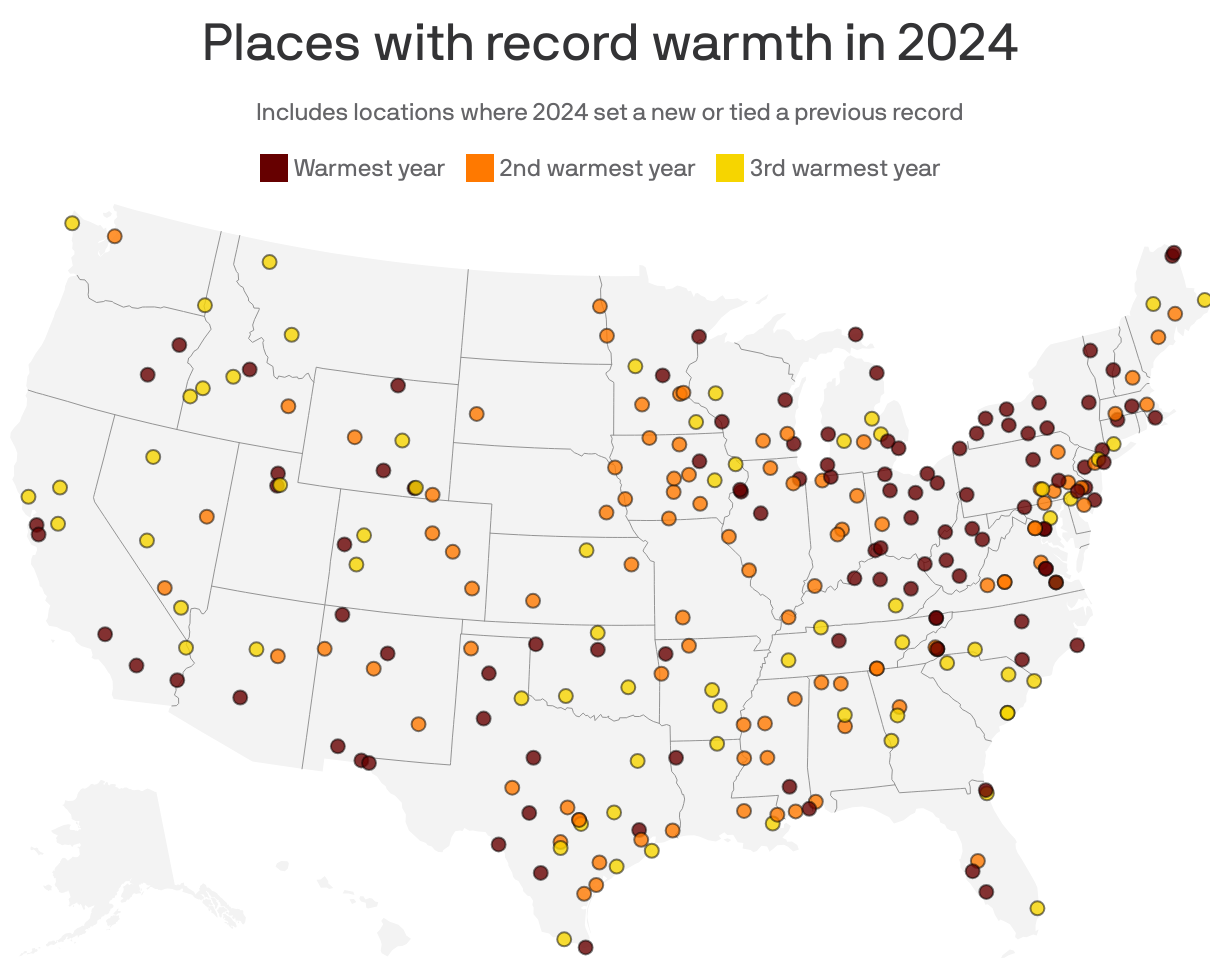
It may be chilly in New Orleans now, but last year was the metro's third hottest year on record.
Why it matters: The year's record hot temperatures include periods of extreme heat, which is a deadly hazard, and demonstrate how long-term, human-caused climate change is playing out in communities.
The big picture: New Orleans' high temperature averaged 80.7°F last year, up 3.1° from normal over the course of 45 years of record-keeping, according to NOAA.
- Shreveport had its hottest year on record, while Slidell and Baton Rouge had their second hottest on record.
Zoom out: Many communities across the U.S. saw record heat in 2024, crushing milestones set in 2023.
- Phoenix, for example, had an average high temperature for the year of 90.5°F.
- The city set a record for the most days with highs that reached at or above 110°F, with 70 such occurrences, smashing the previous record of 55 days.
State of play: Last year was Earth's warmest on record, eclipsing 2023's record, the Copernicus Climate Change Service says.
- While climate scientists don't put too much stock into an individual year's record, the long-term trend is toward more rapid warming.
- It is not entirely clear why 2024 was so hot and what it portends. Go deeper.
The bottom line: Last year saw many extreme weather and climate events that caused widespread damage and reverberated throughout the economy.
- The year demonstrated how global warming is loading the dice in favor of more destructive outcomes, from Hurricane Helene to a period during the summer when global average temperatures spiked to unheard-of levels.