Hundreds of U.S. locations had their hottest year on record

Add Axios as your preferred source to
see more of our stories on Google.
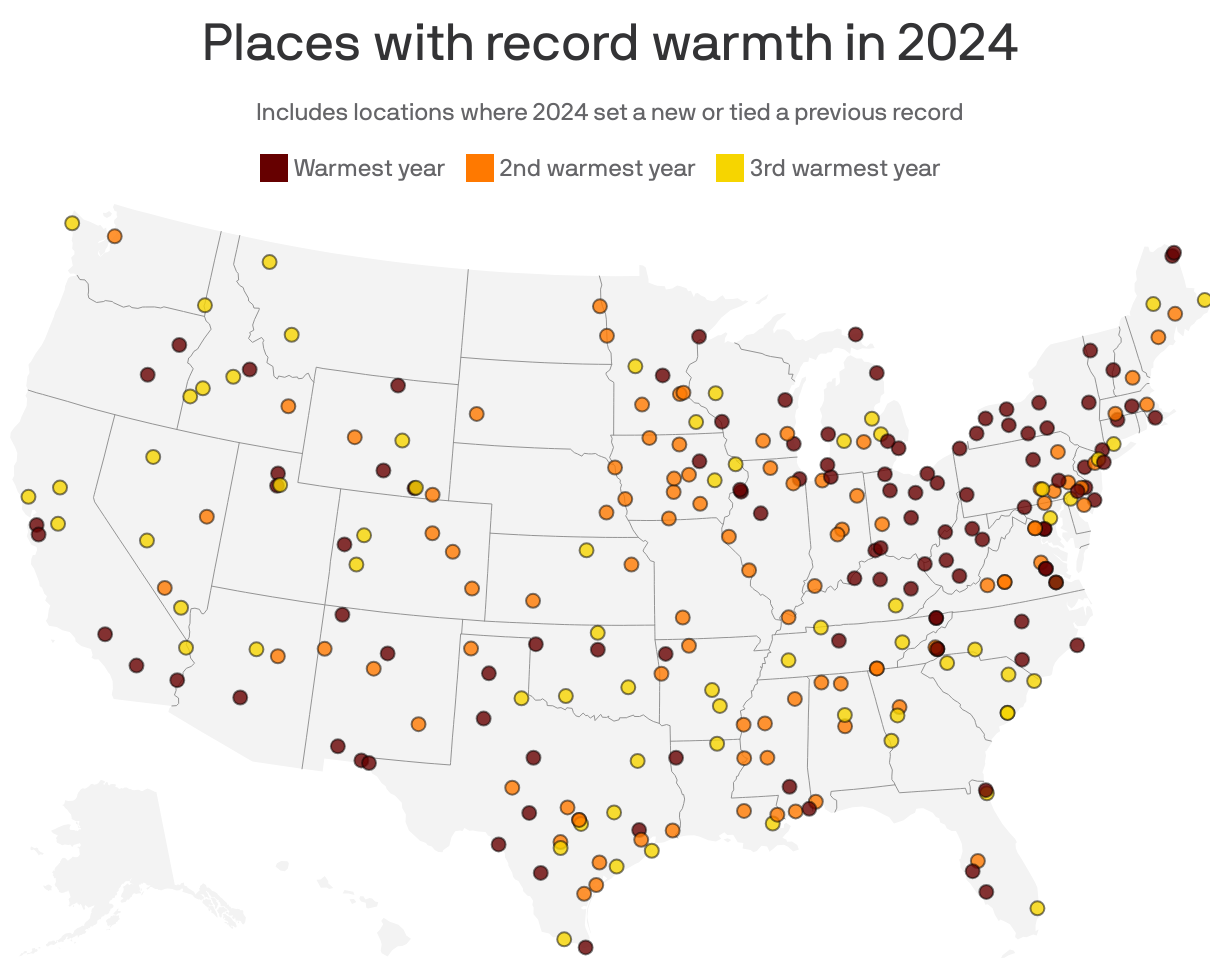
It may be frigid in parts of the U.S. now, but communities from coast to coast saw record warmth during 2024, with many cities crushing milestones set in 2023.
Why it matters: The year's record hot temperatures include periods of extreme heat, which is a deadly hazard, and demonstrate how long-term, human-caused climate change is playing out in communities.
Zoom in: Phoenix, for example, had an average temperature for the year of 90.5°F.
- The city set a record for the most days with highs that reached at or above 110°F, with 70 such occurrences, smashing the previous record of 55 days.
- Numerous locations in the Midwest and East had record warmth as well, with still more communities making the top 3 warmest year list.
- Chicago Midway Airport had its hottest year, while O'Hare International Airport tied its record hottest year.
- Nashville saw record warmth, as did Washington, Pittsburgh, Philadelphia and Burlington, Vermont.
Even the northernmost reaches of Maine, such as Caribou and Houlton near the U.S.-Canada border, had a record warm year.
The intrigue: The unusually high U.S. temperatures during 2024 match global trends, since last year is expected to be the hottest year on record worldwide, beating out 2023.
- Most continents, let alone countries, are expected to set records this year as well. So too are large expanses of the globe's oceans.
- The year saw many extreme weather and climate events that caused widespread damage and reverberated throughout the economy.
- Last year demonstrated how global warming is loading the dice in favor of more destructive outcomes, from Hurricane Helene to a period during the summer when global average temperatures spiked to unheard-of levels.
Yes, but: Extensive domestic warmth is one thing.
- But more broadly, Earth is expected to have global average surface temperatures come in above the Paris Climate Agreement's 1.5°C temperature target relative to preindustrial levels, according to some of the datasets scientists use to keep tabs on the climate.
- This is a warning sign, though not yet a breach of the Paris Agreement, since that would require a few decades of temperatures above the target.
The bottom line: What is going on globally is also happening at the local level.
