More Louisiana kindergartners are getting vaccine exemptions


Add Axios as your preferred source to
see more of our stories on Google.
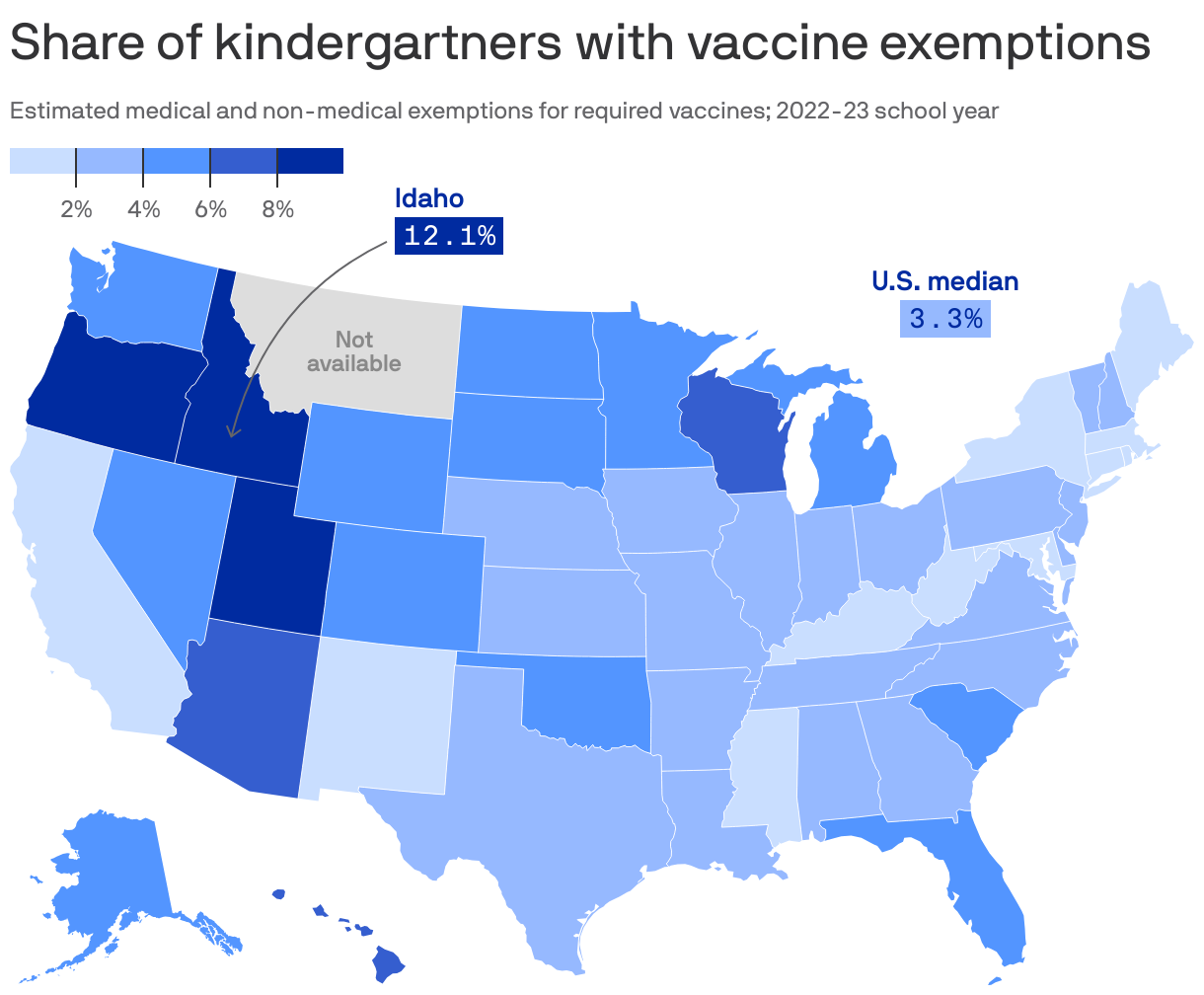
The number of Louisiana kindergartners with vaccine exemptions grew in the most recent data from the CDC.
Why it matters: Lingering vaccine hesitancy from the pandemic is evident in pediatricians' offices across the country as more parents opt out of the shots for measles, chicken pox and whooping cough, among others, using non-medical religious exemptions.
- While official data lags by several months, public health experts told Axios that anecdotal reports suggest rates are still falling, leaving the population more vulnerable to outbreaks.
The big picture: U.S. parents still overwhelmingly support childhood vaccinations. But kindergarten exemptions rose to a median of 3% nationally during the 2022-2023 school year, up from 2.7% the year before.
- In Louisiana, 2.3% of kindergartners had vaccine exemptions, up from 1.1% the prior year, according to the CDC.
Flashback: Louisiana's measles vaccination coverage dipped last year below the threshold generally accepted to prevent community transmission.
State of play: Louisiana has some of the nation's loosest exemption laws for families wishing to forgo childhood vaccinations, but historically some of the highest vaccination rates.
- Louisiana allows exemptions for medical and religious/philosophical reasons, according to the state Department of Health.
- Parents or guardians simply fill out a form that says they are exempting their child and file it with the school or day care operator.
- A new state law this year requires schools to include exemption information when communicating with families about vaccines. Critics fear it will increase opt-outs in Louisiana.
By the numbers: A Gallup Poll in July found that 69% of respondents view childhood vaccines as "extremely" or "very" important, down from 94% in 2001.
- Gallup attributed the drop-off to people who lean Republican, noting the percentage of that cohort saying childhood vaccinations were "extremely important" stood at 26% this year, compared to 62% in 2001.
How it works: While large numbers of kids are getting vaccinated, it takes a 95% rate to maintain herd immunity against a disease like measles, says Tom Lacy, chief of Florida Primary Care for Nemours Children's Health.
- Parents are not only opting out of the well-known childhood shot against measles, mumps and rubella known as MMR, but also vaccines against whooping cough, chicken pox, meningitis and the flu, he said.
- Some may be choosing vaccines based on their perceptions of which seem more important or safer.
Between the lines: Another trend that may not show up in the data: More parents are delaying critical vaccines because they worry about administering too many shots at a young age — a hesitancy that can put the most vulnerable kids at greater risk, Lacy added.
- "Parents, sometimes in their attempt to protect their children, are really making the wrong decision."
Go deeper: