People detained in Louisiana ICE facilities face "rampant abuse," new report says

Add Axios as your preferred source to
see more of our stories on Google.
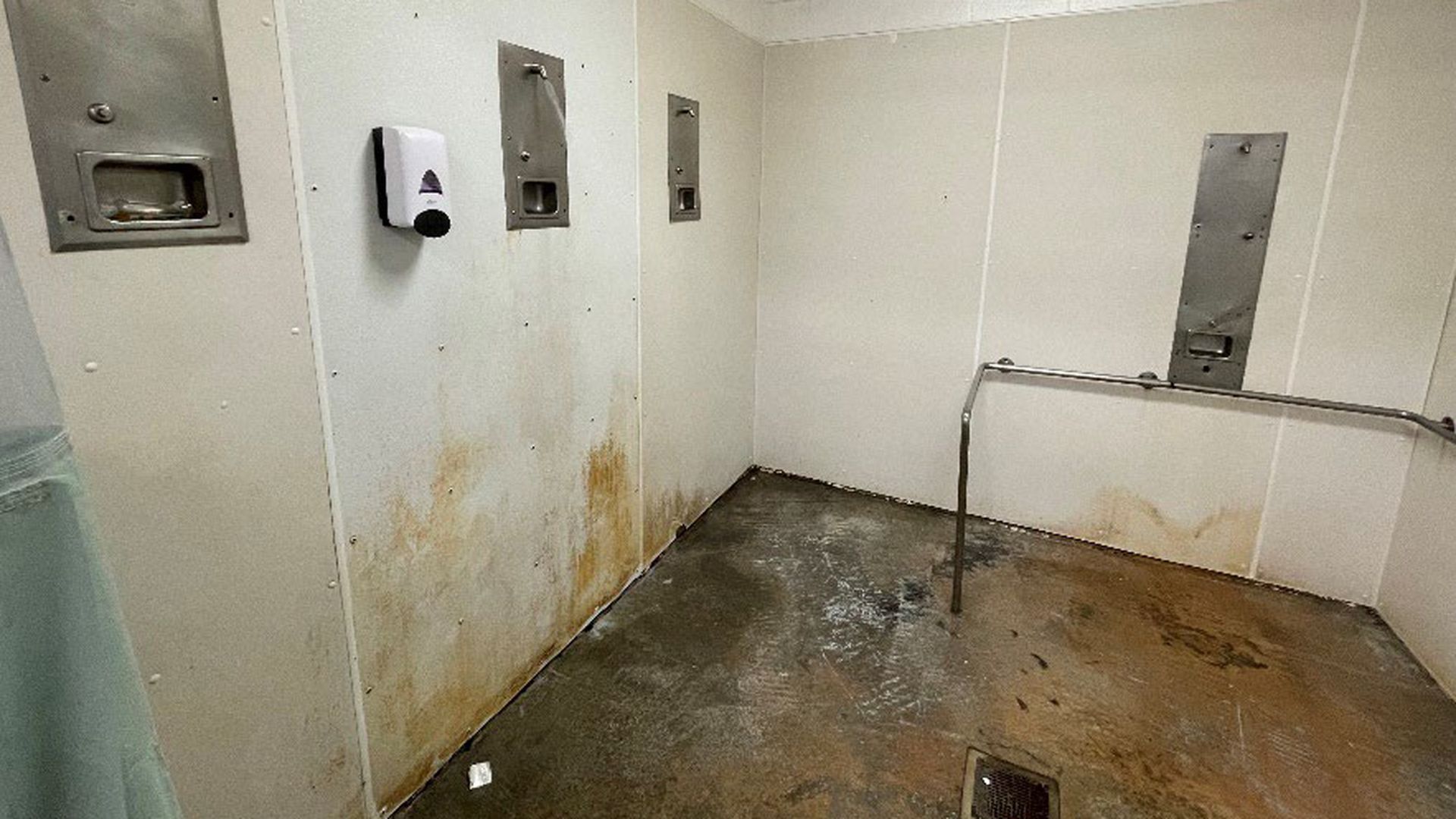
A shower area inside the Richwood Correctional Center, an Immigration and Customs Enforcement facility In Monroe. Photo: Department of Homeland Security Office of Inspector General
People detained by Immigration and Customs Enforcement in Louisiana were subject to "rampant abuse," including prolonged solitary confinement, cockroach-infested food, and physical and sexual abuse, according to a new report from a collection of immigrants' rights groups.
Why it matters: The state maintains the nation's second-largest population of detained immigrants, a press release says, behind only Texas.
The big picture: Louisiana is home to eight ICE detention facilities and a staging facility that acts as a jail, according to the report, and all are located in central and north Louisiana.
- The New Orleans Immigration and Customs Field Office oversees the facilities, the report says, and all but one of them are privately run.
Zoom in: The 108-page report, which is based on interviews with more than 6,000 people during site visits over a two-year period, says the New Orleans ICE office has a pattern of holding people in detention for longer than its counterparts elsewhere, detailing multiple examples of people held at least three months after they were ordered removed.
- Interviewees also reported unsanitary living conditions and meals, citing experiences where the facilities ran out of toilet paper and menstrual products, offered spoiled food at mealtimes, were infested by pests and mold, didn't have enough warm clothing, and had feces- and vomit-covered sleeping areas. Some also cited limited or no access to medical and mental health care.
- In many instances, the detainees report being left hungry and laughed at by guards as they navigated unclean spaces and rotten food.
- The researchers also describe extensive use of solitary confinement, including one case in which a Pakistani immigrant describes being held in solitary for more than 200 days for requesting meals appropriate for his diabetes.
How they did it: The report was produced through a partnership between Robert F. Kennedy Human Rights, the ACLU, the ACLU of Louisiana, Immigration Services & Legal Advocacy, and the National Immigration Project.
- Researchers collected data and conducted interviews during 59 site visits between April 2022 and April 2024.
- They also conducted follow-up interviews, took seven stakeholder tours and reviewed intake sheets.
The other side: In a statement provided to The Guardian, ICE says, "The agency continuously reviews and enhances civil detention operations to ensure noncitizens are treated humanely, protected from harm, provided appropriate medical and mental health care, and receive the rights and protections to which they are entitled."
- ICE says it provides detained people with medical screenings within 12 hours and full health assessments within two weeks of their arrival at its facilities, as well as access to emergency medical care.
Go deeper: Read the full report.