Spring is getting hotter in New Orleans



Add Axios as your preferred source to
see more of our stories on Google.
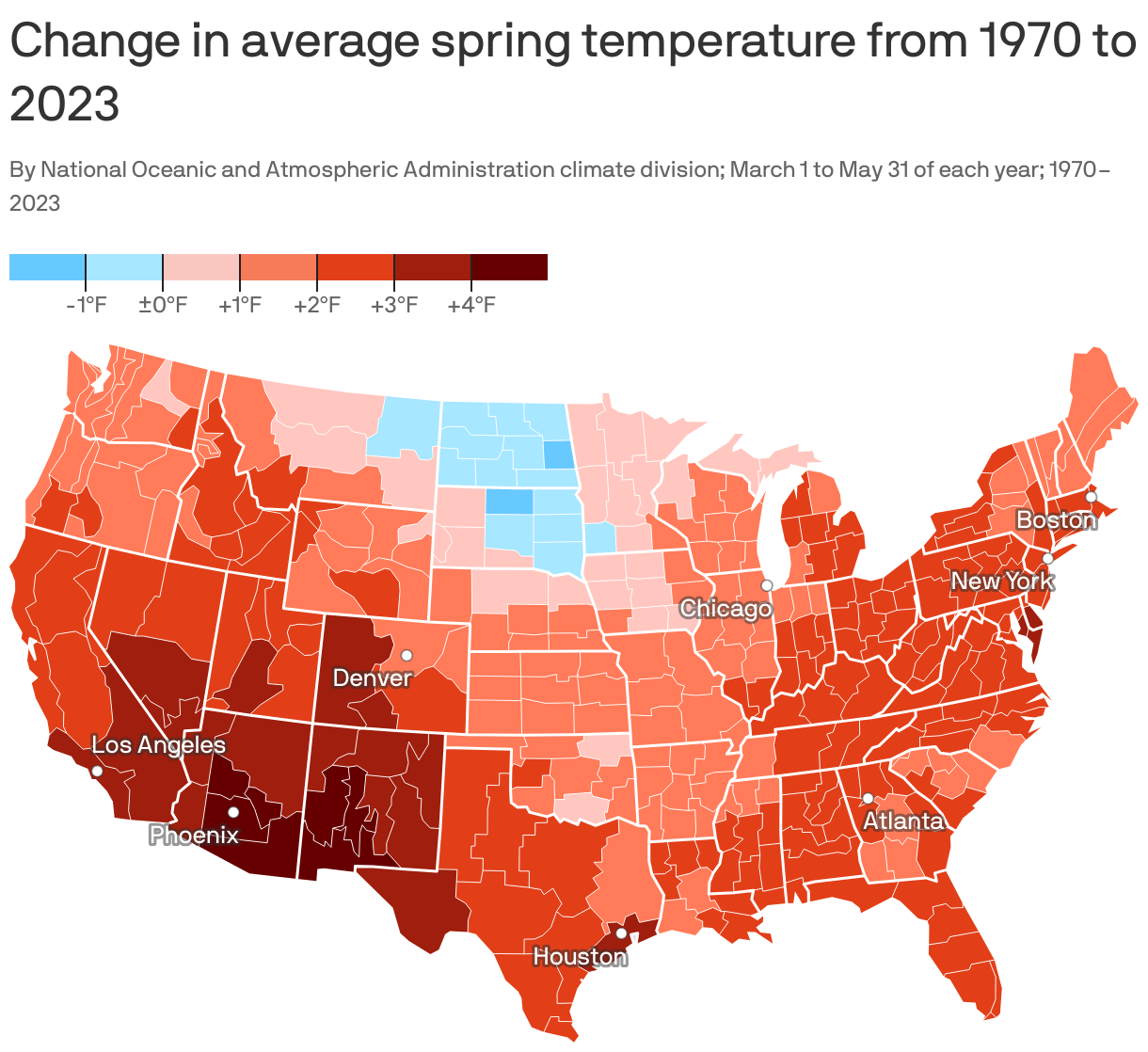
Spring in New Orleans is getting hotter, according to a recent Climate Central analysis — a trend that reflects human-caused warming, the group says.
Why it matters: Much of the seasonal climate change discussion is focused on summer and winter, when temperatures are typically at their annual high and low extremes. But the "between seasons" are affected too.


By the numbers: Springtime in New Orleans warmed by 4.1°F on average between 1970 and 2023, per Climate Central, a climate research and communications nonprofit.
- That's compared to warming of 2.2°F on average across nearly 230 U.S. cities.
Zoom out: Tuesday is the first day of astronomical spring, but allergy season started early in New Orleans this year.
- Pollen.com says the city is one of the worst places in the country right now for allergy sufferers.
Stunning stat: Spring has gotten notably warmer in the American Southwest, where average seasonal temperatures have risen by more than 6°F in some places.
Zoom in: The highest average springtime temperature increases were seen in Reno, Nevada (+6.8°F); El Paso, Texas (+6.3°F); and Las Vegas (+6.2°F).
What it did: The group's analysis is based on NOAA data and looks at meteorological spring, which begins March 1 and ends May 31.
What it's saying: Warmer springtime temperatures cause a variety of indirect effects, per Climate Central, including longer allergy seasons and changes in agricultural growing seasons.