Nashville police tout trial run of drone program

Add Axios as your preferred source to
see more of our stories on Google.
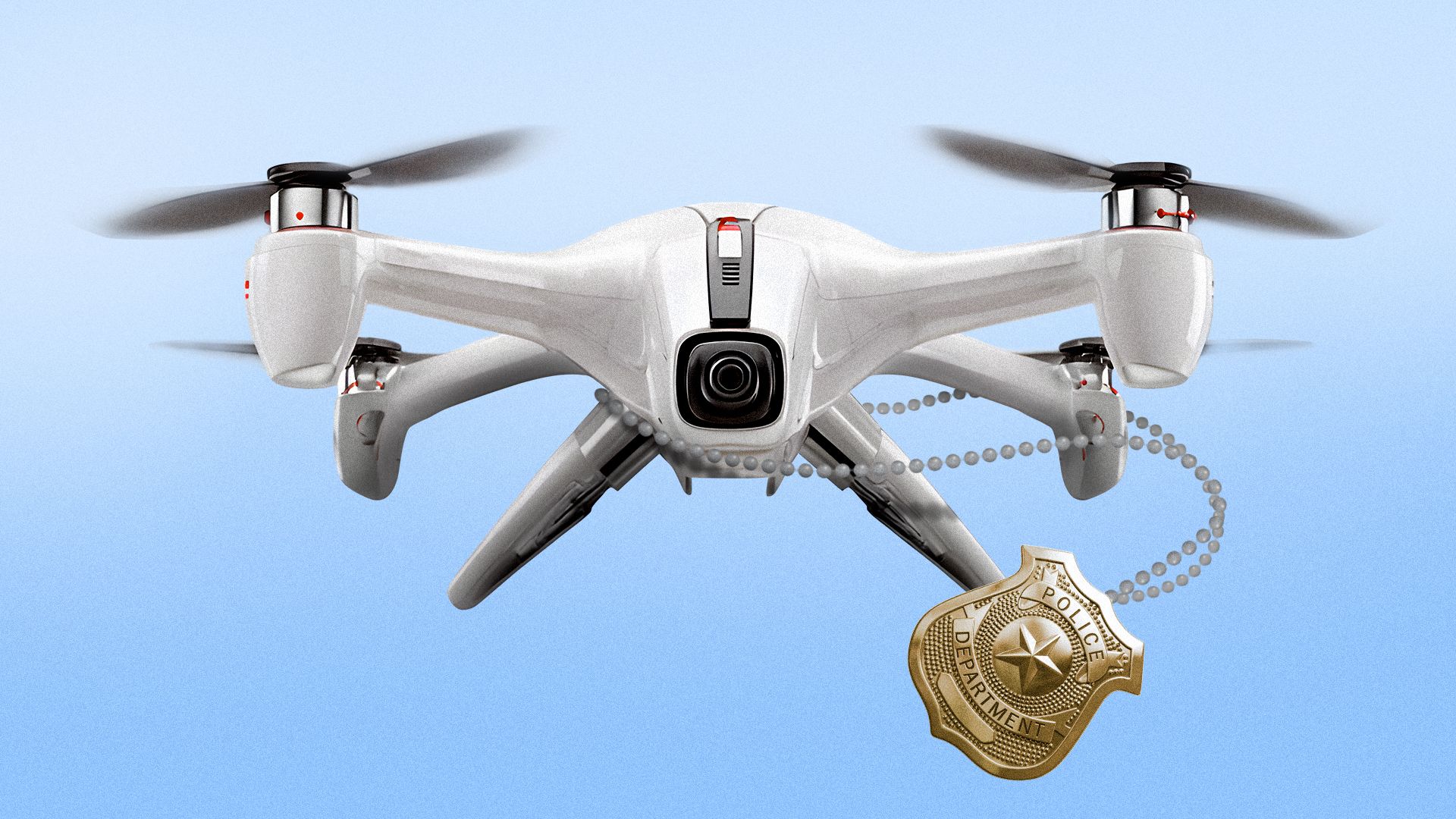
Illustration: Lindsey Bailey/Axios
The Metro Nashville Police Department touted to Metro Council this week the success of its test run using drones to respond to 911.
Why it matters: Police say drones can help them improve public safety in Nashville by responding quickly to emergencies — much more quickly than officers in a patrol car.
- Police officials and their backers on the council hope to eventually expand the use of drones.
Yes, but: The issue is shaping up to be the next major debate in the ongoing saga over police funding and surveillance.
Catch up quick: Police launched the Drone as First Responders (DFR) initiative at just one precinct in the Madison area.
- The pilot program spanned from the final week in May to the first week in August.
Between the lines: Police emphasized in a presentation to the public health and safety committee that the program was designed only as a "reactive public safety tool" that responds after specific kinds of 911 calls.
- It wasn't used for random patrols, traffic enforcement or surveillance. The drones are not weaponized.
How it works: Three drones, located on the roof of the Madison precinct, were operated by Federal Aviation Administration-certified pilots who are also MNPD officers.
- The drones were provided by the firm Skydio, but there was no contract between the company and the city.
- The coverage area was a 2-mile radius around the precinct. Once 911 calls were made there, a drone pilot assessed it.
- If it fell under the kinds of calls covered by the program, the pilot would dispatch the drone.
Zoom in: The program targeted specific kinds of calls, including domestic violence, robbery or other situation in which a person's well-being is threatened.
- Since then, council passed new legislation describing when drones may be used to inlude the following: active shooters, hostages, missing persons and natural disasters.
By the numbers: Police provided stats indicating the program was a success. In 360 calls for service, the average response time was two minutes compared with a 15-minute average response time for officers.
- The responses led to 30 arrests and 11 calls in which the priority of the response was changed following the pilot's assessment. Officer responses were canceled on 18 of the calls.
- Police estimate 12 hours of officer response time was saved by the drone program.
- In one case, a drone located a man assaulting his adult daughter on the side of a road.
What he's saying: "I had the chance to see Nashville's drone-as-first-responder technology in action, and I was impressed by how quickly it can respond to emergencies and give officers a better understanding of what they're walking into," Metro Councilmember Jordan Huffman tells Axios.
- "The feedback from both the community and MNPD has been overwhelmingly positive, and I'm excited about the opportunity to expand this program."
The other side: The program has also rung alarm bells among progressive council members skeptical of police funding and surveillance tools.
- This council has already thwarted efforts to give police access to a network of private security cameras and the use of license plate readers. Police said the program was used in a "highly transparent way with utmost respect to privacy protections."
- An August report by the Metro Nashville Community Review Board found the DFR program was launched in a part of town with a disproportionately high number of minorities compared with the rest of the county.
- "While DFR has the potential to enhance public safety and reduce MNPD response times, it also raises oversight concerns, particularly around surveillance capabilities, privacy, equitable deployment and data sharing," the review board's report found.
What's next: Backers of the program are pondering a longer trial run that could include other locations before possibly expanding countywide. Council would need to sign off on the expansion.