Inside Clarksville's record growth: Big deals, and a population surge


Add Axios as your preferred source to
see more of our stories on Google.
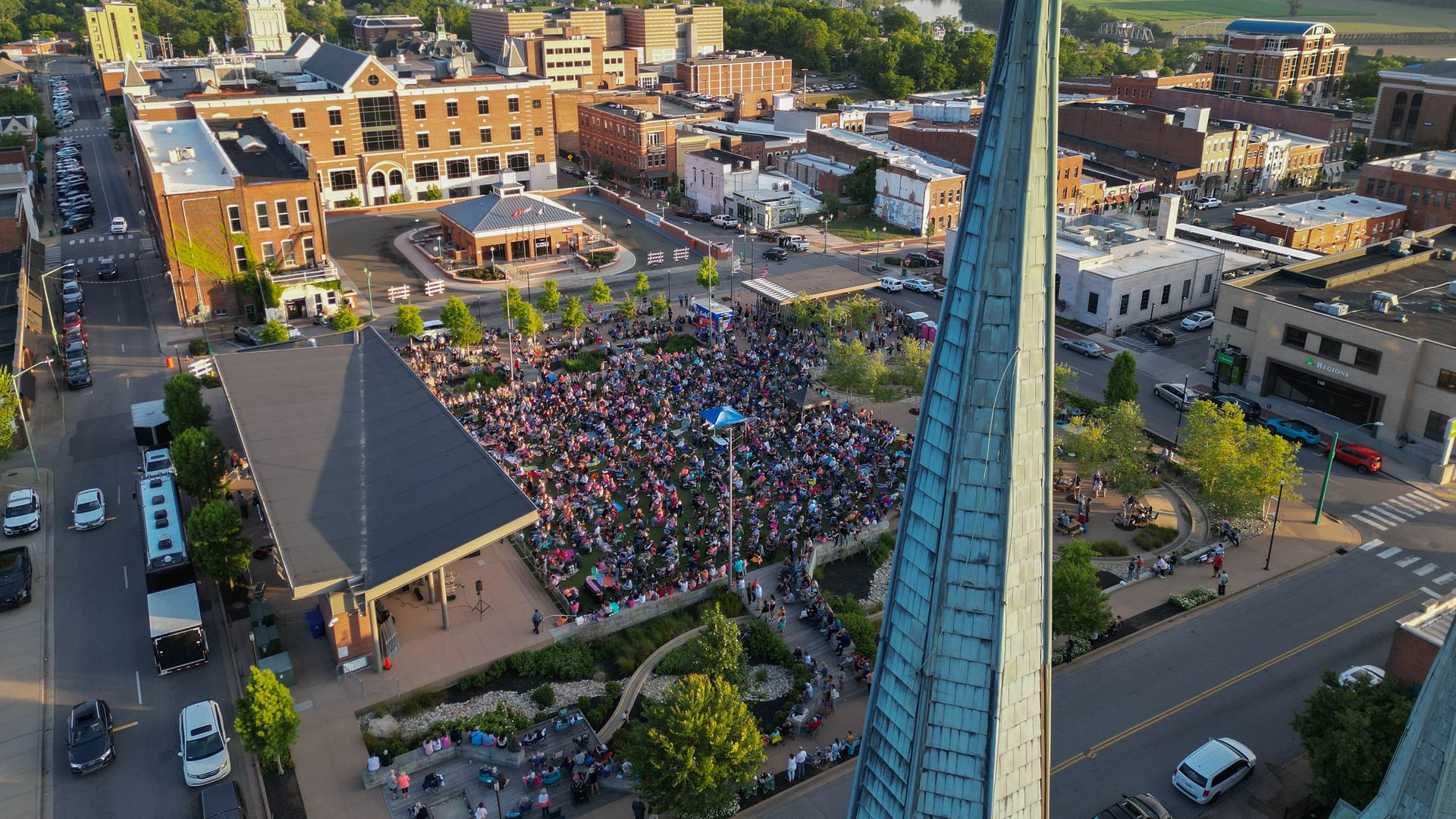
An aerial view of the downtown commons in Clarksville. Photo: courtesy of the Montgomery County mayor's office.
For generations, Tennesseans have referred to the state's big four cities: Nashville, Memphis, Knoxville and Chattanooga.
- Yes, but: It's time to start thinking in terms of the Big Five.
Why it matters: Clarksville is at a tipping point after decades of meteoric growth.
- The once-sleepy Middle Tennessee town an hour away on Interstate 24 is attracting massive mixed-use developments that are on par with Nashville's current East Bank overhaul.
Stunning stat: With a population of 188,829, Clarksville is only a few thousand people away from passing Chattanooga to become Tennessee's fourth-biggest city.
Between the lines: Steady growth has been hidden in plain sight for decades. But over our five years writing this newsletter, Clarksville's magnetism has become harder to ignore.
- A new report from U-Haul found Clarksville was the top destination for residents of all ages who were moving out of Nashville.
- An ambitious multi-use development received a record-setting government incentive.
The big picture: Clarksville is home to large institutions in Fort Campbell and Austin Peay State University that draw residents and help set the vibe for the city.
- Although houses are more affordable than in Nashville, there are neighborhoods that feel similar to Donelson or Crieve Hall.
- The surrounding Montgomery County area attracted major economic development wins in recent years — Korea Zinc, LG Chem and Hankook's recent expansion combine for $10 billion in direct investments and thousands of jobs.
Reality check: Despite its wins, government leaders say they're still fighting the ingrained regional view that the Clarksville area is sleepy and small.
- "A lot of our time is spent selling Montgomery County to state officials," Lee Harrell, who serves as chief of staff to Montgomery County Mayor Wes Golden, tells Axios.
What they're saying: But Golden tells Axios the city's growing appeal is obvious to its residents.
- "Families and employers continue to choose this community because they see a county that is planning not just for today, but for the next generation," he says.
By the numbers: Clarksville's growth


At the turn of the century, Chattanooga was about 50% bigger than Clarksville.
- Today, the population gap has narrowed to less than 3%.
By the numbers: Clarksville has added 85,374 residents since 2000, and that pace picked up in the aftermath of the pandemic.
- Clarksville added 22,040 residents since 2020 — roughly one-quarter of its entire gain since 2000 — and a bigger jump in raw numbers than any Tennessee city besides Nashville.


Yes, but: This is beyond a pandemic-era blip.
- Montgomery County grew by roughly 28% in both the 2000s and the 2010s, adding about 37,500 residents in the first decade and nearly 48,000 in the second.
- "Strong growth has been going on for the better part of two decades," Tennessee State Data Center director Tim Kuhn tells Axios.
Yes, and: Clarksville has room to keep expanding.
Between the lines: Chattanooga is geographically boxed in by the Tennessee River, the Georgia state line and already-developed land. But Clarksville can absorb growth within its existing footprint while also extending outward at its edges, Kuhn says.
The bottom line: Clarksville has already become one of the state's largest cities. Overtaking Chattanooga is a symbolic milestone that is now within reach.


Massive Marcelina project dreams big for Montgomery County
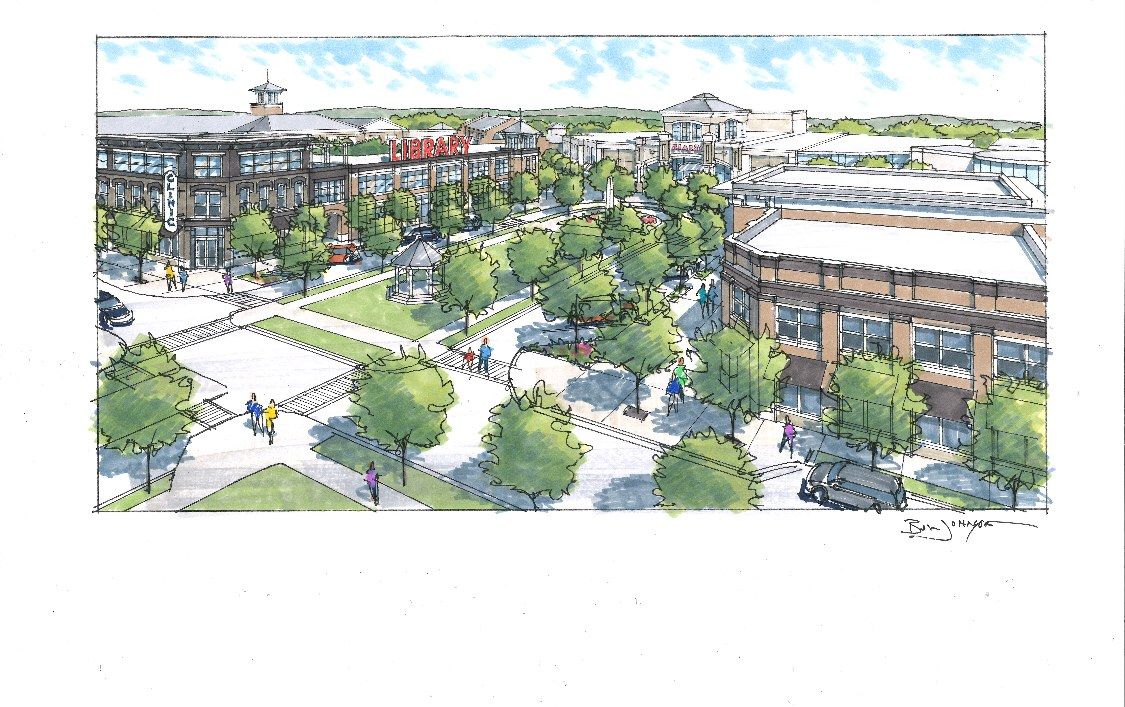
A 423-acre mixed-use development in Montgomery County represents one of the most ambitious in all of Middle Tennessee.
Why it matters: The project, called Marcelina, would have seemed destined for Nashville a few years ago. But Montgomery County sealed the deal.
Zoom out: One of the big reasons Clarksville is booming is that it's both affordable and close enough to Nashville.
- But for business people who live there, the commute down Interstate 24 can be a bear. Marcelina offers the antidote, providing all the amenities a professional or young family would look for in one town center-style development.
What he's saying: "Marcelina is designed to create a vibrant, interconnected community where families can live, work, and play without the burden of long commutes," Ronnie Moore, managing director of Rossview Farms, the project's developer, tells Axios.
Zoom in: Marcelina plans to include retail, hospitality and office space, while also leaving space for civic uses such as performing arts, museums, a library, parks and schools.
- The residential side of the development plan calls for single family, townhomes and multi-family units.
- The first phase of the project was the 116-acre Kirkwood school development, which was completed in 2024.
By the numbers: The project was boosted by a record $225 million in tax increment financing, approved by the county to help pay for infrastructure.
- An independent economic analysis estimated the project will create over 4,800 jobs and $508 million in tax revenues over 30 years.
The bottom line: "It is the type of master-planned, mixed-use development that helps communities grow the right way by bringing together housing, schools, retail, recreation, and civic amenities in a connected environment," Golden tells Axios.
Clarksville's housing boom
Clarksville is a destination for bargain hunters who don't want to shell out $400,000 for a family home.
Zoom in: Zillow put Clarksville's typical home value at $321,955 in July — about $112,000, or 26%, below Nashville's $434,068.
What they're saying: At roughly $300,000 to $350,000, buyers can still find a newly built home of around 2,000 square feet, Clarksville real estate broker Debbie Reynolds tells Axios.
"We always used to have a little saying," Reynolds says. "Every mile you go toward Nashville, put another $1,000 on the price tag of the house.
- "I think that's probably increased even more."
By the numbers: Buyers are taking note. The number of home sales logged in Clarksville has shot up over the years.
- In 2001, Clarksville recorded 2,048 home closings. Closings hit a peak of 7,171 in 2021 and settled to 4,400 the last three years.
The intrigue: Reynolds says buyers who are already used to suburban living in places like Murfreesboro have considered widening their net to Clarksville, which might have previously seemed too far away for commuters who travel to work in Nashville.
- Their thinking, according to Reynolds: "I'm in the traffic anyway, so if I'm going to drive, why not have a more affordable lifestyle?"
Zoom out: Fort Campbell has also fueled Clarksville's expansion. Military families often stay in Clarksville after their service — sometimes they convince far-flung relatives to join them in Tennessee, Reynolds said.
Yes, but: Word of mouth is a bit of a double-edged sword.
Case in point: Clarksville's median sale price shot up $164,000 over a decade, according to Greater Nashville Realtors data provided to Axios. That's an increase of nearly 104%.
Follow the money: Nearly 21,000 households spend more than 30% of their income on housing costs, including 43.6% of renters and 20% of homeowners, according to 2018-2022 Census data analyzed in a city-commissioned housing assessment.
The bottom line: Clarksville is cheaper than Nashville, but familiar affordability challenges are creeping in.
The Publix effect
There is a less scientific metric that points to Clarksville's continued growth and economic power: the rise of Publix grocery stores.
Flashback: When the first Publix opened in Clarksville in 2012, residents camped out for hours and celebrated the upscale amenities that were coming closer to home.
- The Clarksville and Montgomery County mayors both showed up to the ribbon-cutting.
Flashforward: In 2026, there are four Publix locations within the city limits.
Between the lines: Publix officials say strong population growth and robust household incomes are central to their real estate acquisition strategy.