Nashville's college-educated population surges

Add Axios as your preferred source to
see more of our stories on Google.
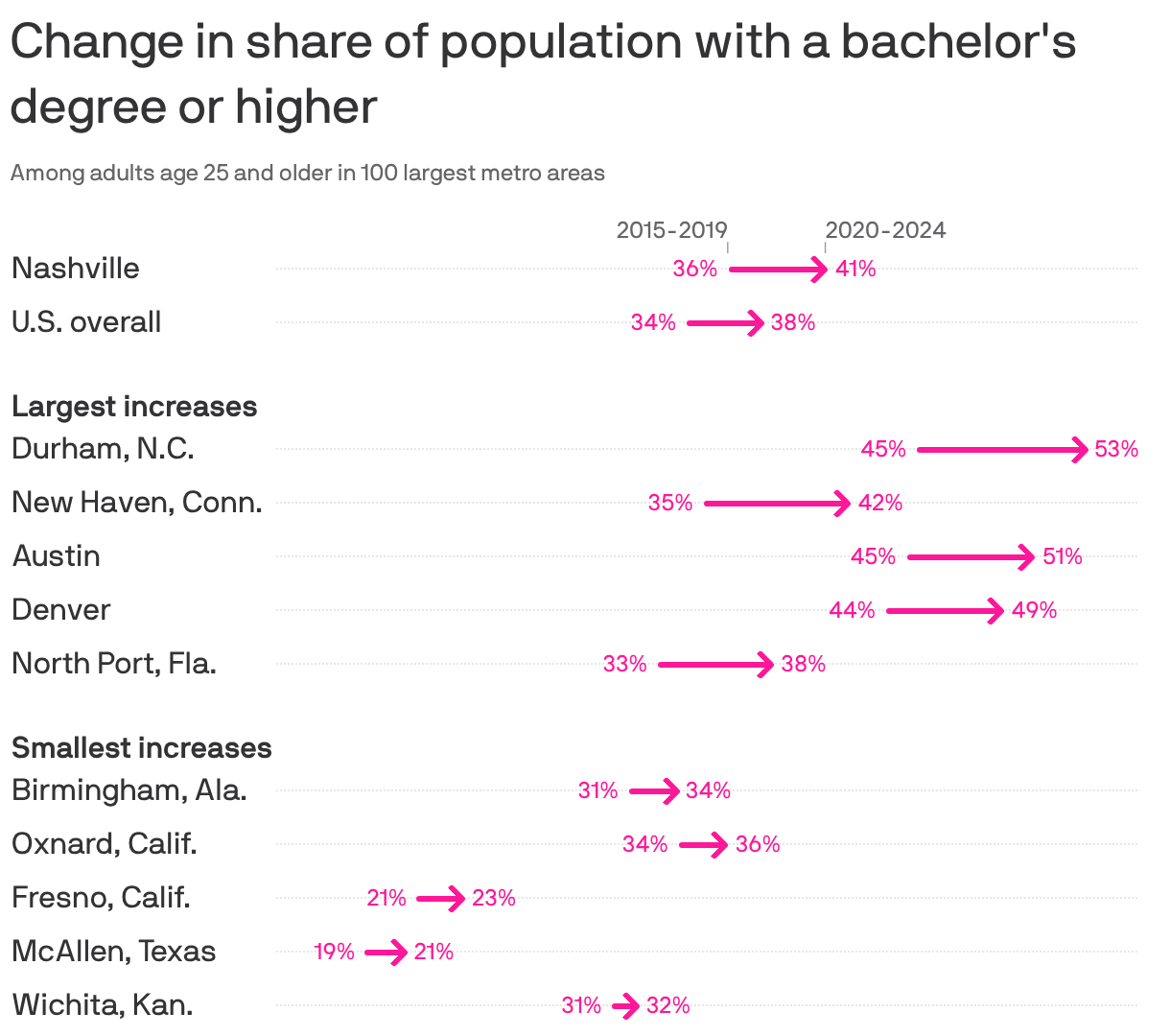
The share of Nashville adults with a bachelor's degree or higher has surged in the last decade, according to new census data.
Why it matters: A rising share of college-educated adults can reshape the area's workforce and build economic muscle. A highly educated population can also be attractive to companies looking to relocate.
By the numbers: Nearly 41% of Nashville-area residents 25 or older have at least a four-year degree, Alex Fitzpatrick and Jacque Schrag report from new census data.
- That's a 5-point jump between the 2015-2019 and 2020-2024 periods.
- Nashville was one of the top 20 metros with the fastest-growing attainment rates.
Zoom out: Nearly 90% of metro areas saw an increase in the share of adults 25 and older with a bachelor's degree or higher, per the Census Bureau's latest five-year American Community Survey estimates.
- A given metro's share can increase if more residents get their degrees or if more people with degrees move to town.
The big picture: Tennessee has been working to expand college access for years. State leaders frame the issue as existential as the state scurries to build out a workforce that can fill jobs in high-tech factories and corporate headquarters.
- Business leaders have urged policymakers to beef up education and training initiatives to meet the demand.
Follow the money: The median annual earnings for a person with a bachelor's degree in Nashville is a little more than $70,000, compared with just over $41,000 for workers whose education stopped at high school.
Reality check: People with the most to gain from higher education also tend to face the most challenges trying to get one. A recent report ranked college affordability in Tennessee poorly.
What we're watching: Tennessee is in the middle of testing a new program that sends high school seniors automatic college admission letters along with personalized financial aid estimates.
- Twenty-one universities are participating alongside all community and technical colleges.
- Education leaders hope that removing the need for applications will encourage more students to pursue higher education.