Nashville's Fort Negley Park finally comes to fruition

Add Axios as your preferred source to
see more of our stories on Google.
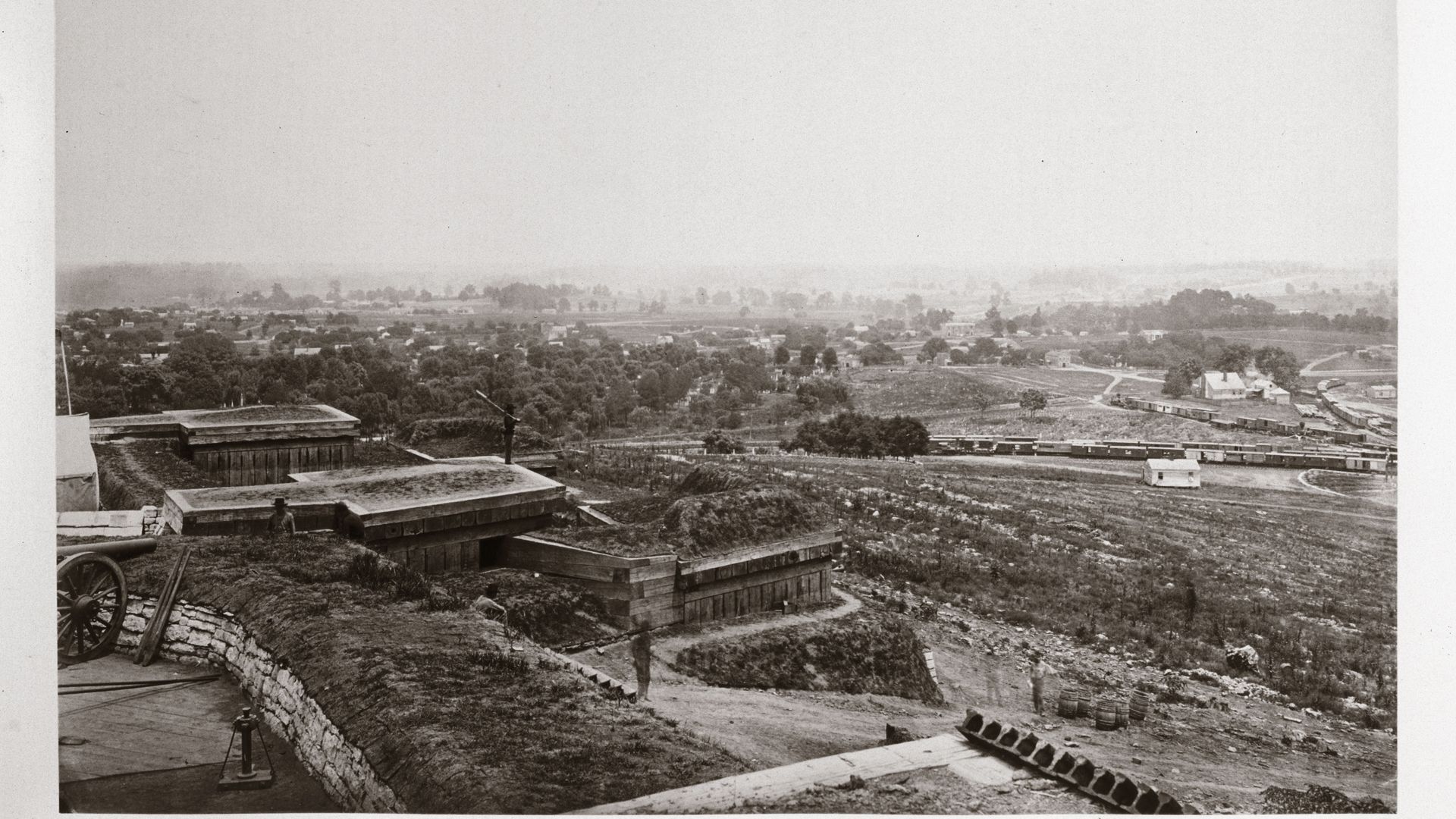
A view of Fort Negley and surrounding area in 1864. Photo: SSPL/Getty Images
Nearly a decade after developers sought to turn the former Greer Stadium property into condos, retail and creative space, work is finally underway to preserve the area as a public park.
Why it matters: The revitalized Fort Negley serves as one of the most prominent recent victories for historic preservationists, who view the property as sacred land because of its Civil War history.
The big picture: The project adds much-needed park space near the booming Wedgewood-Houston neighborhood.
Driving the news: Mayor Freddie O'Connell led a groundbreaking ceremony last week for Phase 1 of Fort Negley Park.
- The project was mired in bureaucratic neverland for the last nine years.
- Fueled by an $11 million investment during former Mayor John Cooper's term, the new park is expected to open in early 2027.
Flashback: The Sounds played their home games at Greer Stadium for decades before leaving the old ballpark for a new stadium in Germantown in 2015.
- Metro leaders debated what to do with a prime piece of real estate located just off Eighth Avenue South.
- A development team led by music producer T Bone Burnett won a bid to raze the old ballpark and replace it with a project called Cloud Hill, which would include housing, retail, creative studios and park space.
- Preservationists opposed that plan and pushed the city to honor its rich history.
Flash further back: Enslaved people and freed people built nearby Fort Negley for the Union military.
- After the fort's construction, workers and their families settled nearby areas, which became Nashville's earliest Black neighborhoods: Bass Street, Rocktown and Edgehill.
- The fort itself was preserved through the Work Projects Administration in the 1930s and has undergone several renovations since then. The neighborhoods were replaced by the construction of Interstate 65 and other urban renewal projects.
Friction point: The debate over the property's future rekindled during Mayor Megan Barry's administration, and preservationists viewed the situation as an opportunity to undo earlier mistakes and actually honor the site's history.
- An archaeology report in 2017 found a "high likelihood" of human remains on a portion of the property. After that revelation, the Cloud Hill plan was abandoned.
What's next: Phase 1 includes removing the old stadium parking lot, restoring the eastern hillside and constructing a memorial lawn that will highlight the area's history.
- The fort will also receive significant enhancements, including accessible walking paths and a new overlook structure.
- Metro also commissioned an archaeological investigation of the former Bass Street community, along with a public history component and a large mural by a local artist.