As SNAP benefits lapse, local governments and food banks in Tennessee step up

Add Axios as your preferred source to
see more of our stories on Google.
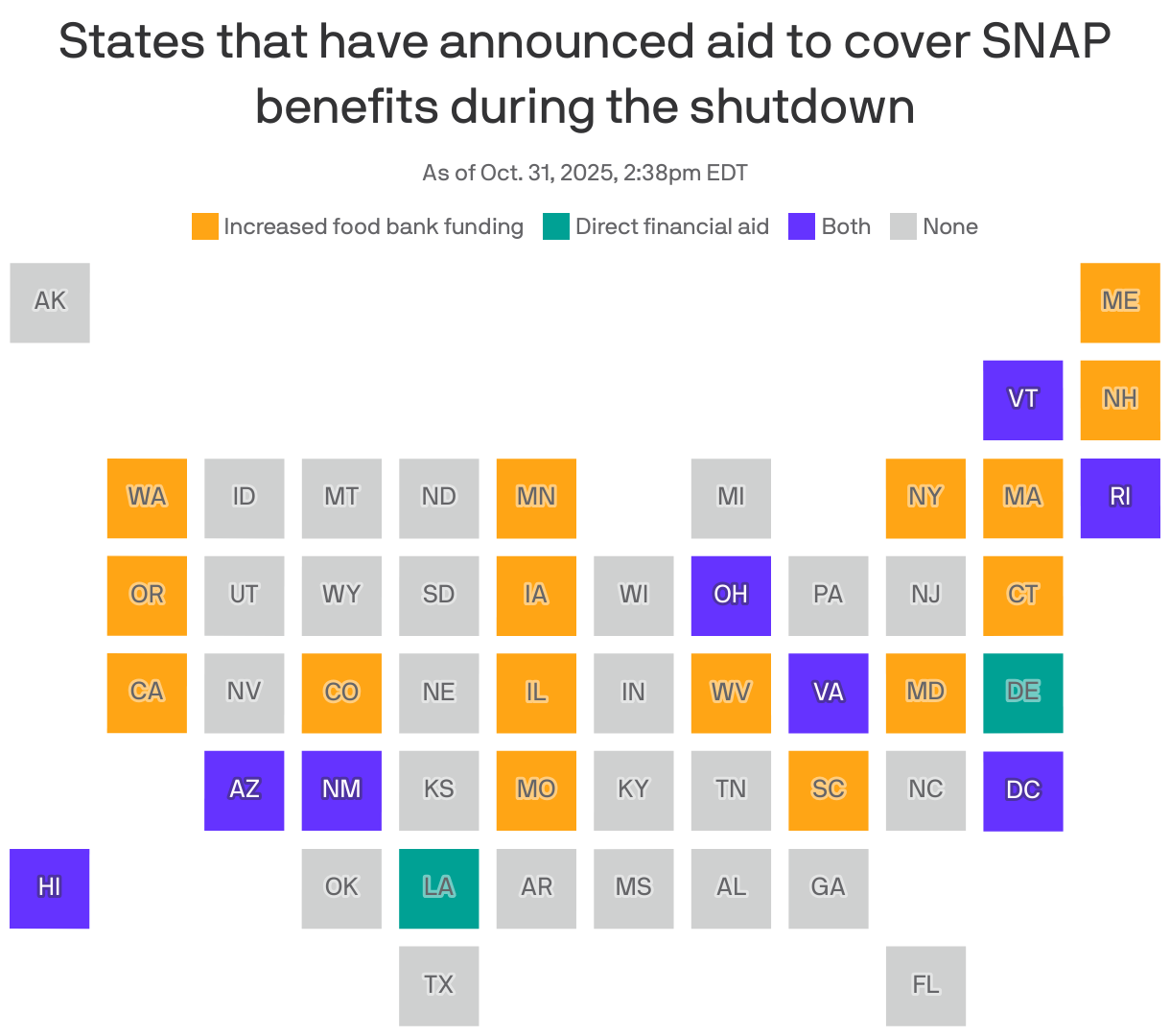
With federal SNAP benefits lapsing Saturday and the state government not stepping in to commit funding, local food banks and nonprofit groups across Tennessee are rallying to help prevent people from going hungry.
State of play: Two separate federal court rulings Friday seemed to offer a reprieve to residents depending on SNAP by ordering the Trump administration to tap into reserve funds to pay for the program.
- But it's unclear how quickly the federal government will move over the money, creating at least several days of food insecurity for those who depend on SNAP for food. President Trump said he's asking the court to clarify "how we can legally fund SNAP as soon as possible."
Why it matters: Approximately 690,000 Tennessee residents, including nearly 60,000 Nashvillians, rely on SNAP, the Supplemental Nutrition Assistance Program, to get their groceries.
Driving the news: With Washington D.C. gridlocked and the federal government shutdown dragging on, SNAP benefits are set to expire. It costs $146 million monthly to operate SNAP in Tennessee.
The latest: Second Harvest Food Bank, the Nashville-based nonprofit that serves 46 counties in Middle Tennessee, is scrambling to meet the needs of people who rely on SNAP.
- Second Harvest created a resource guide for where to find food, including the schedule for its mobile pantry, and how residents can donate to the cause.
- "This is an avoidable crisis caused by a lack of federal leadership," Nashville Mayor Freddie O'Connell said at a press conference at Second Harvest headquarters Friday.
- Metro also joined Second Harvest in launching the Hunger Can't Wait campaign. The city reallocated resources to increase food distribution, strengthen nonprofit partnerships and ramp up emergency food box builds, O'Connell said.
Threat level: If SNAP is delayed for the month of November, it will cost 14.5 million meals just in Second Harvest's coverage area.
- Even with the court orders, stakeholders have concerns about how long the reserve funds would last.
Catch up quick: Gov. Bill Lee said earlier this month the state government will not fill in the funding gap, "as states do not have a mechanism to load benefits onto customer cards."
- The Lee administration is working with nonprofits and faith leaders "to ensure Tennessee families do not go hungry," he said.
Yes, but: As of Friday afternoon, 25 states dedicated direct financial aid, increased food bank funding or both.
Zoom out: Democratic state lawmakers have asked Lee to call a special legislative session to address the issue.
- State Sen. Paul Bailey, a conservative Republican, said in a press release last week the state should act.
- "Our most vulnerable citizens should not become casualties of Washington's dysfunction," Bailey said. "In my rural district alone, 20,635 individuals depend on SNAP benefits, including working parents, elderly residents and Tennesseans living with disabilities."
The bottom line: Bailey acknowledged Lee's point that Tennessee currently lacks a mechanism to fund and distribute SNAP benefits without federal dollars.
- "We have found ways to innovate before and we can do it again," he said.
Go deeper: The Nashville Scene created a resource guide with a list of food banks and other nonprofits offering help.
- Metro also created a resource page for how people can get help.
Editor's note: This story has been updated to reflect Friday afternoon's federal court rulings ordering the Trump administration to tap into reserve fund to pay for SNAP.