Tennessee warns residents to watch for invasive lanternflies

Add Axios as your preferred source to
see more of our stories on Google.
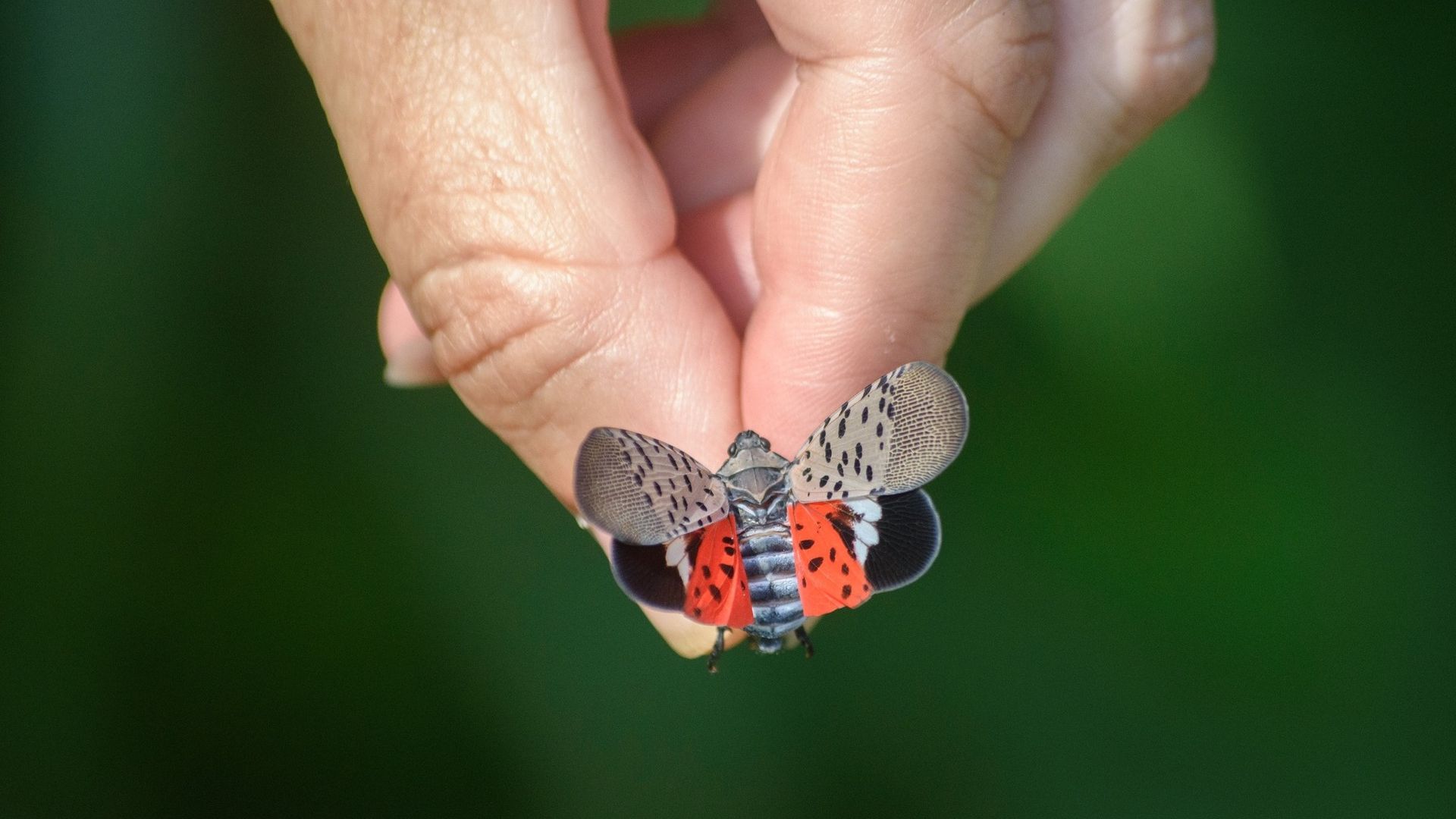
Photo: courtesy of the Department of Agriculture
Tennessee's Department of Agriculture is on alert for an attractive but unwelcome species of insect that's already been seen across the state.
Why it matters: The spotted lanternfly gathers in clusters and stresses plants, including apple trees and grapevines, and leaves behind a gross "sooty mold."
The intrigue: With its unique and colorful polka dot pattern, the spotted lanternfly looks like something you'd want to capture for an Instagram post.
- Instead, the Department of Agriculture is readying a public awareness campaign, including billboards, that will encourage people to squish the insect.
- Cindy Bilbrey, state entomologist, tells Axios the insect is a nuisance for people, including in residential areas where their byproduct, called honeydew, creates a sticky, gunky substance.
Zoom in: She says the awareness campaign is aimed at helping Tennessee nurseries.
- "For the Department of Agriculture, our goal is to assist the movement of pest-free products," she says. "We're a big nursery industry state, and they need pest-free products. We don't want to ship these things to other locations."
Zoom out: The spotted lanternfly was first identified in the U.S. in 2014. "Squish 'em" campaigns have been launched in other states, primarily in the Northeast.
- The varmints especially like nesting in a tree called the tree of heaven, but over 70 species of plants can be impacted. They are not known to bite, she says.
State of play: The spotted lanternfly has been identified in about seven Tennessee counties, including in Sumner County earlier this year. It was seen in Davidson County in 2023.
If you see a spotted lanternfly: Bilbrey says people should snap a picture, stomp the insect and report it.
- She says the department also wants to educate people about how to spot the insects' eggs, which are camouflaged.
- "It is serious for the Department of Agriculture and our agriculture industry. For the general public, they are a nuisance,"
Go deeper: Visit the department's website for more information.