Shutdown could hit SNAP and WIC; Tennessee "awaiting federal guidance"


Add Axios as your preferred source to
see more of our stories on Google.
Government food assistance programs may be at risk if Congress is unable to reach a funding agreement to stop the shutdown in the coming weeks.
Why it matters: Millions of mothers, infants and low-income families who rely on WIC and SNAP — programs commonly known as food stamps — could lose that support in a long-term shutdown.
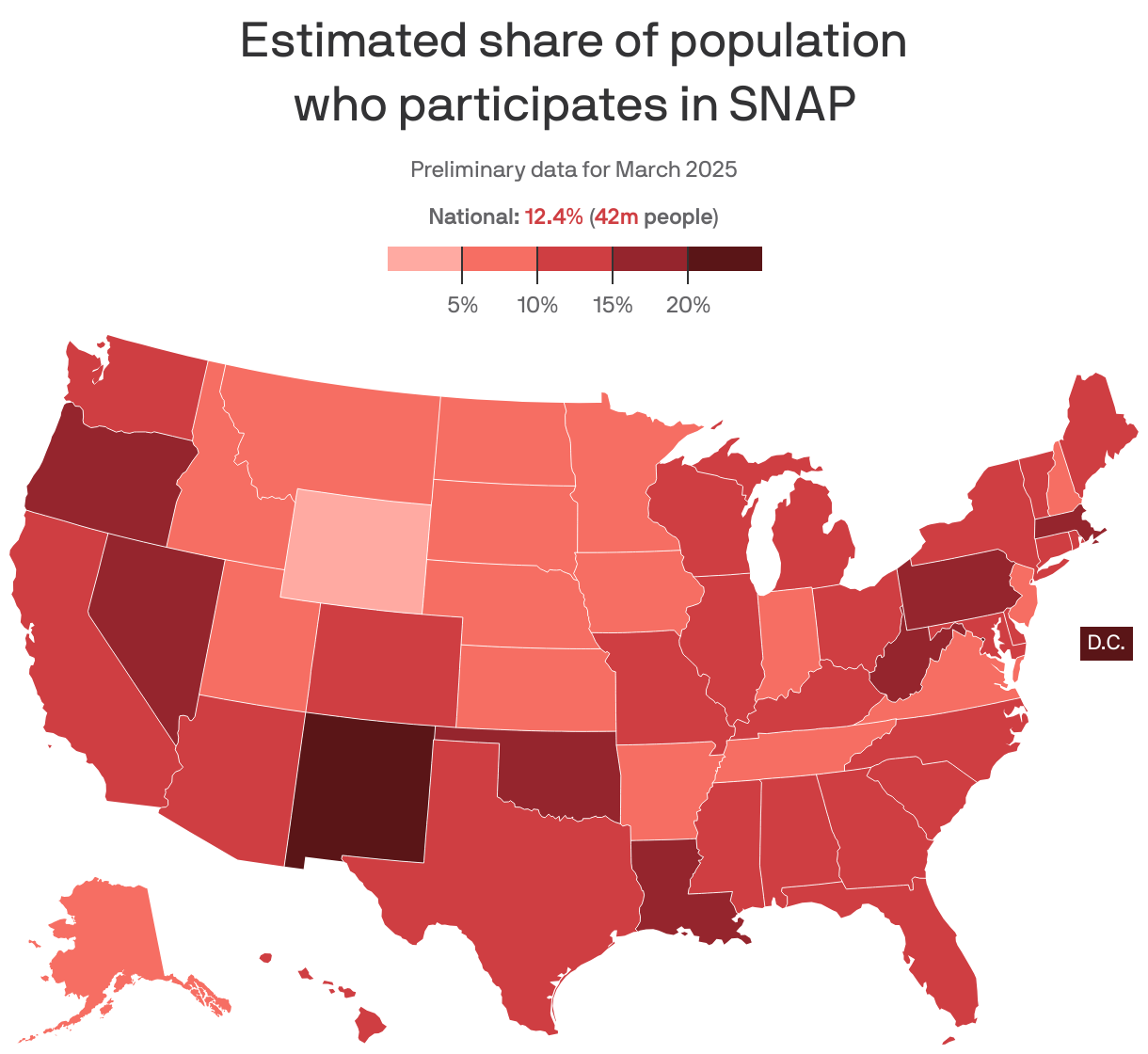
- In Tennessee, nearly 1 in 10 people get Supplemental Nutrition Assistance Program benefits, per data from last year. That's more than 668,000 residents across the state.
What they're saying: In an online statement addressing the shutdown, the state health department said, "Tennessee WIC will continue to operate until further notice."
- "At this time, we are closely monitoring the situation and awaiting federal guidance to evaluate the potential impact" of the shutdown, says Danielle Cotton, spokesperson for the state Department of Human Services, which oversees SNAP benefits.
- "The Lee administration is committed to serving Tennesseans and working with federal agencies to ensure essential services continue, and we will share updates as more information becomes available to ensure our customers remain informed."
How it works: Funding for WIC, known in full as the Special Supplemental Nutrition Program for Women, is allocated quarterly from the USDA to states, but with the shutdown starting at the beginning of the fiscal year, states are left with just $150 million in contingency funds to keep the programs afloat.
- States can tap unspent funds from the last fiscal year, but they may need to use their own tax dollars until Congress restores full funding.
- The U.S. Office of Management and Budget has committed funding for SNAP — which supports more than 40 million Americans monthly — through October, but it hasn't confirmed how long funds would last after that.
Editor's note: This story has been corrected to reflect that Danielle Cotton works for the Tennessee Department of Human Services (not the state health department).