Tennessee is close to requiring school cellphone bans

Add Axios as your preferred source to
see more of our stories on Google.
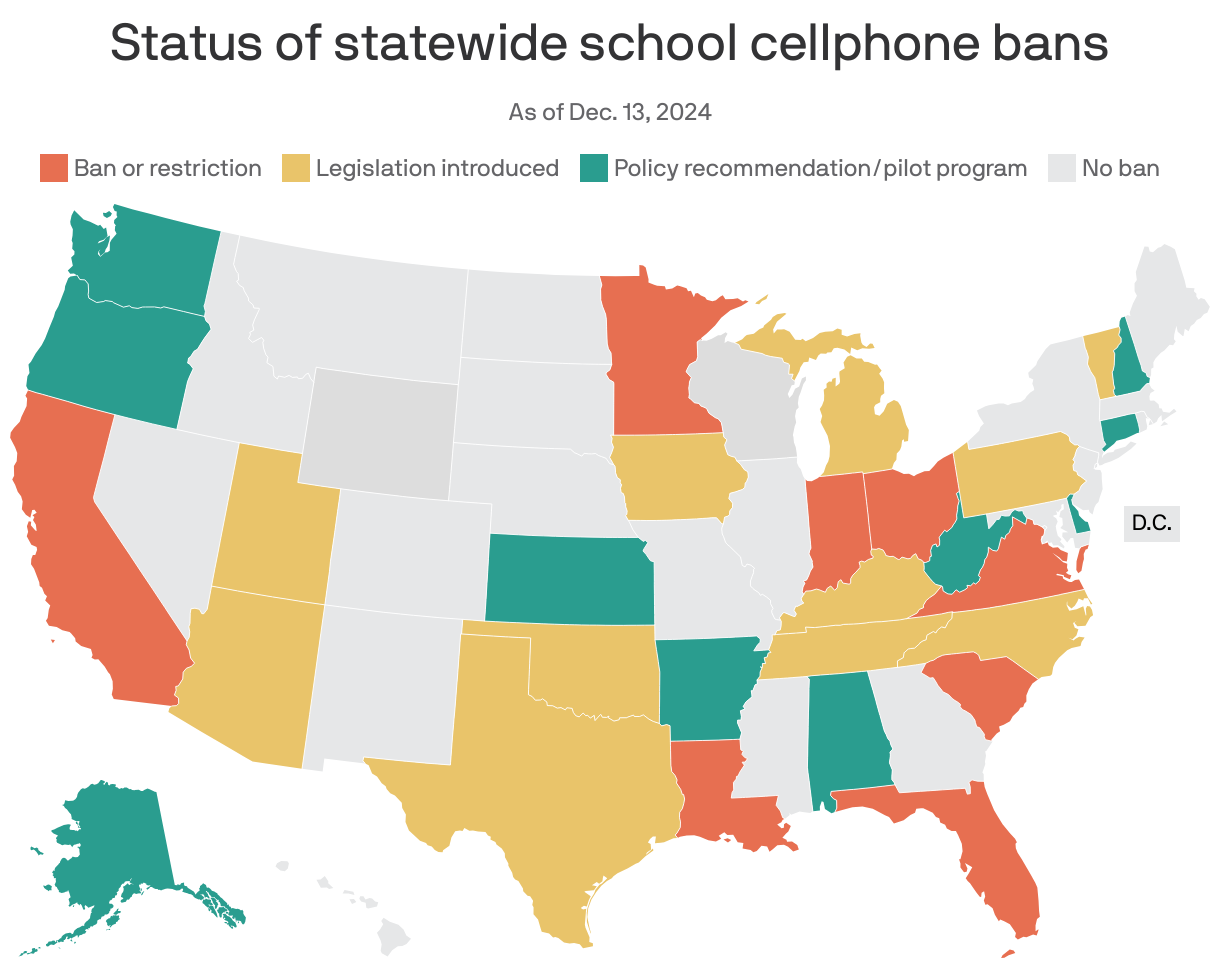
Tennessee is inching closer to banning cellphones in classrooms.
Why it matters: Bans like these, which have become popular nationwide, are designed to reduce distractions in K-12 schools while protecting students' mental health.
The big picture: 68% of U.S. adults support cellphone bans during class, and about 36% favor an all-day ban, a Pew Research survey found last year.
- Those who oppose the bans, especially parents of K-12 students, cited the ability to reach their children when needed, according to the poll.
State of play: A cellphone ban stalled in the Tennessee legislature last year, but a tweaked version has advanced quickly and with bipartisan support in 2025.
- HB 932 would require school systems to establish policies that prohibit cellphones and other "wireless communication devices" during instructional time.
- The measure passed in the House Monday. It could face its final vote in the Senate as soon as Thursday.
Zoom in: The bill, which was crafted with input from statewide education groups, includes several exceptions. For instance, students with disabilities could use phones or special apps they need for schoolwork.
- Teachers could allow students to use cellphones for educational purposes, and students could use phones in emergencies. It would be up to individual districts to set parameters for those exceptions.
What they're saying: State Rep. Rebecca Alexander (R-Jonesborough), the lead sponsor, said districts would have plenty of flexibility to determine the specifics of their local bans. Some school districts might ban phones all day, while others might only prohibit them during class.
- "It is a very permissive bill and it allows each school board to set up their own policy," Alexander said in a legislative hearing last month.
Reality check: Most Tennessee school districts, including Metro, already have bans in place. Some are stricter than the basic plan laid out in this legislation.
- Alexander said superintendents asked her to bring the bill forward.
The bottom line: "We're setting a minimum level of expectation of what we believe is in the best interest of the students," Rep. Scott Cepicky (R-Culleoka) said during a hearing.