Nashville school board chair Freda Player talks top issues facing the district

Add Axios as your preferred source to
see more of our stories on Google.
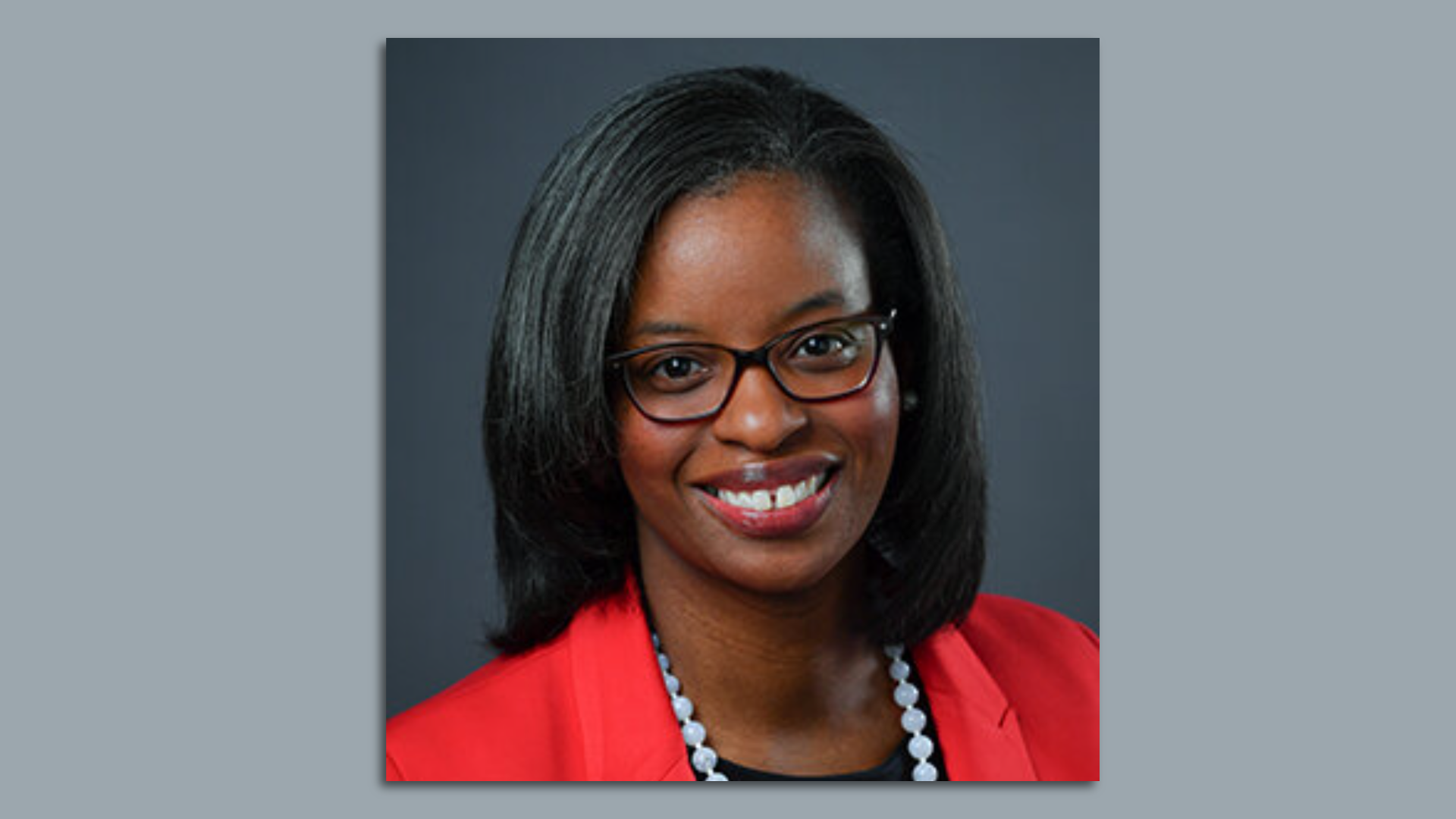
Nashville school board chair Freda Player
Voucher expansion is imminent, President Trump has committed to abolishing the U.S. Department of Education and charter schools continue to grow in Nashville.
- Nashville school board chair Freda Player is at the intersection of drastic changes to education policy.
Against that backdrop, Axios interviewed Player about the biggest issues facing Metro Nashville Public Schools and her goal of making sure the school board is not "must-see TV."
- Before being elected to the school board in 2020, Player worked as a political strategist for the Service Employees International Union, then-Mayor David Briley's administration and the Tennessee Democratic Party.
Why did you want to be the board chair, and what is your approach to the job?
I wanted to bring the effectiveness, the efficiency, an improved sense of culture, considering what our past history has been.
I've even had [Arizona U.S. Sen.] Mark Kelly tell me, "You know, that's one office I would never run for." Other elected officials are just like, "God bless you, I would never run for school board."
[I believe] it's a noble cause, but also it can run effectively like any other branch or any other body of government. And so I just want to elevate the board to that level, and more importantly, institutionalize it where there is a basic, fundamental governing culture that we can sustain.
What is the culture of the school board right now?
It's really great. We are no longer the must-see TV that we have been in the past. I definitely joke that our meetings are boring and we nerd out on data. But it's a very collegial body. I say we're like siblings in that we will have some tough conversations.
We agree on the same goal, but maybe not the tactic of how to achieve that goal. One moment, we'll have some tough conversations in a thoughtful way, and then after that discussion is over, we're literally cracking jokes and having jovial conversations with one another.
So zooming out, what is the biggest issue facing MNPS as you see it right now?
I would say state and national leaders making fundamental changes to the system that don't take account for the full diversity of communities within our state and our nation and how that affects us on the ground.
[For instance,] the fact that we're getting less money [from the state's new funding formula] at a time where we need more money to educate. Especially with the increased standards that make it that much more difficult, because you're not you're not taking account of the students, their social and economic situations, whether they're learning English as a second language.
So we're getting less money. ... So now I have to figure out with the mayor and Dr. [Adrienne] Battle and the council: How do you make up for that lack of funding which we were getting from the state that now that we have to go back to the local level? ... How do we mitigate the impact?
Presidential politics have potential impacts on the local school board because the president has talked about abolishing the Department of Education. Have you given much thought to those comments and how it might affect us here in Nashville?
It's one of the things that we are thinking about behind the scenes. ... To completely demolish a whole branch of government, a whole part of the executive cabinet, you can't do it overnight. So it will take several years to actually do.
But it really affects, how do you deal with like Title I [federal funding for economically disadvantaged students], Title IX [gender-based anti-discrimination laws]. Some of those funding mechanisms typically come to special ed. We're starting to think about, how do we start making up for that gap?
We already have vouchers in Nashville. Does that take the sting off the governor's voucher expansion plan, or is there still concern that an expansion would negatively affect us here in Nashville?
It takes about 70% of the sting away because we were already doing it. But the question is, once it's fully implemented, the other 30% is what changes, what adjustments could also affect us?
[MNPS lost] about $6 million of operating budget toward vouchers this year.
At the end of this fiscal year, we're looking at close to $9 million being part of the pilot program, that's how much we have lost with the vouchers.
A decade ago, the charter school fights like Great Hearts were a defining issue in local politics. How would you describe the state of the charter school push in Nashville right now?
Charters are here to stay. They're not going anywhere. And I would say we have great relationships with some charter schools, not so great with others. ...
My concern is that if we do not have a strategy or a vision of how charters fit within the public school system, you're going to get to a point where you're going to have more charter school seats and public school seats than there will be kids that actually live in Davidson County.
[Editor's note: The interview with Player took place before the Antioch school shooting. When asked about safety issues, Player referred Axios to her comments at last week's school board meeting, which is included below.]
The decision to pilot metal detectors at Antioch High School was not made lightly. We are aware of the many concerns and limitations of using them. The assessment of their effectiveness will extend beyond the physical results for the upcoming weeks.
We also recognize we must do more to ensure our students who feel isolated, disconnected, or hopeless have students and staff who can reach out and offer support. This is an essential ingredient to preventing violence in our schools and our communities. We will continue to prioritize making every student known, but also loved and supported.