Vanderbilt sets new world record for heart transplants

Add Axios as your preferred source to
see more of our stories on Google.
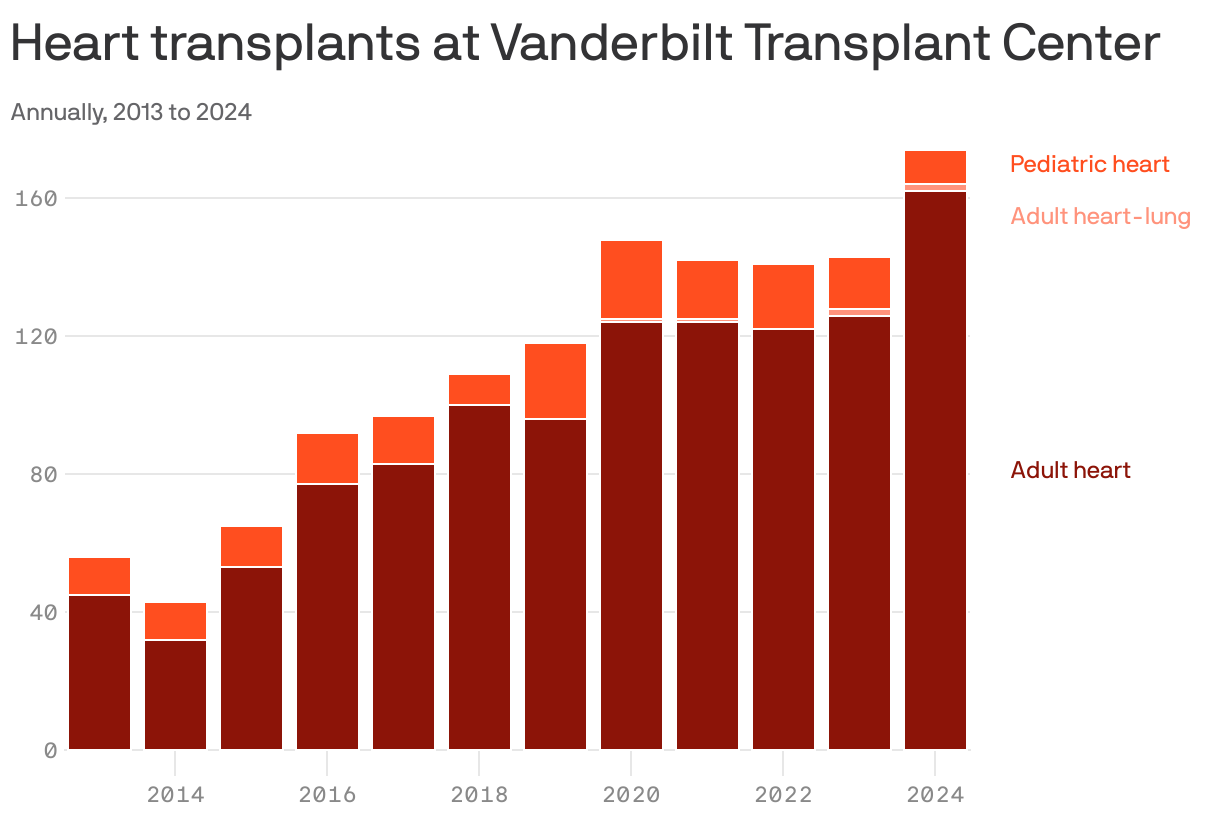
Vanderbilt University Medical Center set a world record in 2024 for the most heart transplants conducted in a single year.
Why it matters: To put it plainly, organ transplants save lives.
- Vanderbilt has become a destination for high-risk patients from around the country who urgently need new hearts.
By the numbers: The record-setting year included a whopping 174 heart transplants. Ten of those transplants went to children.
- Patients referred to Vanderbilt for transplant consideration came from more than 15 states.
What they're saying: "It's not about the number but about what that number represents: teamwork, innovation and the humbling but incredibly rewarding opportunity to shepherd so many patients on their life-changing journeys," Kelly Schlendorf, the medical director of the Adult Heart Transplant Program, said in a statement this month.
Zoom in: Some of the heart transplants conducted last year attracted national headlines.
- Scot Pollard, a former NBA player and "Survivor" contestant whose 6-foot-11 frame posed specific challenges, received a heart transplant at Vanderbilt in February.
- In May, a Vanderbilt organ recovery team traveled 5,704 nautical miles to Alaska to recover a donor heart.
The big picture: Vanderbilt conducted its first heart transplant in 1985. The pace of transplants has grown especially rapidly over the last decade.
- The Vanderbilt Transplant Center recently announced it had completed 2,000 heart transplants.
Between the lines: Vanderbilt has been a leader in harnessing new technology that allows medical teams to preserve hearts that would have been discarded in the past for fear that they wouldn't work well.
- That new technology has greatly expanded the donor pool and the window of time teams have to transport the organs.
- VUMC reports that half of the hearts transplanted there in 2023 came from DCD (donor after cardiac death) cases that would not have been deemed viable in the past.
How it works: It takes about 150 people to work on a single organ transplant, including surgeons, anesthesiologists, pharmacists, social workers and nutritionists.
Fun fact: One organ donor can save eight lives and help 75 others.
- If you're interested, you can learn more and register online to become an organ donor.