O'Connell administration studies historic zoning improvements

Add Axios as your preferred source to
see more of our stories on Google.
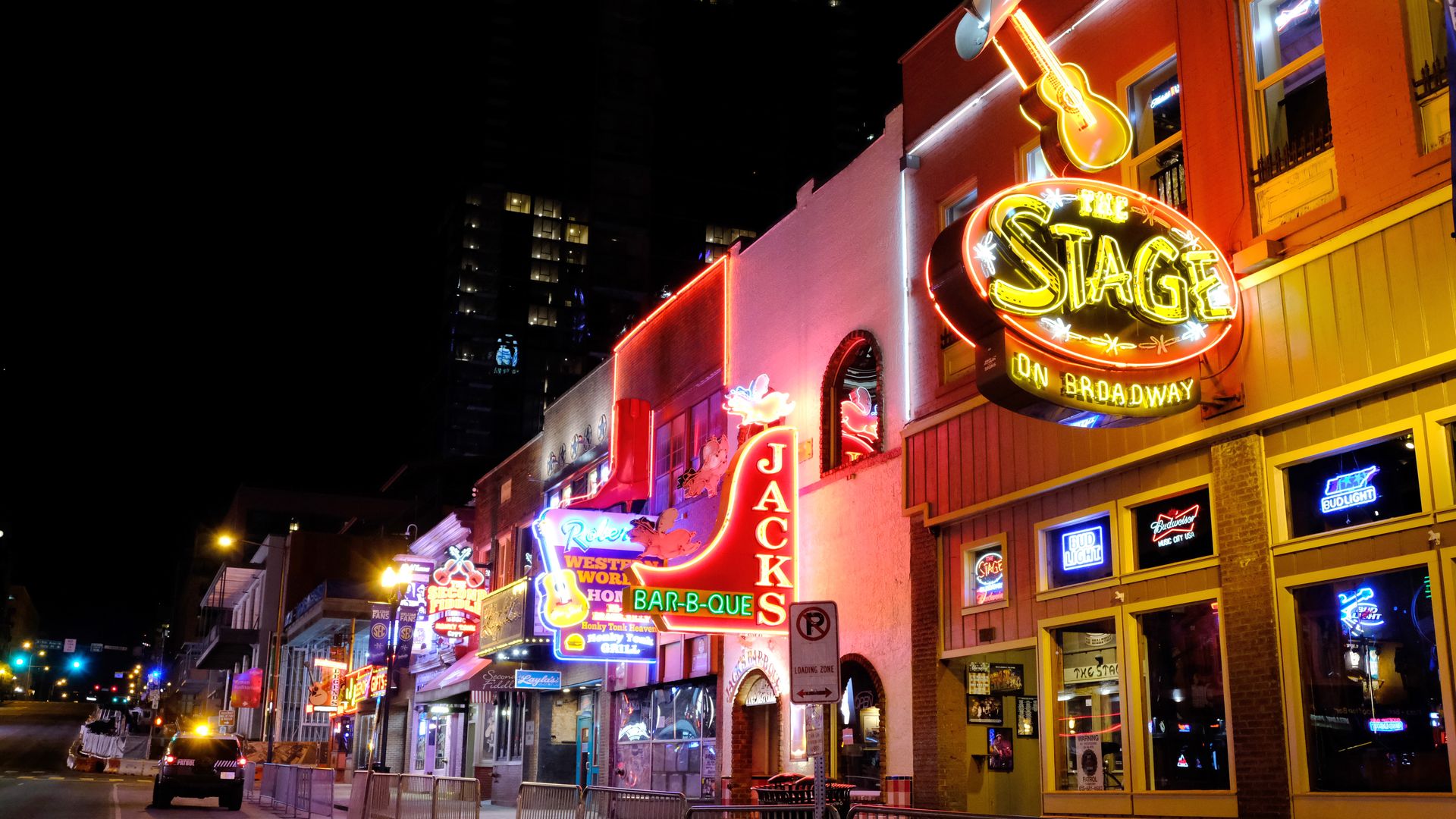
Lower Broadway in 2020. Photo: Mickey Bernal/Getty Images
A study of historic zoning regulations is underway in Nashville as leaders seek to satisfy preservationists, neighborhoods and downtown honky-tonk owners.
The big picture: Downtown honky-tonk owners pursued state legislation earlier this year that would have watered down historic zoning protections in Nashville.
- The legislation, backed by the Broadway Entertainment Association, didn't advance during the session this past spring, but there's a possibility it could return.
- Honky-tonk owners regularly run up against historic zoning regulations when they seek to alter their old buildings downtown.
- Homeowners in Nashville neighborhoods have also had dust-ups with the city's Historic Zoning Commission when they seek approval to make upgrades to their houses.
Driving the news: Mayor Freddie O'Connell's administration is trying to get ahead of the issue, and has hired a consultant to study Nashville's historic zoning.
- Their goal is to ensure historical buildings and neighborhoods are preserved while also coming up with common sense improvements to the city's historic zoning process.
- The consultant, HDR, has quietly been interviewing key stakeholders, including people representing downtown businesses, in recent weeks about their experiences with historic zoning.
What they're saying: "We have worked with a consultant and multiple departments to look at process improvements related to historic zoning," O'Connell spokesperson Alex Apple tells Axios.
Between the lines: Over several decades, Metro created roughly three dozen historic zoning overlays to preserve the character of some Nashville neighborhoods and curb widespread redevelopment.
- Nashville is inconsistent at preserving its historic buildings, sending signals that Metro isn't too strict about its regulations.
- On the other hand, some of the zoning disagreements created extra costs and bureaucratic hassle for property owners seeking small alterations to their homes.
- "[The Historic Zoning Commission] needs to be a department that serves the ideology of the people of the city," Rob Mortensen, lobbyist and spokesperson for the honky-tonk group, tells Axios. He says the disputes are the result of occasional "overreach" by the department.
Zoom in: Metro Councilmember Emily Benedict represents the Inglewood area, where residents have recently had disagreements with the Historic Zoning Commission.
- In one case, a homeowner wanted to add a new porch onto their house. During the application process, staff discovered that an existing porch on a different part of the house was illegally constructed by a previous owner without proper approvals.
- So the commission ruled in August that in order to build the new porch, the homeowners must fix or tear down the original porch.
- In another case, the commission rejected homeowners' request to replace their siding because the material they wanted to use isn't allowed by the overlay. In that case, nearby neighbors offered their support for the project, but the plans were still rejected.
Benedict tells Axios the Historic Zoning Commission should factor in support from neighbors when they make their decision.
- "While I understand how the commission arrived at their conclusions, I would like to see more creative and flexible solutions," Benedict tells Axios. "I believe our staff and commission can work together to achieve better outcomes for our residents in the future."
The other side: A recent internal study by Historic Zoning Commission staff found that the vast majority of applications are approved. Just 10% have been rejected this year.
- "The low percentages likely tell us that staff is doing a good job assisting applicants with feedback to help them obtain approval," the staff report found.
- "Although still low, this year the number has approximately doubled which could be another indicator that applications have become more challenging than they were in the recent past."
- Metro Historic Zoning executive director Tim Walker tells Axios his department supports the study. Walker says it's important to remember historic overlays are in place because residents wanted them.
The bottom line: "We are always looking for ways to streamline our process for applicants and others, and this study should provide us with some potential recommendations for improvements," Walker says.