Nashville driving has eclipsed pre-COVID levels


Add Axios as your preferred source to
see more of our stories on Google.
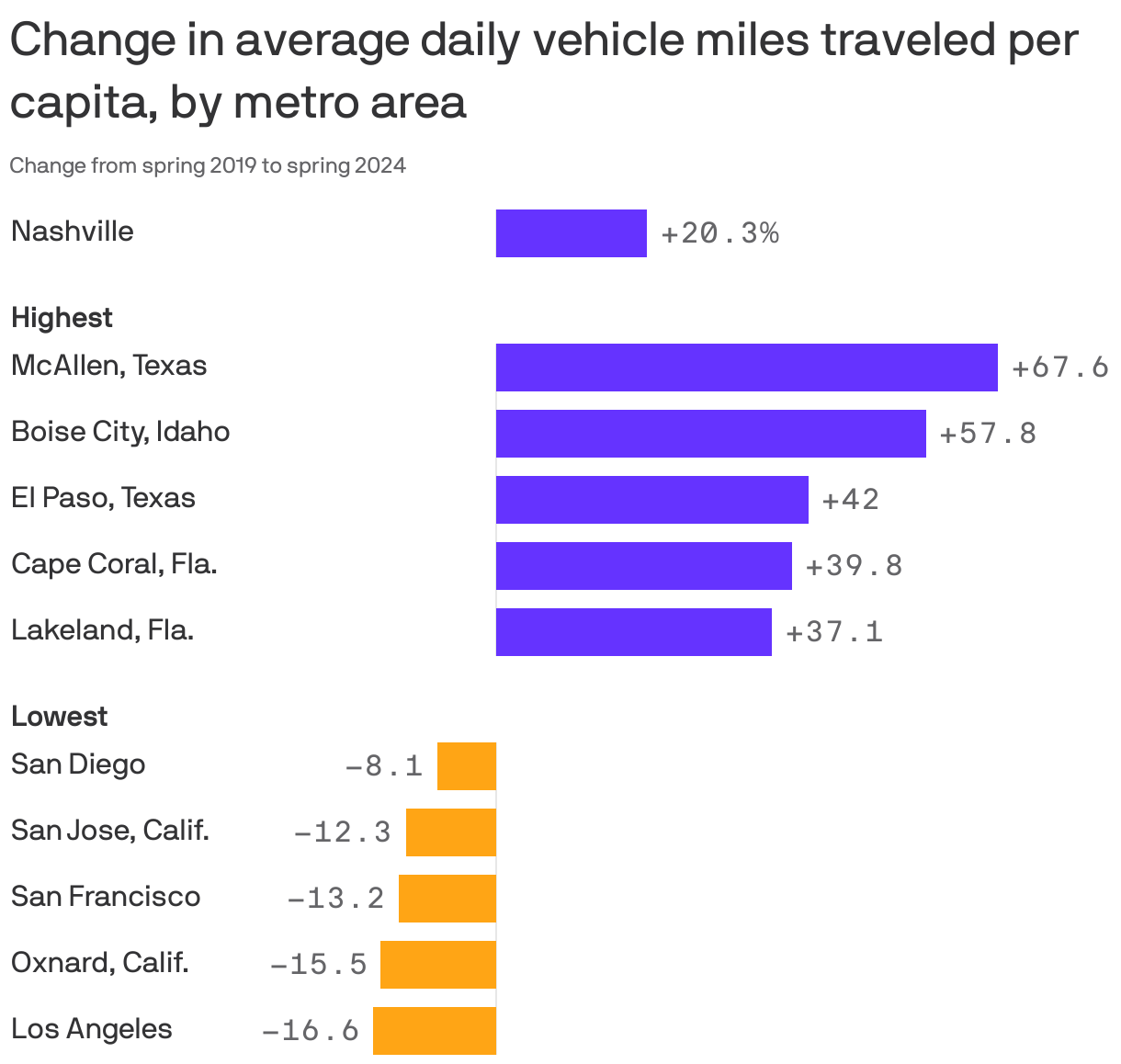
Nashville-area residents are driving quite a bit more than they did before COVID, a new analysis finds.
Why it matters: Driving plummeted during the lockdown period, giving cities a chance to get a lasting handle on transportation emissions. But the subsequent surge in drive times could have the opposite effect.
The big picture: Average daily vehicle miles traveled (VMT) per capita is increasing nationwide, per a new report from StreetLight Data, a transportation analytics firm.
- It jumped by 12.3% across the 100 biggest U.S. metro areas this past spring compared to the same period in 2019.
Zoom in: In the Nashville area, travel soared by more than 20%.
- A separate study earlier this year found Nashvillians logged the fourth-highest rate of daily miles traveled in the nation at 35.5.
Driving the news: Mayor Freddie O'Connell is pushing a transportation plan that would use a sales tax bump to fund increased public transit and new traffic light technology.
- The administration argues the plan, which will be on the Nov. 5 ballot, could decrease residents' reliance on cars, and could time stoplights to make commutes quicker for people who drive.
Yes, but: While higher VMT tends to mean more vehicle-related emissions, it can also be a sign of changes generally perceived as positive, like more economic activity.
- Lower VMT can be a sign of successful public transit or cycling projects — or an indication that people are still working hybrid or remotely.
The bottom line: "It's not just that [VMT] is back up, but we're actually seeing a bit of an acceleration compared to the previous couple of years," Emily Adler, director of content at StreetLight, tells Axios.
- "So that suggests that we're not peaking," she says.
- "Whatever efforts we've strived for to keep VMT down, they're not quite working — or they're not working yet."