How Nashville is fighting to reduce food waste

Add Axios as your preferred source to
see more of our stories on Google.
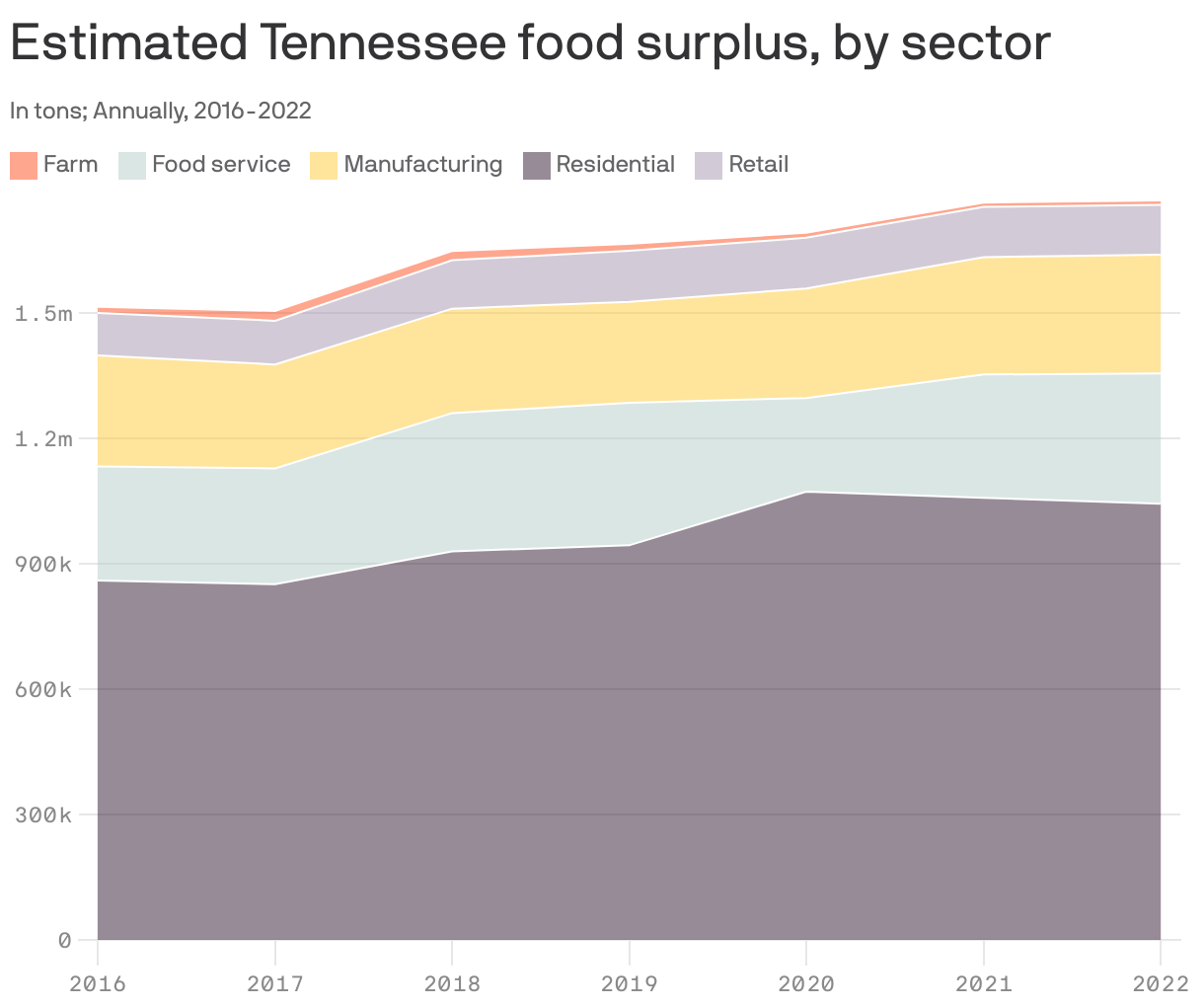
Residents and businesses in Tennessee produced 1.77 million tons of surplus food in 2022, a 17% increase from 2016, per data from the nonprofit ReFED.
Why it matters: Wasting food has wide-ranging consequences that negatively affect communities.
Zoom in: For starters, that food could be a vital lifeline for people who are food insecure. In Nashville alone, more than 73,000 people lack access to the food they need to stay healthy, according to Feed America data.
- There are serious environmental concerns as well. Food waste makes up 24% of municipal landfill input and contributes to 6.1% of U.S. greenhouse gas emissions.
- It also hits you in the wallet: On average, a person wastes $759 on uneaten food each year.
State of play: In 2015, the Natural Resources Defense Council tapped Nashville as its pilot city for developing local strategies to address food waste.
- Leaders here have been working for years to do so via the the Nashville Food Waste Initiative, which brings together nonprofits, businesses and restaurants to educate the public and cut down on the city's surplus through several programs.
- Last year, the Metro Council passed a resolution setting a citywide goal of cutting food waste from 2017 levels in half by 2030.
- That work ties in with Nashville's broader effort to reduce greenhouse gas emissions by 80% from 2014 levels by 2050.
What he's saying: "Obviously, it's very important not just to the city but to the planet that we get food right," Todd Lawrence, executive director of Urban Green Lab, tells Axios.
- "Where do we start? Well, we need to set a goal. Nashville has that goal."
Of note: Urban Green Lab leads the food waste initiative and focuses on educating the community.
- The local nonprofit has trained 330 public school teachers in Nashville to teach students about food waste. They also are commissioning murals across the city to spur conversations on the issue.
The latest: In October, Metro Waste Services launched a yearlong pilot program collecting curbside food scraps from 750 households. The program will divert the food waste from landfills and toward composting instead.
- A spokesperson tells Axios the pilot will inform the city's "long-term, sustainable solution to organic waste for residents with Metro's curbside trash and recycling services."
The big picture: Advocates say thinking about food waste can be a first step toward broader conversations about protecting the environment.
- "Food waste is a gateway into learning about sustainability," Lawrence says.
- "If you're just talking about greenhouse gasses, that's something people can't really hold onto or see. But everyone eats food."
What you can do
Everyone can play a role in reducing food waste. Experts tell Axios it's best to start by weaving manageable habits into your daily routine.
Be smart: "You don't need to be perfect," says Linda Breggin, a senior attorney at the Environmental Law Institute who works closely with the Nashville Food Waste Initiative and has collaborated with city leaders.
- "Anything helps."
What she's saying: "There's a lot of promising movement in this area," Breggin says, noting state and local policy wins as well as engagement from businesses and residents.
- "It's not a politically fraught issue in the same way as other environmental issues."
How to help: Urban Green Lab has several tips for reducing food waste. ReFED suggests following the "Food Waste Five" strategies:
🍞 Store food properly. Knowing the best ways to store bread, herbs and other foods can keep them fresh longer.
🧊 Freeze food to extend its life.
🍽️ Dedicate a day each week for eating leftovers.
🔍 Understand the meaning behind date "best by" labels. Those typically refer to food quality, not safety.
- If food with a "best by" date looks and smells OK, it's probably OK to eat, according to ReFED.
📃 Plan your meals before buying groceries.