Vanderbilt doubles down on criticism of U.S. News rankings

Add Axios as your preferred source to
see more of our stories on Google.
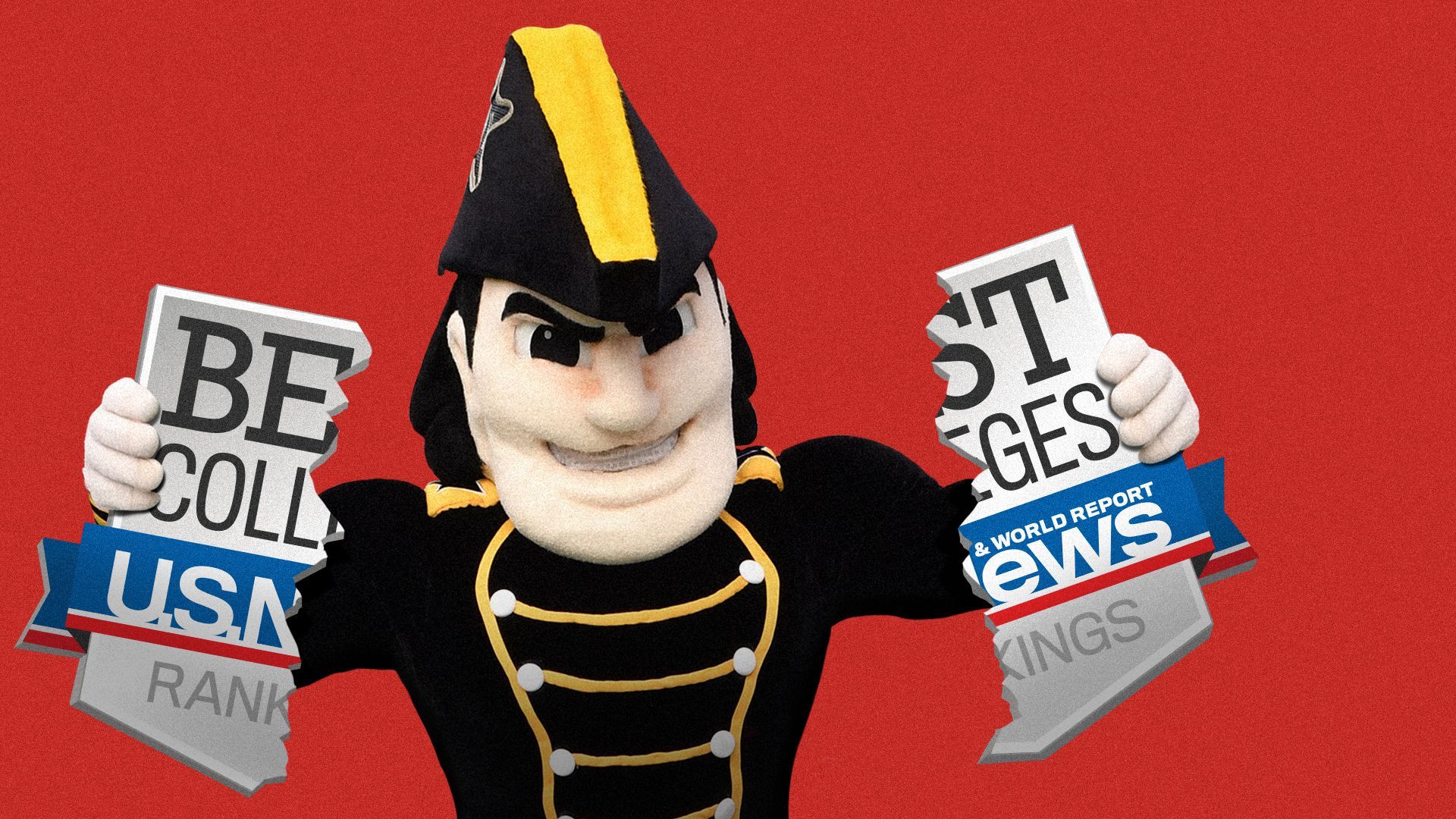
Illustration: Lindsey Bailey/Axios. Photo: Icon Sportswire/Getty Images
Vanderbilt University continues to go on the offense against U.S. News & World Report's college rankings, with university leaders calling the methodology "an attack on the very notion of academic excellence."
Why it matters: Academic institutions have criticized the U.S. News rankings for years, but the intensity of Vanderbilt's opposition reflects a growing backlash.
- Even as they blast the "annual rankings circus," leaders at Vanderbilt acknowledge the list's enduring influence on students and their families.
Driving the news: Vanderbilt stayed in the top 20 in the nationwide rankings but fell five spots since last year, to No. 18. The drop came after the publication overhauled its system, eliminating measures like class size and professor qualifications and adding new ones focused on student debt and other socioeconomic factors.
The latest: The university denounced the removal of the academic factors in an email to students last week. Vanderbilt Chancellor Daniel Diermeier and Provost C. Cybele Raver sent another message Tuesday doubling down on those criticisms and poking holes in the socioeconomic measures.
State of play: Diermeier tells Axios the metrics are incomplete and misleading. For instance, he says, the figure on student debt reflects the average among students who take out loans.
- But he says the average doesn't include students who don't need to take out loans due to hundreds of millions of dollars in need-based aid Vanderbilt awards annually through its in-house financial aid program Opportunity Vanderbilt.
What he's saying: Diermeier says the student debt metric paints a misleading picture that could drive away "high-achieving, low-income students that would thrive at a university like Vanderbilt."
- "They're scaring people away," Diermeier says. "That's why we care."
- "We think we have a duty to speak up."
The big picture: Columbia University recently stopped sharing data for the U.S. News undergraduate rankings, and multiple high-profile law schools, including Vanderbilt's, stopped participating in a ranking for that specialty because of criticism that it was a poor measure of quality.
- Diermeier says Vanderbilt hasn't decided if it will participate in the undergraduate rankings in the future.
- "Our key focus right now is to put a spotlight on how problematic this year's rankings are."
The other side: A spokesperson for U.S. News defended the methodology changes in a statement to Inside Higher Ed.
- "We made changes to our rankings as appropriate and to reflect the changing landscape of higher education," the statement read. "We know that comparing diverse academic institutions across a common data set is challenging."