How vouchers could help Indianapolis keep families while hurting IPS

Add Axios as your preferred source to
see more of our stories on Google.
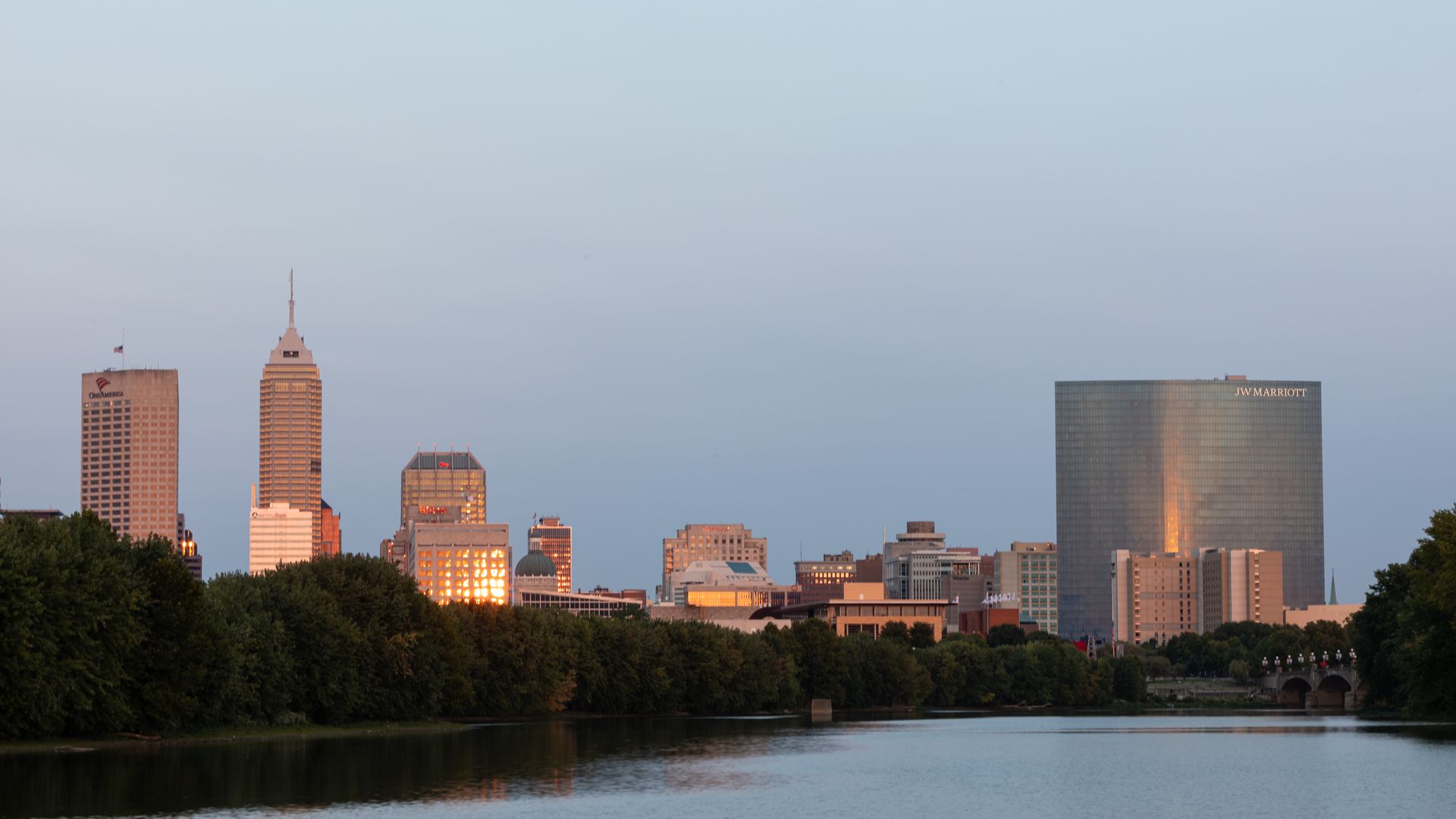
Indianapolis has attracted young professionals, but many leave when they have kids. Photo: C. Morgan Engel/Getty Images
Expanding school voucher eligibility to high-income families could have an unintended benefit for Indianapolis: retaining some people who'd otherwise flee to suburbs.
The big picture: Young people flock to Indianapolis while starting their careers, only to leave after they marry and have children because they either don't trust public schools or can't enroll in the highest-performing schools.
Why it matters: Poor school quality, either real or perceived, is an oft-cited reason why people with children leave Indianapolis for communities with high-ranking public schools.
State of play: Even when wealthy families in Indianapolis can afford private schools, many decide they'd rather buy a bigger house in the suburbs, which comes with automatic enrollment in the local public school district.
- Vouchers, which now make private schools free or inexpensive for those families under a new state law, change the value proposition.
Zoom in: Midtown Indianapolis, a swath of affluent north-side neighborhoods including Mapleton-Fall Creek, Butler-Tarkington, Meridian-Kessler and Broad Ripple, is a microcosm of school-shopping families.
- Some of the top-performing schools within Indianapolis Public Schools are located there — but often fill up through the district's lottery process, leaving many families looking for other options.
- "Families, as soon as they got rejection letters, you'd see for-sale signs go up," Michael McKillip, the executive director of Midtown Indy, tells Axios.
The intrigue: Critics argue that vouchers hurt public schools by siphoning children, and thus resources, out and accelerating decline while private schools reap the tax dollars.
- Research also suggests vouchers lead to more racial segregation.
- These concerns are exacerbated now that voucher recipients, who skew white, increasingly could afford private schools without public money.
Between the lines: Data show most children in the Choice Scholarship Program have never attended public schools, which suggests vouchers haven't altered families' decisions much so far.
💭 James' thought bubble: Anyone who might pitch voucher uptake as a selling point for keeping families in Indianapolis would have to tread lightly — and might not go there at all out of fear of offending IPS or other stakeholders.
What they're saying: "When I've looked at families leaving, they were all higher-income families who enjoyed access to public schools but could take their families private or they could move to the suburbs if they wanted to," McKillip says.
The bottom line: Even six-figure households are sensitive to private school prices, and some previously ineligible families could now opt to take voucher money rather than move to Zionsville or Carmel.