Exclusive: Houston startup races to power up nuclear microreactor

Add Axios as your preferred source to
see more of our stories on Google.
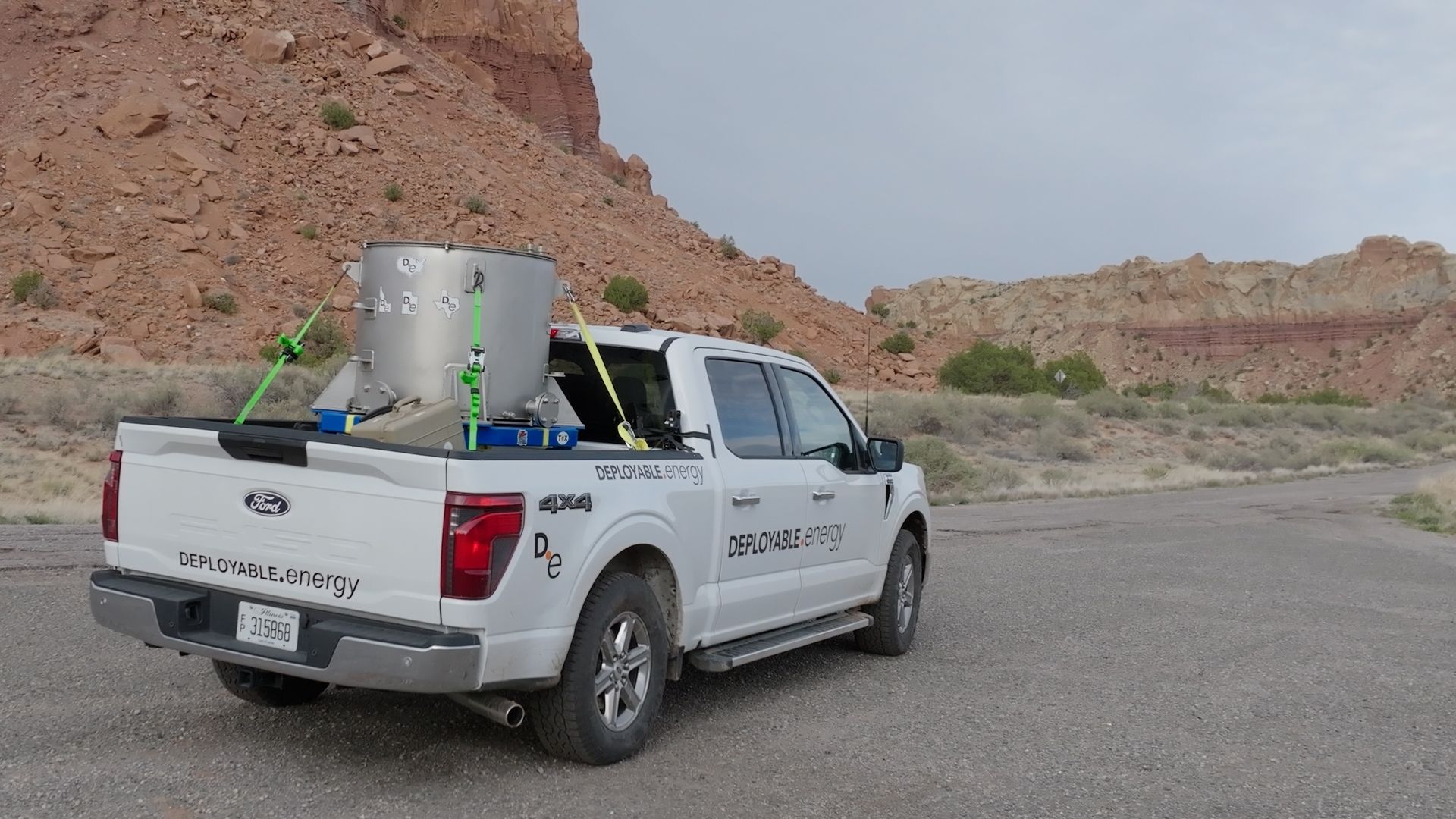
Deployable Energy's first module on the move. Photo: World View Films, courtesy of Deployable Energy
A Houston company is racing to turn on a nuclear microreactor by July 4 — and is driving its module to Idaho in a pickup truck this week to begin federal testing.
Why it matters: Deployable Energy — founded last year, self-funded and with 20 full-time employees — is one of the four companies in the Department of Energy's new Nuclear Energy Launch Pad program, announced this week.
- The U.S. is pushing to speed up advanced nuclear development.
State of play: The initiative is meant to help companies move from design to testing and real-world deployment faster.
- Deployable is competing to be one of the first companies to bring a new reactor to "criticality" — or turn it on — before a July 4 deadline.
What they're saying: Deployable co-founder and CEO Bobby Gallagher calls the company "scrappy" but tells Axios "we're emerging to be one of the leaders in this advanced reactor space."
- "Houston makes energy products. And this is just hopefully another energy product. We're going to make nuclear an energy product, as opposed to an energy project."
How it works: Deployable is developing a Houston-built microreactor designed to produce about 1 megawatt of power, which Gallagher says is enough to power about 700 houses and can be scaled for more homes and data centers.
Gallagher says the company's core advantage is that its design can be deployable and uses items from existing supply chains rather than exotic materials.
- "We've eliminated a lot of the things that make reactors [have] quite [a] long lead time — large forgings, exotic materials, exotic coatings," he says.
Zoom in: Deployable is leaning on Houston's energy supply chain to build the reactors.
- "You need welders to weld the stainless steel structures. You need machine shops. You need assembly bays — and we have all those assets," Gallagher says. "Houston is the best place in the world to put things on skids and ship them to site."
What's next: The company aims to turn on its reactor by July 4 and complete safety checks through mid-2027.
- If successful, it plans to begin commercial deployments by 2028.