Houston's energy industry looks to benefit from Iran war


Add Axios as your preferred source to
see more of our stories on Google.
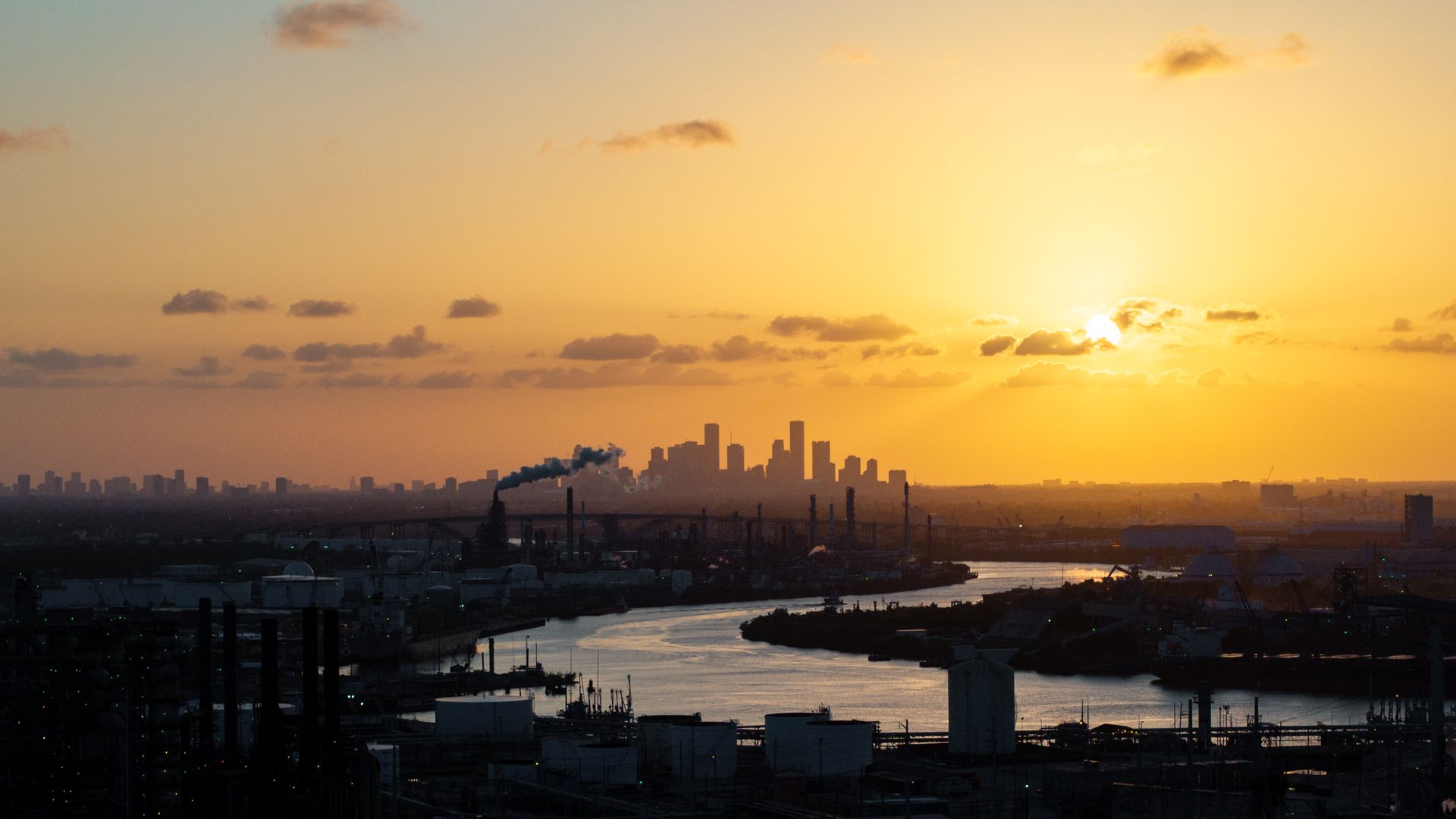
The sun sets on the Houston Ship Channel. Photo: Brandon Bell/Getty Images
Houston's energy industry is poised to benefit from the war in Iran amid supply chain disruptions, a Rice University economist tells Axios, even as Houston-area consumers face pain at the pump.
Why it matters: The region's engineering and logistics expertise "is set up to be able to flex ... and capitalize where possible on those shifts," says Kenneth Medlock, energy and resource economist at Rice's Baker Institute. "It's why this region, economically, has been so vibrant for such a long time."
The big picture: With the U.S. and Israel's bombardment of Iran in its second week, the Strait of Hormuz remains largely frozen, straining one of the world's most critical chokepoints for oil supply.
The latest: President Trump told Axios in a brief phone interview Wednesday that the war with Iran will end "soon" because there is "practically nothing left to target."
- Israeli Defense Minister Israel Katz said Wednesday the war will continue "without any time limit, for as long as necessary, until we achieve all the objectives and decisively win the campaign."
- Israeli and U.S. officials say they are preparing for at least two more weeks of strikes in Iran. Trump himself declined to specify a timeline for when the war will end.
By the numbers: Crude oil futures rose from about $65 per barrel in February to about $85 as of Wednesday, reaching more than $100 earlier this week.
- That led to the International Energy Agency to release 400 million barrels of oil from strategic stockpiles to try and offset the spike.
Yes, but: The rise in prices coupled with the uncertainty about when the conflict will end are volatile conditions for the Houston energy and commodities industries, Medlock says.
- Plus, while higher prices on gasoline and other goods are generally good for commodity-producing regions like Greater Houston, it's not good for consumers.
What they're saying: "There's a balance there," Medlock says. "You typically want a price that's healthy enough to support business and business expansion, but at the same time, not really crimp pocketbooks."
Zoom in: The Trump administration's murky messaging on the war is hindering oil and gas producers and their downstream counterparts, like plastics manufacturers, from making business decisions, Medlock says.
- "Companies don't know whether to produce more. ... If you've got a lot of volatility, they're not going to take that step because it's an additional cost, and they don't know if it's going to be worth it."
- "Even when the (Trump) administration's making statements, they seem to contradict themselves," Medlock says. "It's not doing anything to help ease the uncertainty."
The bottom line: "It's more about what we produce right now, how that is marketed and ultimately how it can help ease the stress in the global market," Medlock says.
- "That's going to put a lot of demand for the expertise and the commodities that are produced and flow out of this region in the short run."